
环状ANKRD12 在血管内皮细胞氧化应激反应中被诱导产生。
CircANKRD12 Is Induced in Endothelial Cell Response to Oxidative Stress.
机构信息
Molecular Cardiology Laboratory, IRCCS Policlinico San Donato, San Donato Milanese, 20097 Milan, Italy.
Operative Unit of Vascular & Endovascular Surgery, IRCCS Policlinico San Donato, San Donato Milanese, 20097 Milan, Italy.
出版信息
Cells. 2022 Nov 9;11(22):3546. doi: 10.3390/cells11223546.
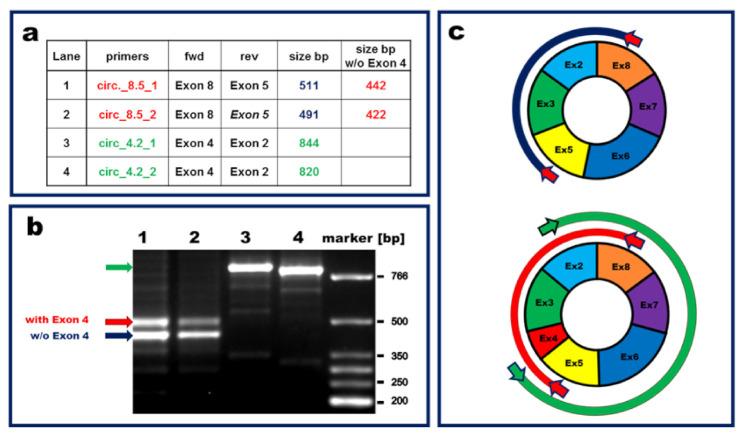
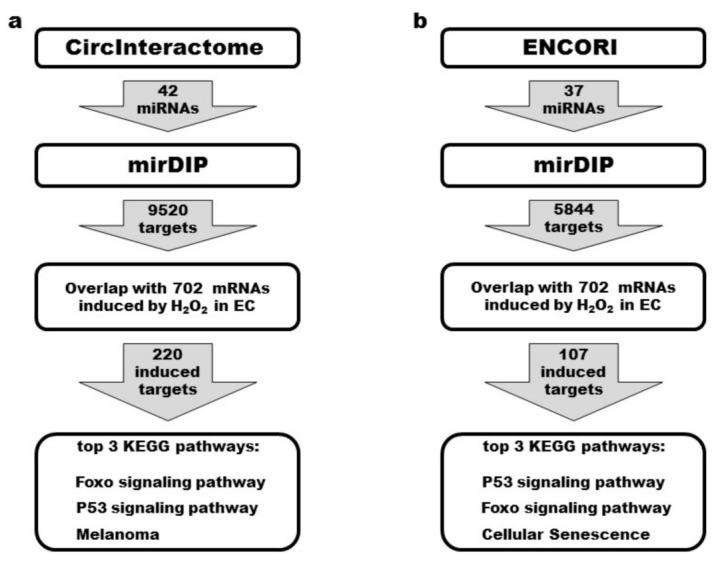
Redox imbalance of the endothelial cells (ECs) plays a causative role in a variety of cardiovascular diseases. In order to better understand the molecular mechanisms of the endothelial response to oxidative stress, the involvement of circular RNAs (circRNAs) was investigated. CircRNAs are RNA species generated by a "back-splicing" event, which is the covalent linking of the 3'- and 5'-ends of exons. Bioinformatics analysis of the transcriptomic landscape of human ECs exposed to HO allowed us to identify a subset of highly expressed circRNAs compared to their linear RNA counterparts, suggesting a potential biological relevance. Specifically, circular Ankyrin Repeat Domain 12 (circANKRD12), derived from the junction of exon 2 and exon 8 of the ANKRD12 gene (hsa_circ_0000826), was significantly induced in HO-treated ECs. Conversely, the linear RNA isoform of ANKRD12 was not modulated. An increased circular-to-linear ratio of ANKRD12 was also observed in cultured ECs exposed to hypoxia and in skeletal muscle biopsies of patients affected by critical limb ischemia (CLI), two conditions associated with redox imbalance and oxidative stress. The functional relevance of circANKRD12 was shown by the inhibition of EC formation of capillary-like structures upon silencing of the circular but not of the linear isoform of ANKRD12. Bioinformatics analysis of the circANKRD12-miRNA-mRNA regulatory network in HO-treated ECs identified the enrichment of the p53 and Foxo signaling pathways, both crucial in the cellular response to redox imbalance. In keeping with the antiproliferative action of the p53 pathway, circANKRD12 silencing inhibited EC proliferation. In conclusion, this study indicates circANKRD12 as an important player in ECs exposed to oxidative stress.
内皮细胞(ECs)的氧化还原失衡在多种心血管疾病中起着致病作用。为了更好地理解内皮细胞对氧化应激的分子机制,研究了环状 RNA(circRNA)的参与。circRNA 是通过“反向剪接”事件产生的 RNA 物种,这是外显子 3' 和 5' 末端的共价连接。对暴露于 HO 的人 ECs 的转录组景观进行生物信息学分析,使我们能够识别出与线性 RNA 相比具有更高表达的circRNA 子集,这表明其具有潜在的生物学相关性。具体而言,源自 ANKRD12 基因(hsa_circ_0000826)exon2 和 exon8 交界处的环状 Ankyrin Repeat Domain 12(circANKRD12)在 HO 处理的 EC 中显著诱导。相反,ANKRD12 的线性 RNA 同工型未被调节。在暴露于低氧的培养 EC 中和受严重肢体缺血(CLI)影响的患者的骨骼肌活检中,也观察到 ANKRD12 的环状与线性比值增加。circANKRD12 的功能相关性通过沉默环状而非线性 ANKRD12 同工型抑制 EC 形成毛细血管样结构来证明。在 HO 处理的 EC 中对 circANKRD12-miRNA-mRNA 调控网络的生物信息学分析表明,p53 和 Foxo 信号通路的富集,这两者在细胞对氧化还原失衡的反应中都至关重要。与 p53 途径的抗增殖作用一致,circANKRD12 沉默抑制了 EC 的增殖。总之,这项研究表明 circANKRD12 是暴露于氧化应激的 EC 中的重要参与者。




 Zotero 插件