
多功能介孔硅纳米粒子增强丝素蛋白复合材料具有抗菌和成骨作用,可用于感染性骨康复。
Multifunctional Mesoporous Silica Nanoparticles Reinforced Silk Fibroin Composite with Antibacterial and Osteogenic Effects for Infectious Bone Rehabilitation.
机构信息
School and Hospital of Stomatology, Fujian Medical University, Fuzhou, People's Republic of China.
Fujian Key Laboratory of Fujian College and University, Fujian Medical University, Fuzhou, People's Republic of China.
出版信息
Int J Nanomedicine. 2022 Nov 25;17:5661-5678. doi: 10.2147/IJN.S387347. eCollection 2022.
BACKGROUND
Existing implant materials cannot meet the essential multifunctional requirements of repairing infected bone defects, such as antibacterial and osteogenesis abilities. A promising strategy to develop a versatile biomimicry composite of the natural bone structure may be accomplished by combining a multifunctional nanoparticle with an organic scaffold.
METHODS
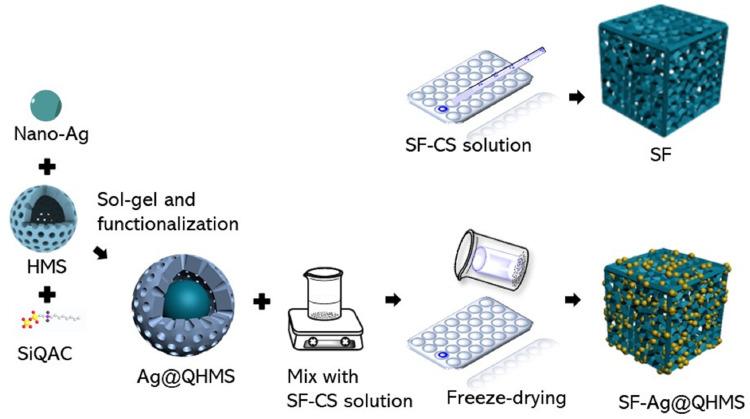
In this study, a quaternary ammonium silane-modified mesoporous silica containing nano silver (Ag@QHMS) was successfully synthesized and further combined with silk fibroin (SF) to fabricate the multifunctional nano-reinforced scaffold (SF-Ag@QHMS) using the freeze-drying method. Furthermore, the antibacterial and osteogenic effects of this composite were evaluated in vitro and in vivo.
RESULTS
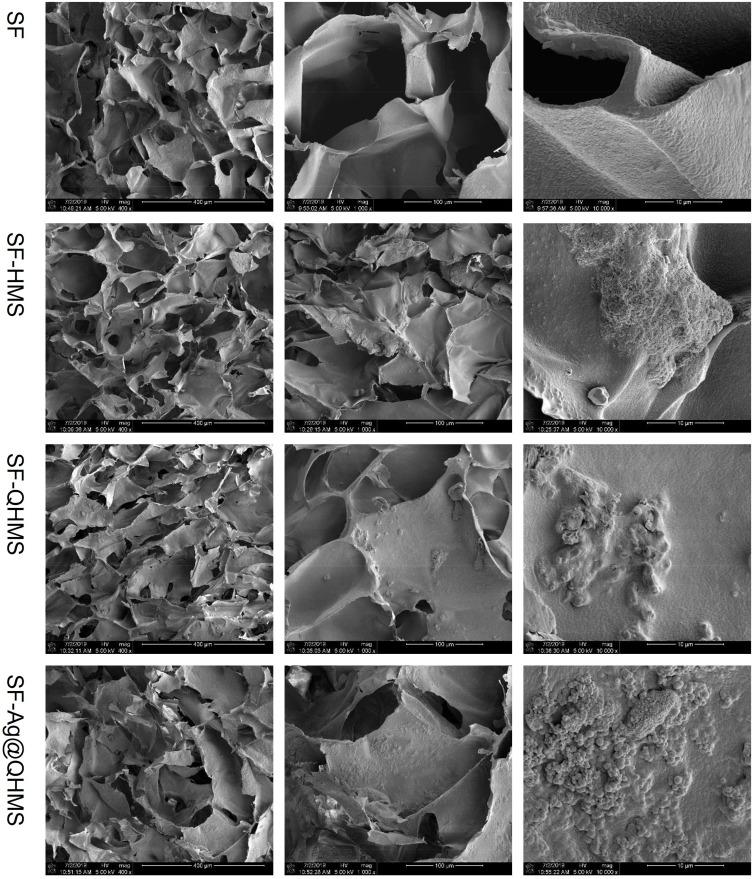
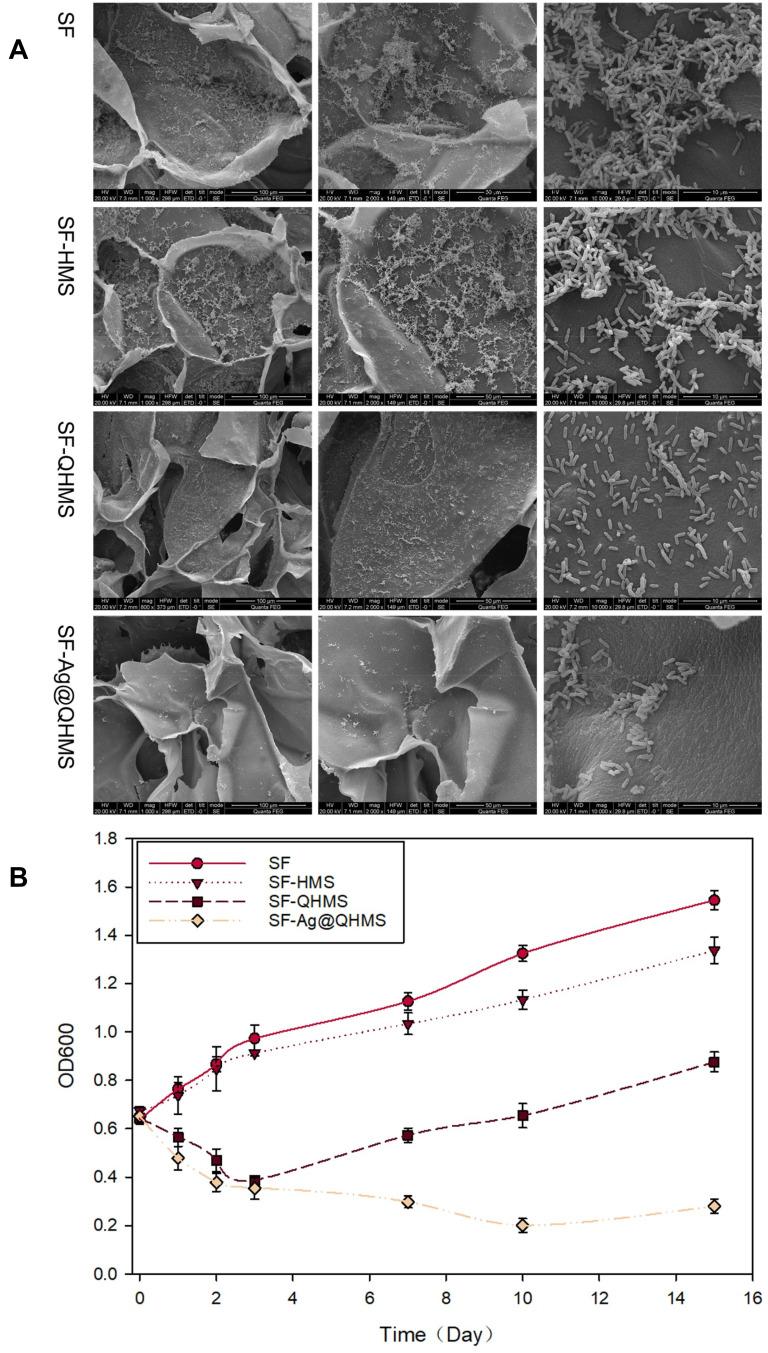
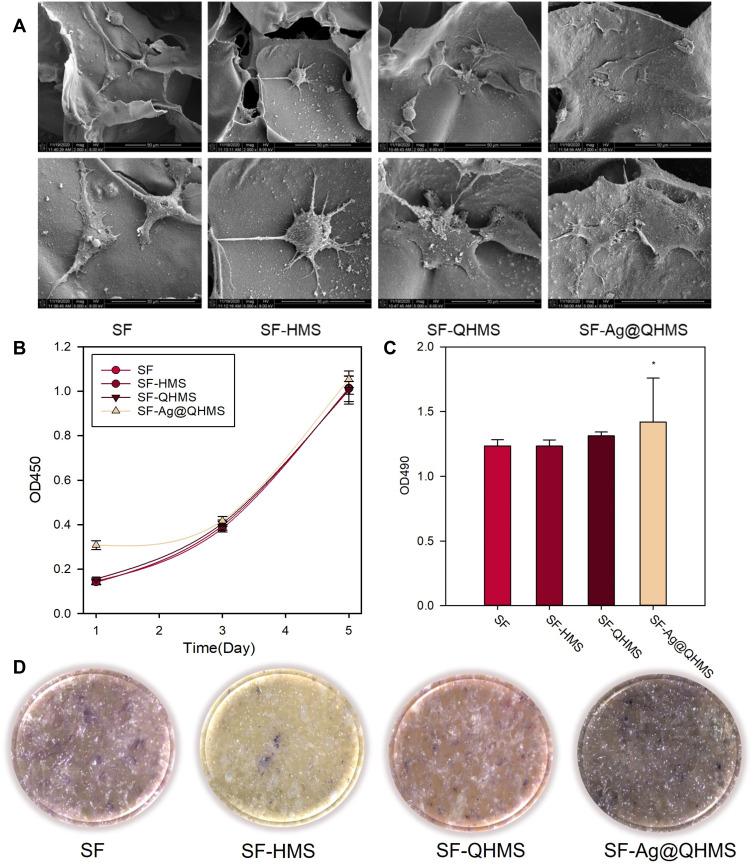
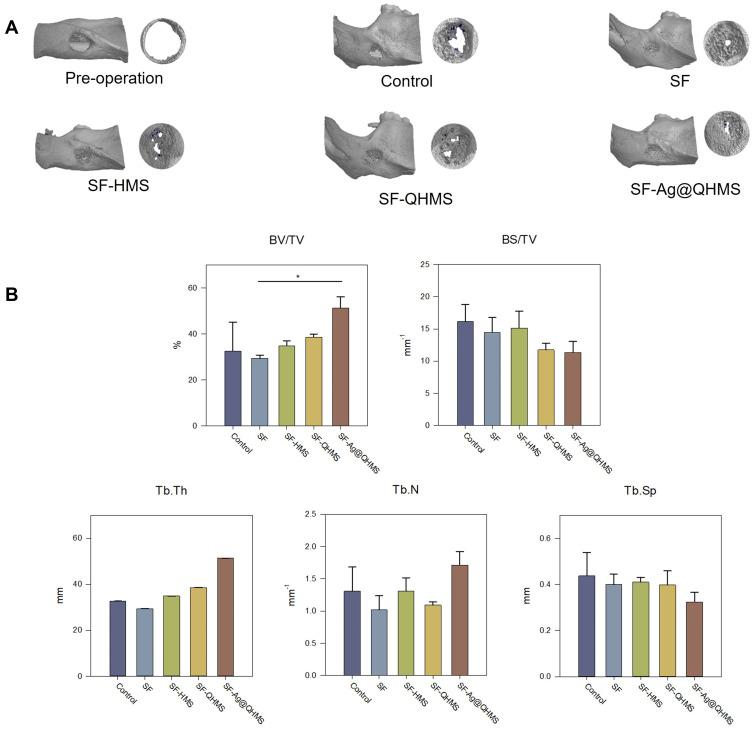
SF-Ag@QHMS inherited a three-dimensional porous structure (porosity rate: 91.90 ± 0.62%) and better mechanical characteristics (2.11 ± 0.06 kPa) than that of the SF scaffold (porosity rate: 91.62 ± 1.65%; mechanic strength: 2.02 ± 0.01 kPa). Simultaneously, the introduction of versatile nanoparticles has provided the composite with additional antibacterial ability against , which can be maintained for 15 days. Furthermore, the expression of osteogenic-associated factors was up-regulated due to the silver ions eluting from the composite scaffold. The in vivo micro-CT and histological results indicated that the new bone formation was not only localized around the border of the defect but also arose more in the center with the support of the composite.
CONCLUSION
The multifunctional silver-loaded mesoporous silica enhanced the mechanical strength of the composite while also ensuring greater and sustained antibacterial and osteogenic properties, allowing the SF-Ag@QHMS composite to be used to repair infected bone defects.
背景
现有的植入材料无法满足修复感染性骨缺损的基本多功能要求,例如抗菌和成骨能力。通过将多功能纳米颗粒与有机支架结合,开发具有天然骨结构多功能仿生复合材料是一种很有前途的策略。
方法
在本研究中,成功合成了一种季铵硅烷修饰的含纳米银的介孔硅(Ag@QHMS),并进一步通过冷冻干燥法将其与丝素蛋白(SF)结合,制备多功能纳米增强支架(SF-Ag@QHMS)。此外,还评估了该复合材料的体外和体内的抗菌和促成骨效果。
结果
SF-Ag@QHMS 继承了三维多孔结构(孔隙率:91.90±0.62%)和更好的机械特性(2.11±0.06 kPa),优于 SF 支架(孔隙率:91.62±1.65%;机械强度:2.02±0.01 kPa)。同时,多功能纳米粒子的引入赋予了复合材料对 的额外抗菌能力,这种能力可以维持 15 天。此外,由于复合支架中银离子的洗脱,成骨相关因子的表达上调。体内 micro-CT 和组织学结果表明,新骨形成不仅局限于缺损边缘,而且在复合材料的支持下,更多地出现在中心部位。
结论
载银介孔硅的多功能化增强了复合材料的机械强度,同时确保了更大且持续的抗菌和促成骨特性,使 SF-Ag@QHMS 复合材料可用于修复感染性骨缺损。



 Zotero 插件