
非酒精性脂肪性肝病(NAFLD)与精神疾病:情绪、代谢和药物之间的联系机制
Non-alcoholic fatty liver disease (NAFLD) and mental illness: Mechanisms linking mood, metabolism and medicines.
作者信息
Gangopadhyay Anwesha, Ibrahim Radwa, Theberge Karli, May Meghan, Houseknecht Karen L
机构信息
Department of Biomedical Sciences, College of Osteopathic Medicine, University of New England, Biddeford, ME, United States.
出版信息
Front Neurosci. 2022 Nov 15;16:1042442. doi: 10.3389/fnins.2022.1042442. eCollection 2022.
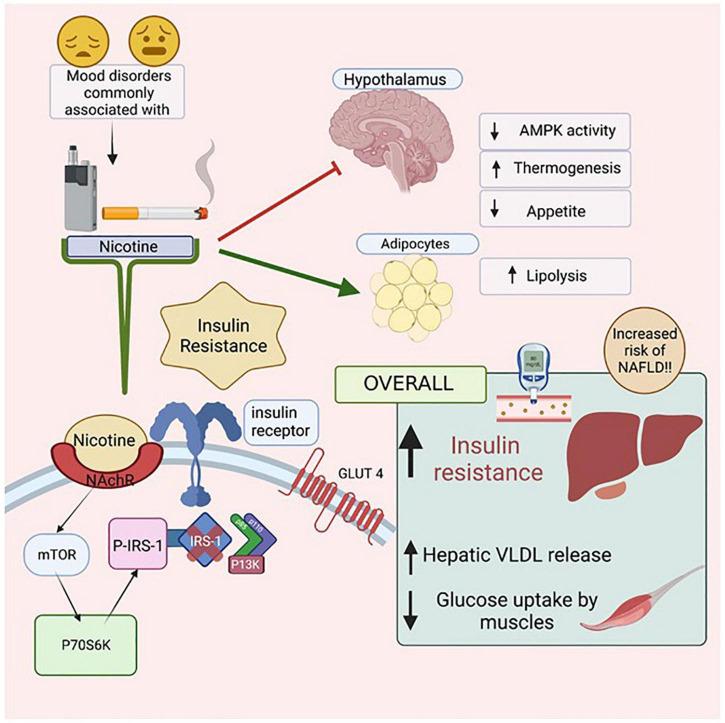
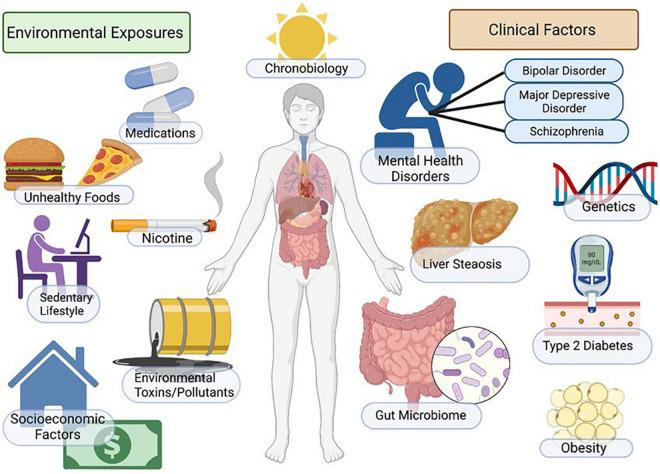
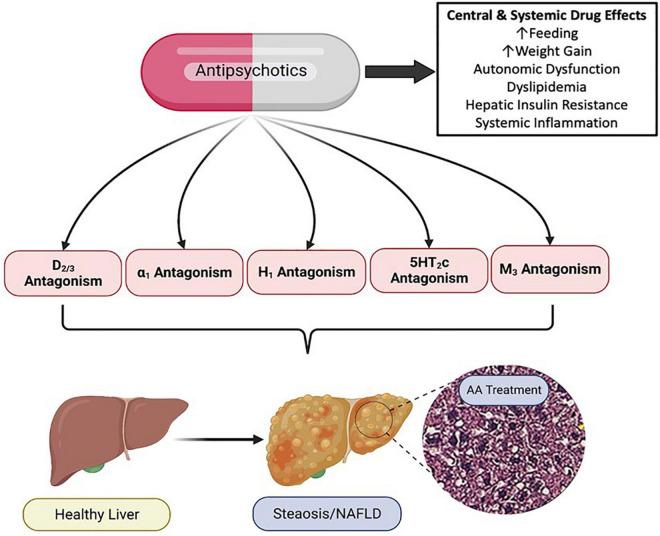
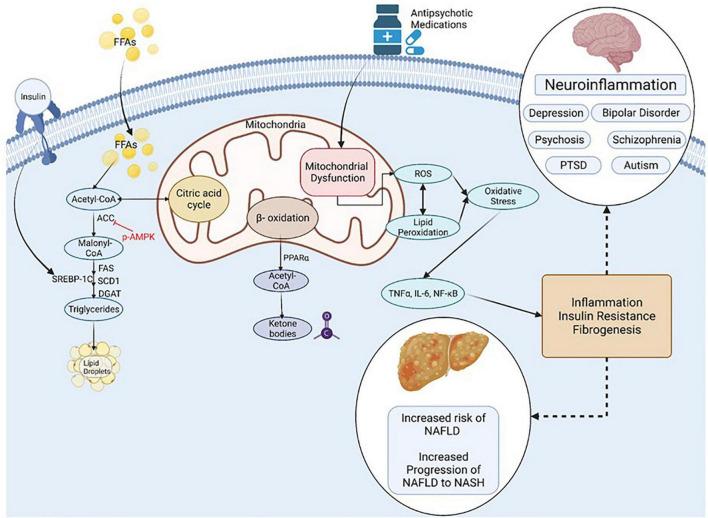
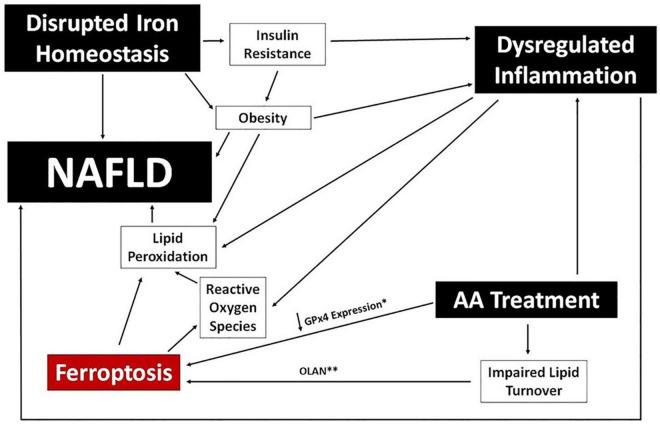
Non-alcoholic fatty liver disease (NAFLD) is the most common cause of chronic liver disease in the world and one of the leading indications for liver transplantation. It is one of the many manifestations of insulin resistance and metabolic syndrome as well as an independent risk factor for cardiovascular disease. There is growing evidence linking the incidence of NAFLD with psychiatric illnesses such as schizophrenia, bipolar disorder and depression mechanistically genetic, metabolic, inflammatory and environmental factors including smoking and psychiatric medications. Indeed, patients prescribed antipsychotic medications, regardless of diagnosis, have higher incidence of NAFLD than population norms. The mechanistic pharmacology of antipsychotic-associated NAFLD is beginning to emerge. In this review, we aim to discuss the pathophysiology of NAFLD including its risk factors, insulin resistance and systemic inflammation as well as its intersection with psychiatric illnesses.
非酒精性脂肪性肝病(NAFLD)是全球慢性肝病最常见的病因,也是肝移植的主要指征之一。它是胰岛素抵抗和代谢综合征的多种表现之一,也是心血管疾病的独立危险因素。越来越多的证据表明,NAFLD的发病率与精神疾病(如精神分裂症、双相情感障碍和抑郁症)在机制上存在联系,涉及遗传、代谢、炎症和环境因素,包括吸烟和精神科药物。事实上,无论诊断如何,服用抗精神病药物的患者患NAFLD的发生率均高于人群平均水平。抗精神病药物相关NAFLD的作用机制药理学正逐渐显现。在这篇综述中,我们旨在探讨NAFLD的病理生理学,包括其危险因素、胰岛素抵抗和全身炎症,以及它与精神疾病的交叉点。

 Zotero 插件