
《针对药物使用问题个体的集体动机性访谈:一项预-后-随访、非对照的初步研究》。
Collective Motivational Interviewing for Individuals with Drug Use Problems: A Pre-Post-Follow-Up, Uncontrolled Pilot Study.
机构信息
Department of Social Work and Social Administration, The University of Hong Kong, Hong Kong Special Administrative Region, Hong Kong, China.
Department of Applied Social Sciences, HKCT Institute of Higher Education, Hong Kong Special Administrative Region, Hong Kong, China.
出版信息
Int J Environ Res Public Health. 2022 Dec 6;19(23):16344. doi: 10.3390/ijerph192316344.
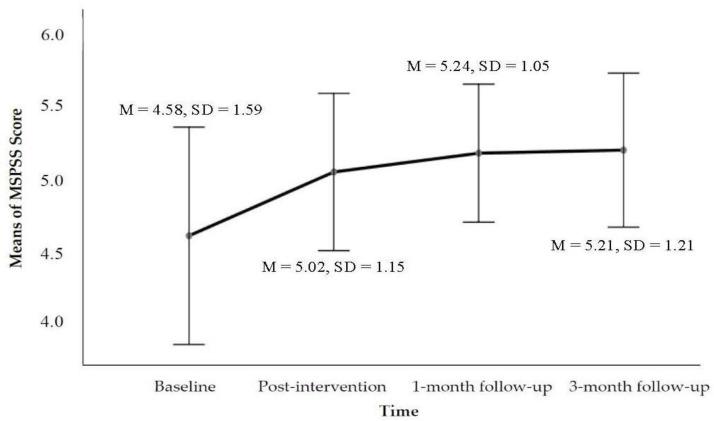
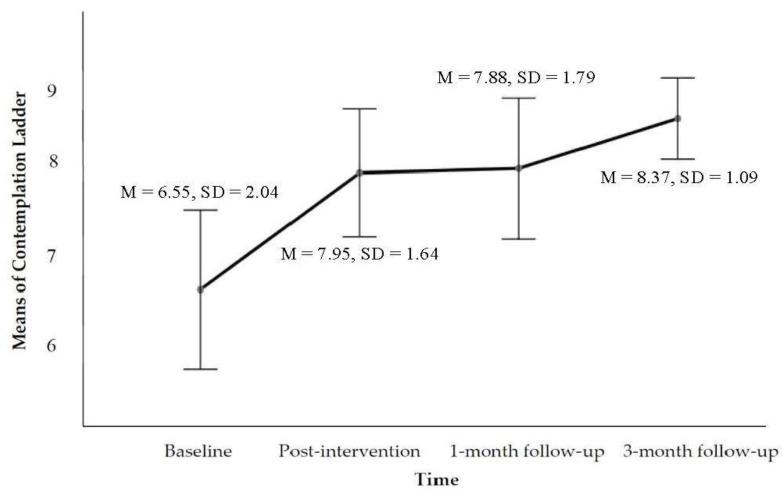
Collective motivational interviewing (CMI) is a novelty motivational approach which optimises the motivational interviewing (MI) for individuals from collectivistic cultures. While MI has been empirically tested as an effective intervention for addictive disorders and has had a positive effect on facilitating lifestyle changes, CMI has retained the potency of MI as an individualistic intervention, and it further invites the social network resources to strengthen the level of motivation and cultivate a joint change partnership. This pilot study was the first clinical study of CMI to work with individuals with drug use problems (IDUPs) by involving concerned significant others (CSOs) in the three-session intervention, and the fidelity control was assessed by the Collective Motivational Interviewing Treatment Integrity (CMITI) scale. This pre-post−follow-up and uncontrolled feasibility study was conducted between 2017 and 2019, with dyads of 20 IDUPs and their CSOs. The potential impacts of CMI were examined by measures at baseline, post-intervention, and 1-month and 3-month post-intervention. All clinical sessions were audio-recorded, and four cases were randomly selected for fidelity review by two trained coders. The normality of data at the baseline was checked by a Shapiro−Wilk test. Non-parametric Wilcoxon-signed-rank test and repeated-measures ANOVA were employed for quantitative analysis. The results showed that six IDUPs had reduced drug use, and ten maintained drug abstinence with the support of CSOs, whereas four IDUPs remained unchanged or increased drug use. Overall, at the 3-month follow-up, drug use was reduced (p > 0.05), social support was strengthened (p < 0.05), and the IDUPs’ motivation for change was enhanced (p < 0.05). However, the small sample sizes, non-random sampling, and lack of control group may limit the generalizability and confirmation of the outcomes and of the “real effects”. This finding of the study suggests that the CMI is a feasible and acceptable therapeutic tool to motivate IDUPs with the support of CSOs to achieve mutually agreed-upon goals. Further development and evaluation with robust methodology are warranted.
集体动机访谈(CMI)是一种新颖的动机方法,它优化了针对集体主义文化个体的动机访谈(MI)。虽然 MI 已经通过实证检验,作为一种治疗成瘾障碍的有效干预措施,并对促进生活方式改变产生了积极影响,但 CMI 保留了 MI 作为一种个体干预措施的效力,并且进一步邀请社会网络资源来增强动机水平并培养共同的改变伙伴关系。这项初步研究是首次使用 CMI 与有药物使用问题的个体(IDUP)合作的临床研究,通过让相关重要他人(CSO)参与三阶段干预,并且使用集体动机访谈治疗完整性(CMITI)量表评估了忠实性控制。这项预-后-随访和无对照的可行性研究于 2017 年至 2019 年进行,涉及 20 名 IDUP 和他们的 CSO。通过在基线、干预后以及干预后 1 个月和 3 个月时的测量,检查了 CMI 的潜在影响。所有临床会议都进行了录音,并且随机选择了四个案例由两位经过培训的编码员进行忠实性审查。通过 Shapiro-Wilk 检验检查了数据在基线时的正态性。采用非参数 Wilcoxon 符号秩检验和重复测量方差分析进行定量分析。结果表明,有 6 名 IDUP 减少了药物使用,在 CSO 的支持下,有 10 名 IDUP 保持了药物戒断,而有 4 名 IDUP 保持不变或增加了药物使用。总体而言,在 3 个月的随访中,药物使用减少(p>0.05),社会支持增强(p<0.05),IDUP 改变的动机增强(p<0.05)。然而,小样本量、非随机抽样和缺乏对照组可能限制了结果和“真实效果”的可推广性和确证性。本研究的这一发现表明,CMI 是一种可行且可接受的治疗工具,可以在 CSO 的支持下激励 IDUP 实现双方同意的目标。需要进一步用稳健的方法进行开发和评估。

 Zotero 插件