
基于纳米医学的淫羊藿次苷免疫疗法治疗晚期肝细胞癌。
Nanomedicine-boosting icaritin-based immunotherapy of advanced hepatocellular carcinoma.
机构信息
Department of Polymeric Materials, School of Materials Science and Engineering, Tongji University, Shanghai, 201804, China.
College of Chemistry, Chemical Engineering and Biotechnology, Donghua University, Shanghai, 201620, China.
出版信息
Mil Med Res. 2022 Dec 12;9(1):69. doi: 10.1186/s40779-022-00433-9.
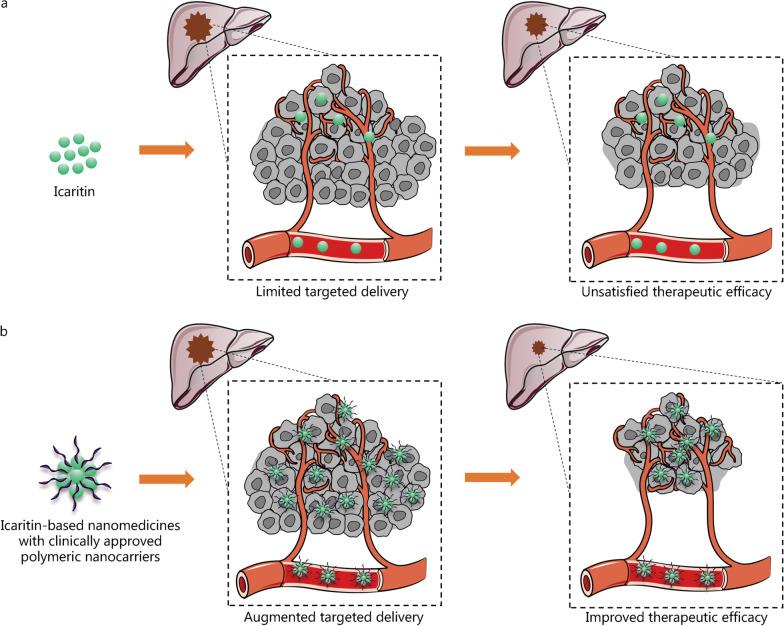
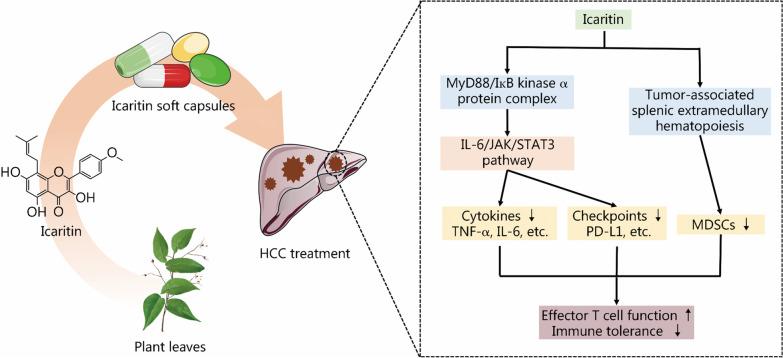
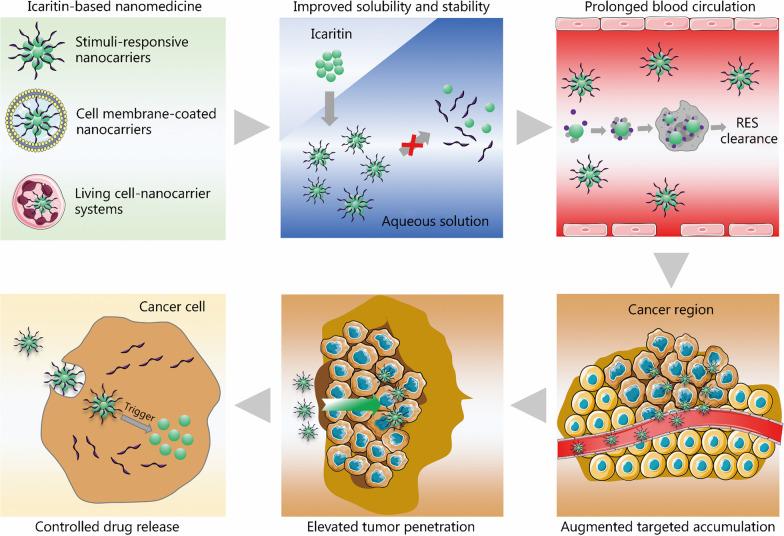
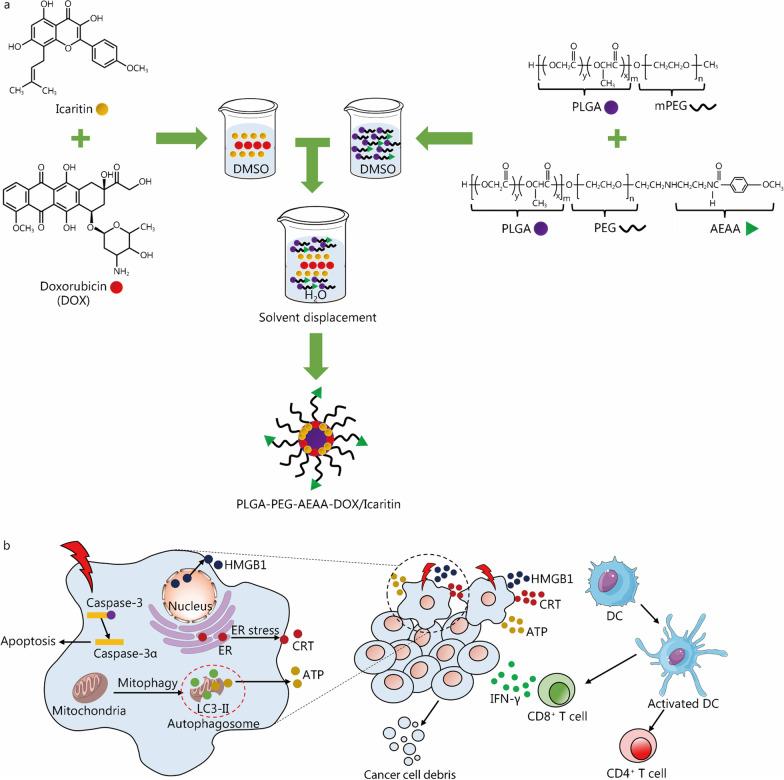
Traditional treatments for advanced hepatocellular carcinoma (HCC), such as surgical resection, transplantation, radiofrequency ablation, and chemotherapy are unsatisfactory, and therefore the exploration of powerful therapeutic strategies is urgently needed. Immunotherapy has emerged as a promising strategy for advanced HCC treatment due to its minimal side effects and long-lasting therapeutic memory effects. Recent studies have demonstrated that icaritin could serve as an immunomodulator for effective immunotherapy of advanced HCC. Encouragingly, in 2022, icaritin soft capsules were approved by the National Medical Products Administration (NMPA) of China for the immunotherapy of advanced HCC. However, the therapeutic efficacy of icaritin in clinical practice is impaired by its poor bioavailability and unfavorable in vivo delivery efficiency. Recently, functionalized drug delivery systems including stimuli-responsive nanocarriers, cell membrane-coated nanocarriers, and living cell-nanocarrier systems have been designed to overcome the shortcomings of drugs, including the low bioavailability and limited delivery efficiency as well as side effects. Taken together, the development of icaritin-based nanomedicines is expected to further improve the immunotherapy of advanced HCC. Herein, we compared the different preparation methods for icaritin, interpreted the HCC immune microenvironment and the mechanisms underlying icaritin for treatment of advanced HCC, and discussed both the design of icaritin-based nanomedicines with high icaritin loading and the latest progress in icaritin-based nanomedicines for advanced HCC immunotherapy. Finally, the prospects to promote further clinical translation of icaritin-based nanomedicines for the immunotherapy of advanced HCC were proposed.
传统的治疗晚期肝细胞癌(HCC)的方法,如手术切除、移植、射频消融和化疗等,效果并不令人满意,因此迫切需要探索强有力的治疗策略。免疫疗法因其副作用小和持久的治疗记忆效应而成为晚期 HCC 治疗的一种有前途的策略。最近的研究表明,淫羊藿素可作为晚期 HCC 有效免疫治疗的免疫调节剂。令人鼓舞的是,2022 年,淫羊藿素软胶囊获得中国国家药品监督管理局(NMPA)批准,用于晚期 HCC 的免疫治疗。然而,淫羊藿素在临床实践中的治疗效果受到其生物利用度差和体内递送效率不佳的限制。最近,包括刺激响应纳米载体、细胞膜包覆纳米载体和活细胞-纳米载体系统在内的功能化药物递送系统被设计用来克服药物的缺点,包括低生物利用度和有限的递送效率以及副作用。综上所述,基于淫羊藿素的纳米药物的发展有望进一步提高晚期 HCC 的免疫治疗效果。在此,我们比较了淫羊藿素的不同制备方法,解释了 HCC 免疫微环境和淫羊藿素治疗晚期 HCC 的机制,并讨论了高载药量的基于淫羊藿素的纳米药物的设计和基于淫羊藿素的纳米药物在晚期 HCC 免疫治疗中的最新进展。最后,提出了促进淫羊藿素纳米药物进一步临床转化用于晚期 HCC 免疫治疗的前景。
 Zotero 插件