
安大略省老年人与跌倒相关伤害发生前一年内所开药物
Medication Prescribed Within One Year Preceding Fall-Related Injuries in Ontario Older Adults.
作者信息
Ming Yu, Zecevic Aleksandra A, Booth Richard G, Hunter Susan W, Tirona Rommel G, Johnson Andrew M
机构信息
School of Health Studies, Western University, London, ON.
Arthur Labatt Family School of Nursing, Western University, London, ON.
出版信息
Can Geriatr J. 2022 Dec 1;25(4):347-367. doi: 10.5770/cgj.25.569. eCollection 2022 Dec.
BACKGROUND
Serious injuries secondary to falls are becoming more prevalent due to the worldwide ageing of societies. Several medication classes have been associated with falls and fall-related injuries. The purpose of this study was to describe medication classes and the number of medication classes prescribed to older adults prior to the fall-related injury.
METHODS
This population-based descriptive study used secondary administrative health-care data in Ontario, Canada for 2010-2014. Descriptive statistics were reported for Anatomic Therapeutic Chemical 4 level medication classes. Frequency of medications prescribed to older adults was calculated on different sex, age groups, types of medications, and injures.
RESULTS
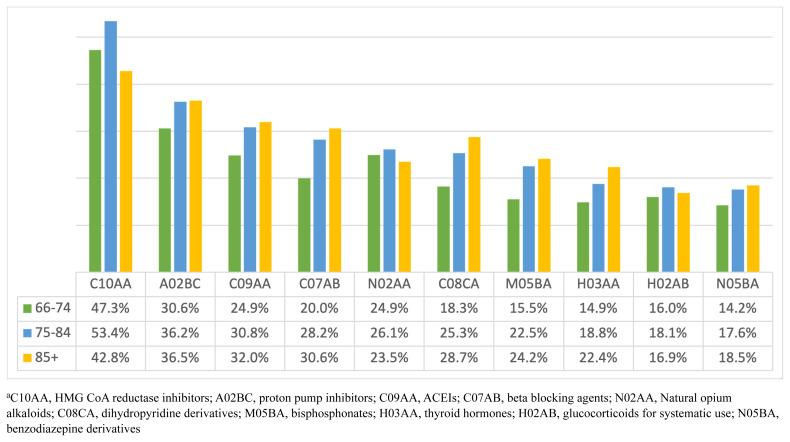
Over five years (2010-2014), 288,251 older adults (63.2% females) were admitted to an emergency department for a fall-related injury (40.0% fractures, 12.1% brain injury). In the year before the injury, 48.5% were prescribed statins, 27.2% antidepressants, 25.0% opioids, and 16.6% anxiolytics. Females were prescribed more diuretics, antidepressants, and anxiolytics than males; and people aged 85 years and older had a higher percentage of diuretics, antidepressants, and antipsychotics. There were 36.4% of older adults prescribed 5-9 different medication classes and 41.2% were prescribed 10 or more medication classes.
DISCUSSION
Older adults experiencing fall-related injuries were prescribed more opioids, benzodiazepines, and antidepressants than previously reported for the general population of older adults in Ontario. Higher percentage of females and more 85+ older adults were prescribed with psychotropic drugs, and they were also found to be at higher risk of fall-related injuries. Further associations between medications and fall-related injuries need to be explored in well-defined cohort studies.
背景
由于全球社会老龄化,跌倒导致的严重伤害日益普遍。几类药物与跌倒及跌倒相关伤害有关。本研究的目的是描述跌倒相关伤害发生前开给老年人的药物类别及药物类别数量。
方法
这项基于人群的描述性研究使用了加拿大安大略省2010 - 2014年的二级行政医疗保健数据。报告了解剖治疗化学4级药物类别的描述性统计数据。计算了不同性别、年龄组、药物类型和伤害情况下开给老年人的药物频率。
结果
在五年期间(2010 - 2014年),288,251名老年人(63.2%为女性)因跌倒相关伤害入住急诊科(40.0%为骨折,12.1%为脑损伤)。在受伤前一年,48.5%的人服用他汀类药物,27.2%服用抗抑郁药,25.0%服用阿片类药物,16.6%服用抗焦虑药。女性服用利尿剂、抗抑郁药和抗焦虑药的比例高于男性;85岁及以上的人群服用利尿剂、抗抑郁药和抗精神病药的比例更高。36.4%的老年人服用5 - 9种不同的药物类别,41.2%的老年人服用10种或更多药物类别。
讨论
与跌倒相关伤害的老年人服用的阿片类药物、苯二氮䓬类药物和抗抑郁药比安大略省老年人群体先前报告的更多。女性和85岁及以上的老年人服用精神药物的比例更高,而且他们也被发现有更高的跌倒相关伤害风险。药物与跌倒相关伤害之间的进一步关联需要在明确界定的队列研究中进行探索。
 Zotero 插件