
多尺度病理学图像纹理特征是可切除肺腺癌的预后因素:一项多中心回顾性研究。
Multi-scale pathology image texture signature is a prognostic factor for resectable lung adenocarcinoma: a multi-center, retrospective study.
机构信息
School of Computer Science and Information Security, Guilin University of Electronic Technology, Guilin, 541004, China.
Department of Radiology, Guangdong Provincial People's Hospital, Guangdong Academy of Medical Sciences, Guangzhou, 510080, China.
出版信息
J Transl Med. 2022 Dec 14;20(1):595. doi: 10.1186/s12967-022-03777-x.
BACKGROUND
Tumor histomorphology analysis plays a crucial role in predicting the prognosis of resectable lung adenocarcinoma (LUAD). Computer-extracted image texture features have been previously shown to be correlated with outcome. However, a comprehensive, quantitative, and interpretable predictor remains to be developed.
METHODS
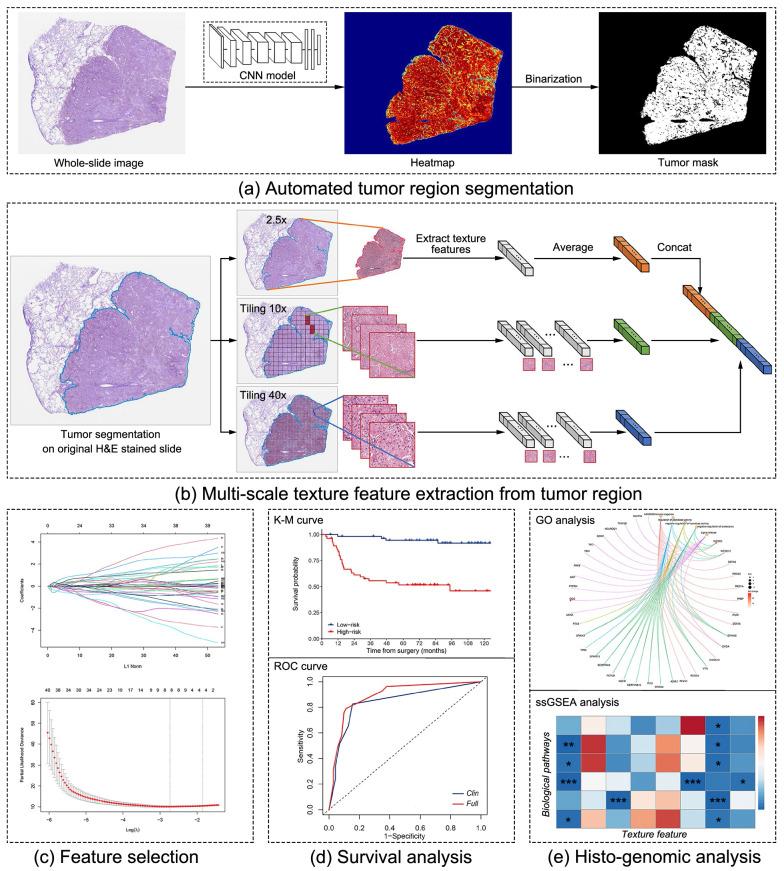
In this multi-center study, we included patients with resectable LUAD from four independent cohorts. An automated pipeline was designed for extracting texture features from the tumor region in hematoxylin and eosin (H&E)-stained whole slide images (WSIs) at multiple magnifications. A multi-scale pathology image texture signature (MPIS) was constructed with the discriminative texture features in terms of overall survival (OS) selected by the LASSO method. The prognostic value of MPIS for OS was evaluated through univariable and multivariable analysis in the discovery set (n = 111) and the three external validation sets (V, n = 115; V, n = 116; and V, n = 246). We constructed a Cox proportional hazards model incorporating clinicopathological variables and MPIS to assess whether MPIS could improve prognostic stratification. We also performed histo-genomics analysis to explore the associations between texture features and biological pathways.
RESULTS
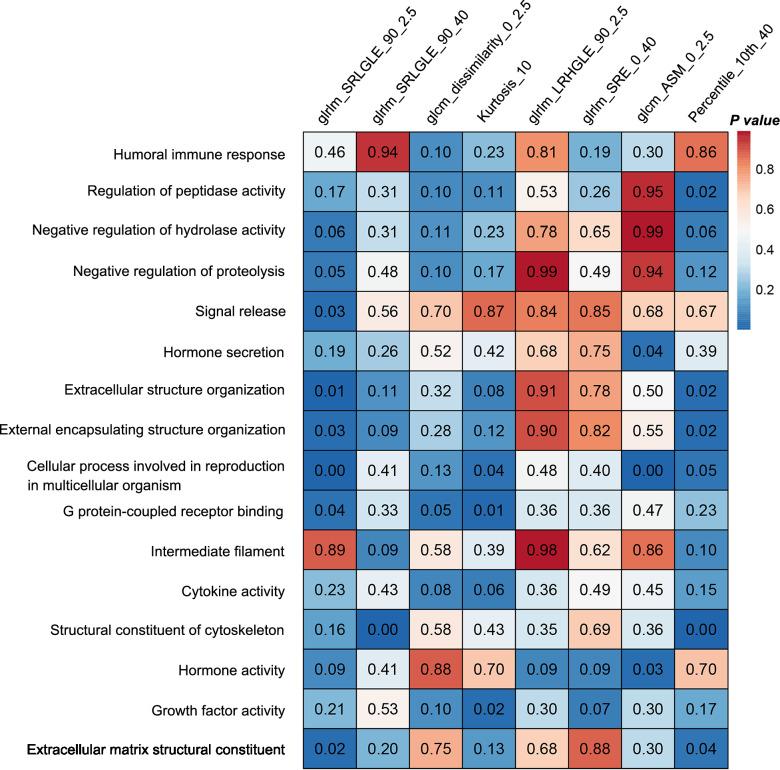
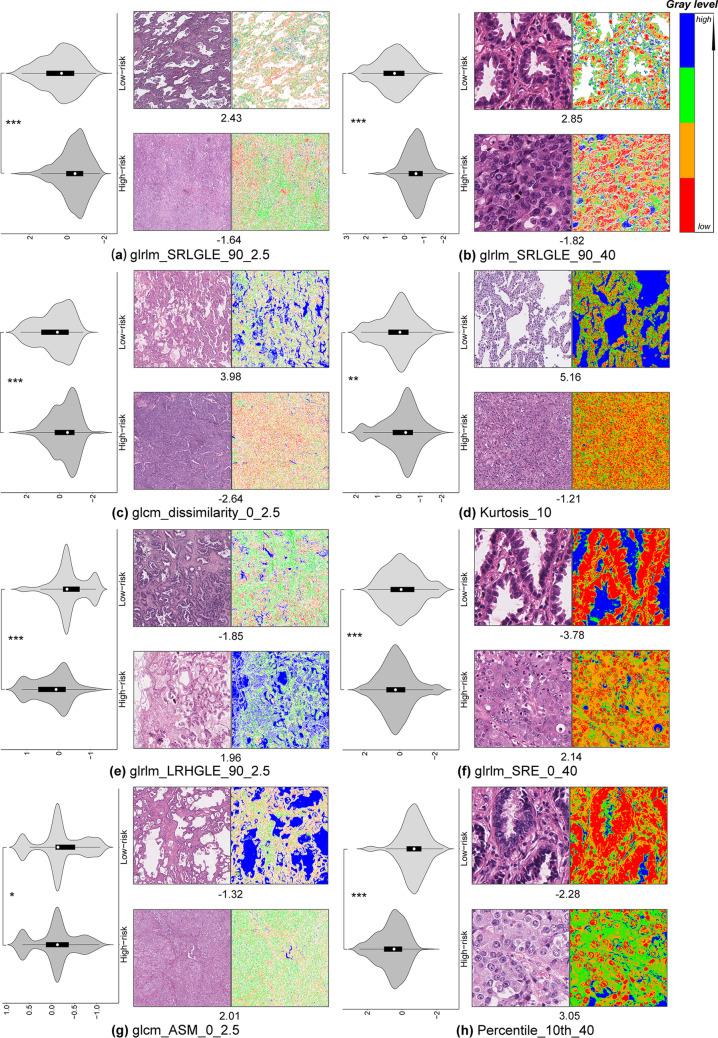
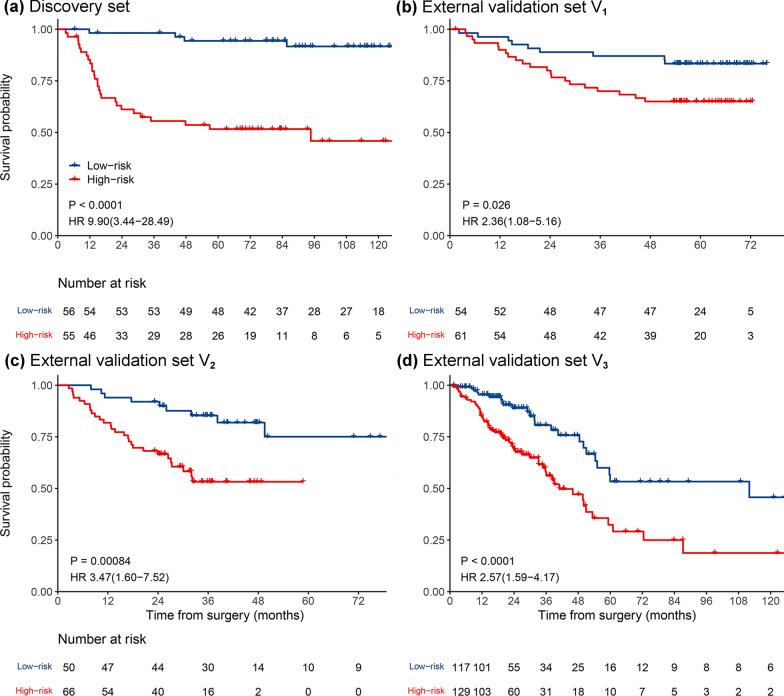
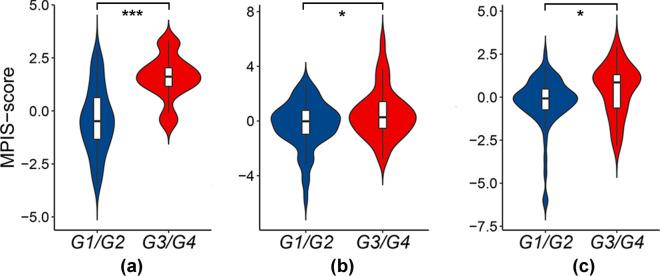
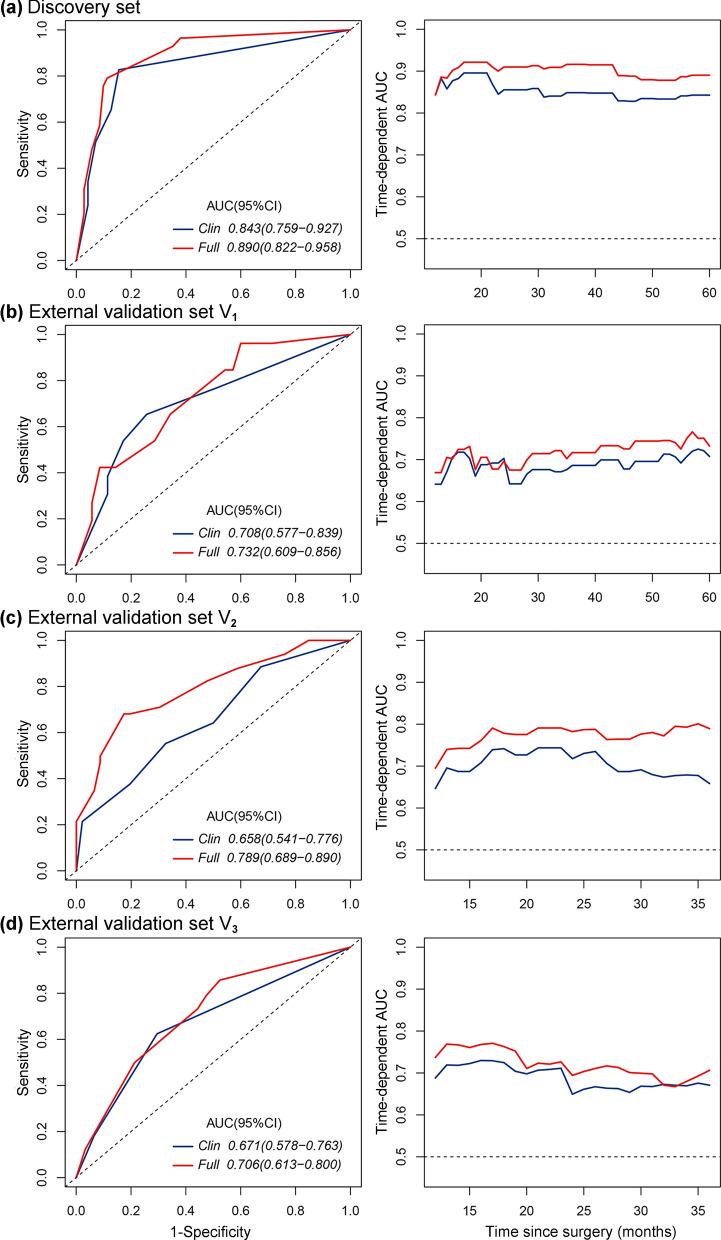
A set of eight texture features was selected to construct MPIS. In multivariable analysis, a higher MPIS was associated with significantly worse OS in the discovery set (HR 5.32, 95%CI 1.72-16.44; P = 0.0037) and the three external validation sets (V: HR 2.63, 95%CI 1.10-6.29, P = 0.0292; V: HR 2.99, 95%CI 1.34-6.66, P = 0.0075; V: HR 1.93, 95%CI 1.15-3.23, P = 0.0125). The model that integrated clinicopathological variables and MPIS had better discrimination for OS compared to the clinicopathological variables-based model in the discovery set (C-index, 0.837 vs. 0.798) and the three external validation sets (V: 0.704 vs. 0.679; V: 0.728 vs. 0.666; V: 0.696 vs. 0.669). Furthermore, the identified texture features were associated with biological pathways, such as cytokine activity, structural constituent of cytoskeleton, and extracellular matrix structural constituent.
CONCLUSIONS
MPIS was an independent prognostic biomarker that was robust and interpretable. Integration of MPIS with clinicopathological variables improved prognostic stratification in resectable LUAD and might help enhance the quality of individualized postoperative care.
背景
肿瘤组织形态学分析在预测可切除肺腺癌(LUAD)的预后方面起着至关重要的作用。先前已经证明,计算机提取的图像纹理特征与预后相关。然而,仍然需要开发一种全面、定量且可解释的预测因子。
方法
在这项多中心研究中,我们纳入了来自四个独立队列的可切除 LUAD 患者。设计了一个自动化的流水线,用于从苏木精和伊红(H&E)染色的全幻灯片图像(WSI)的肿瘤区域提取纹理特征,在多个放大倍数下进行。根据整体生存(OS)选择的具有判别力的纹理特征,使用 LASSO 方法构建多尺度病理图像纹理特征(MPIS)。在发现集(n=111)和三个外部验证集(V,n=115;V,n=116;V,n=246)中,通过单变量和多变量分析评估了 MPIS 对 OS 的预后价值。我们构建了一个 Cox 比例风险模型,纳入了临床病理变量和 MPIS,以评估 MPIS 是否可以改善预后分层。我们还进行了组织基因组学分析,以探讨纹理特征与生物学途径之间的关联。
结果
选择了一组八个纹理特征来构建 MPIS。在多变量分析中,发现集(HR 5.32,95%CI 1.72-16.44;P=0.0037)和三个外部验证集(V:HR 2.63,95%CI 1.10-6.29,P=0.0292;V:HR 2.99,95%CI 1.34-6.66,P=0.0075;V:HR 1.93,95%CI 1.15-3.23,P=0.0125)中,较高的 MPIS 与明显较差的 OS 相关。与基于临床病理变量的模型相比,该模型在发现集(C 指数,0.837 与 0.798)和三个外部验证集(V:0.704 与 0.679;V:0.728 与 0.666;V:0.696 与 0.669)中具有更好的 OS 区分能力。此外,鉴定出的纹理特征与生物途径相关,例如细胞因子活性、细胞骨架的结构成分和细胞外基质的结构成分。
结论
MPIS 是一种独立的预后生物标志物,具有稳健性和可解释性。将 MPIS 与临床病理变量相结合可以改善可切除 LUAD 的预后分层,并可能有助于提高术后个体化护理的质量。
 Zotero 插件