
针对 H7N9 禽流感病毒的治疗性人源单克隆抗体的抗原特性分析。
Antigenic Characterization of Human Monoclonal Antibodies for Therapeutic Use against H7N9 Avian Influenza Virus.
机构信息
The Pirbright Institute, Pirbright, Woking, United Kingdom.
Center for Translational Immunology, Chinese Academy of Medical Science Oxford Institute, Nuffield Department of Medicine, University of Oxford, Oxford, United Kingdom.
出版信息
J Virol. 2023 Jan 31;97(1):e0143122. doi: 10.1128/jvi.01431-22. Epub 2022 Dec 21.
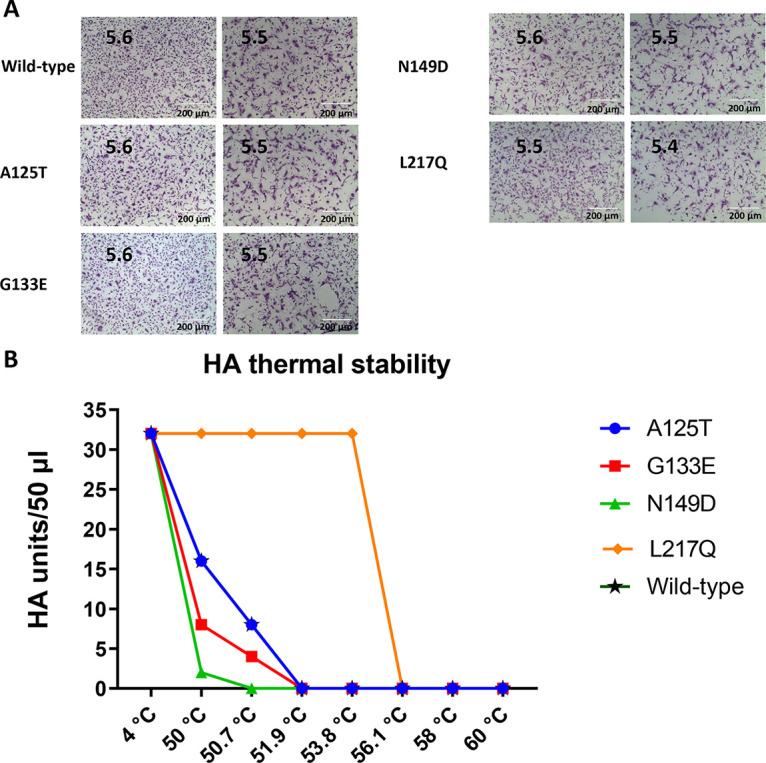
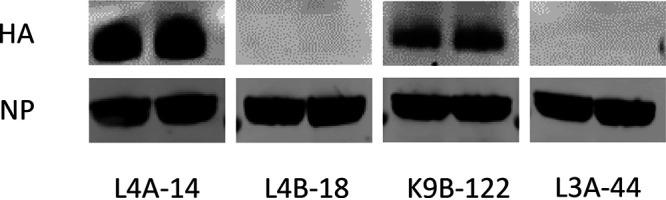
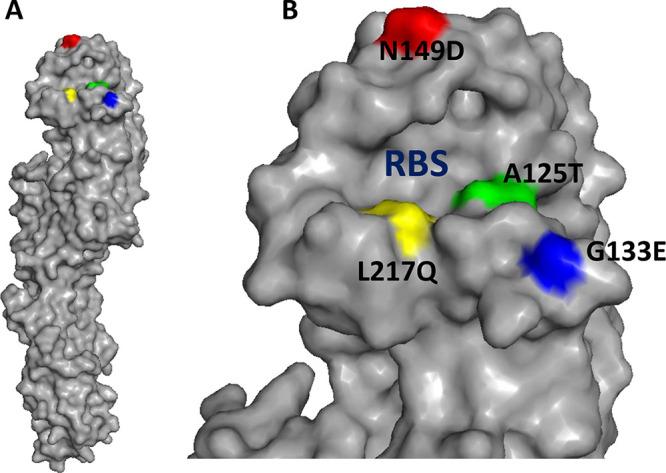
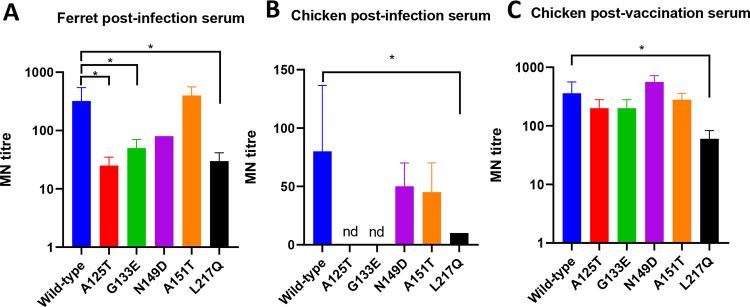
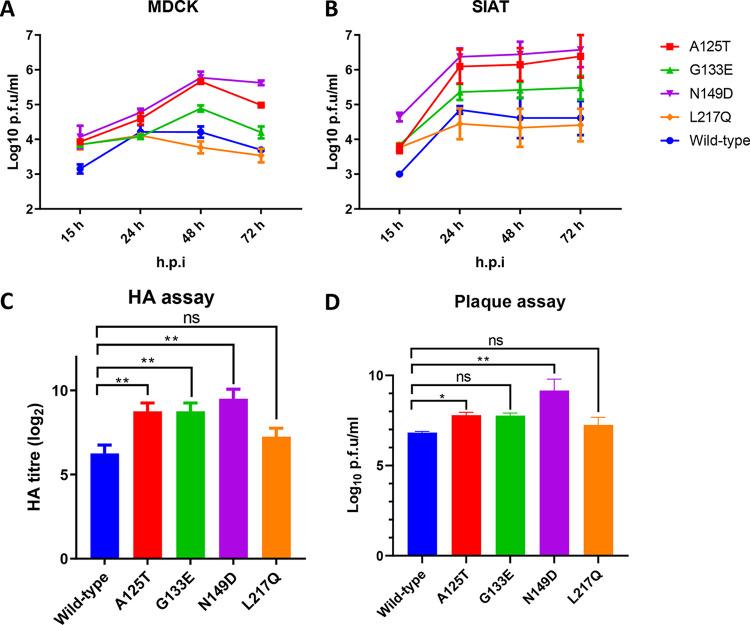
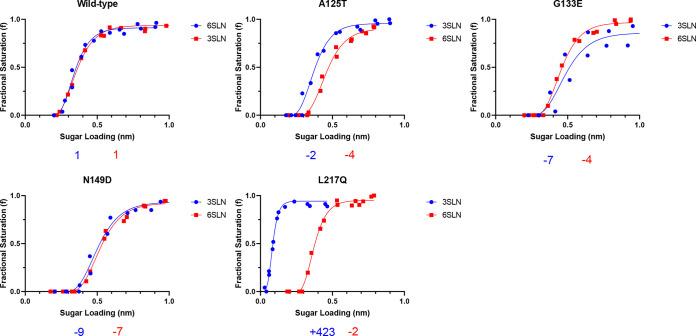
Since 2013, H7N9 avian influenza viruses (AIVs) have caused more than 1,500 human infections and the culling of millions of poultry. Despite large-scale poultry vaccination, H7N9 AIVs continue to circulate among poultry in China and pose a threat to human health. Previously, we isolated and generated four monoclonal antibodies (mAbs) derived from humans naturally infected with H7N9 AIV. Here, we investigated the hemagglutinin (HA) epitopes of H7N9 AIV targeted by these mAbs (L3A-44, K9B-122, L4A-14, and L4B-18) using immune escape studies. Our results revealed four key antigenic epitopes at HA amino acid positions 125, 133, 149, and 217. The mutant H7N9 viruses representing escape mutations containing an alanine-to-threonine substitution at residue 125 (A125T), a glycine-to-glutamic acid substitution at residue 133 (G133E), an asparagine-to-aspartic acid substitution at residue 149 (N149D), or a leucine-to-glutamine substitution at residue 217 (L217Q) showed reduced or completely abolished cross-reactivity with the mAbs, as measured by a hemagglutination inhibition (HI) assay. We further assessed the potential risk of these mutants to humans should they emerge following mAb treatment by measuring the impact of these HA mutations on virus fitness and evasion of host adaptive immunity. Here, we showed that the L4A-14 mAb had broad neutralizing capabilities, and its escape mutant N149D had reduced viral stability and human receptor binding and could be neutralized by both postinfection and antigen-induced sera. Therefore, the L4A-14 mAb could be a therapeutic candidate for H7N9 AIV infection in humans and warrants further investigation for therapeutic applications. Avian influenza virus (AIV) H7N9 continues to circulate and evolve in birds, posing a credible threat to humans. Antiviral drugs have proven useful for the treatment of severe influenza infections in humans; however, concerns have been raised as antiviral-resistant mutants have emerged. Monoclonal antibodies (mAbs) have been studied for both prophylactic and therapeutic applications in infectious disease control and have demonstrated great potential. For example, mAb treatment has significantly reduced the risk of people developing severe disease with severe acute respiratory syndrome coronavirus 2 (SARS-CoV-2) infection. In addition to the protection efficiency, we should also consider the potential risk of the escape mutants generated by mAb treatment to public health by assessing their viral fitness and potential to compromise host adaptive immunity. Considering these parameters, we assessed four human mAbs derived from humans naturally infected with H7N9 AIV and showed that the mAb L4A-14 displayed potential as a therapeutic candidate.
自 2013 年以来,H7N9 禽流感病毒(AIV)已导致超过 1500 人感染,并导致数百万家禽被扑杀。尽管进行了大规模的家禽疫苗接种,但 H7N9 AIV 仍在中国家禽中继续传播,对人类健康构成威胁。此前,我们从自然感染 H7N9 AIV 的人类中分离并产生了四种单克隆抗体(mAb)。在这里,我们通过免疫逃逸研究研究了这些 mAb(L3A-44、K9B-122、L4A-14 和 L4B-18)针对的血凝素(HA)表位。我们的研究结果揭示了 HA 氨基酸位置 125、133、149 和 217 处的四个关键抗原表位。代表逃逸突变的突变型 H7N9 病毒在残基 125 处含有丙氨酸到苏氨酸取代(A125T),在残基 133 处含有甘氨酸到谷氨酸取代(G133E),在残基 149 处含有天冬酰胺到天冬氨酸取代(N149D)或在残基 217 处含有亮氨酸到谷氨酰胺取代(L217Q),其与 mAb 的交叉反应性降低或完全丧失,这通过血凝抑制(HI)测定来衡量。我们进一步评估了这些突变体在 mAb 治疗后对人类出现的潜在风险,方法是测量这些 HA 突变对病毒适应性和逃避宿主适应性免疫的影响。在这里,我们表明 L4A-14 mAb 具有广泛的中和能力,其逃逸突变体 N149D 具有降低的病毒稳定性和人类受体结合能力,并且可以被感染后和抗原诱导的血清中和。因此,L4A-14 mAb 可能成为治疗人类 H7N9 AIV 感染的候选药物,值得进一步研究用于治疗应用。禽流感病毒(AIV)H7N9 继续在鸟类中传播和进化,对人类构成可信威胁。抗病毒药物已被证明对人类严重流感感染的治疗有用;然而,人们担心出现了抗病毒耐药突变体。单克隆抗体(mAb)已被研究用于传染病控制的预防和治疗应用,并显示出巨大的潜力。例如,mAb 治疗显著降低了严重急性呼吸系统综合征冠状病毒 2(SARS-CoV-2)感染患者发生严重疾病的风险。除了保护效率之外,我们还应该通过评估其病毒适应性和对宿主适应性免疫的潜在损害来考虑 mAb 治疗产生的逃逸突变对公共卫生的潜在风险。考虑到这些参数,我们评估了来自自然感染 H7N9 AIV 的人类的四种人源 mAb,并表明 mAb L4A-14 具有作为治疗候选药物的潜力。
 Zotero 插件