
使用绿色生物聚合物作为壁材通过喷雾干燥法对葡萄籽油中单不饱和脂肪酸和多不饱和脂肪酸的保护
Protection of Mono and Polyunsaturated Fatty Acids from Grapeseed Oil by Spray Drying Using Green Biopolymers as Wall Material.
作者信息
Sánchez-Osorno Diego Mauricio, Caicedo Paz Angie Vanesa, López-Jaramillo María Camila, Villa Aída Luz, Martínez-Galán Julián Paul
机构信息
Grupo de Investigación Alimentación y Nutrición Humana-GIANH, Escuela de Nutrición y Dietética, Universidad de Antioquia, Cl. 67, No 53-108, Medellín 050010, Colombia.
Grupo de Investigación e Innovación Ambiental GIIAM, Institución Universitaria Pascual Bravo, Cl. 73, No 73a-226, Medellín 050034, Colombia.
出版信息
Foods. 2022 Dec 7;11(24):3954. doi: 10.3390/foods11243954.
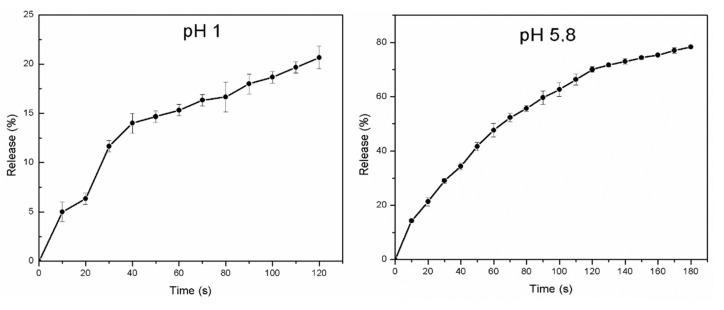
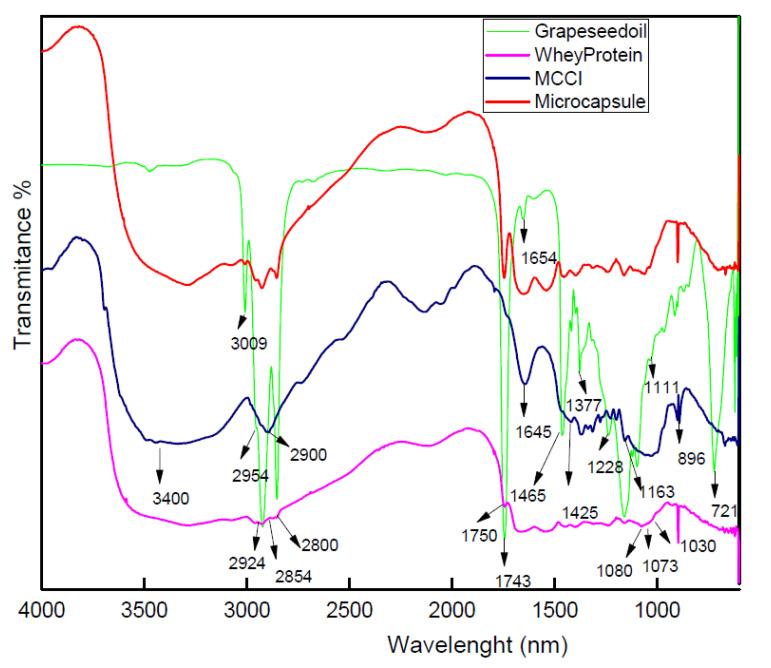
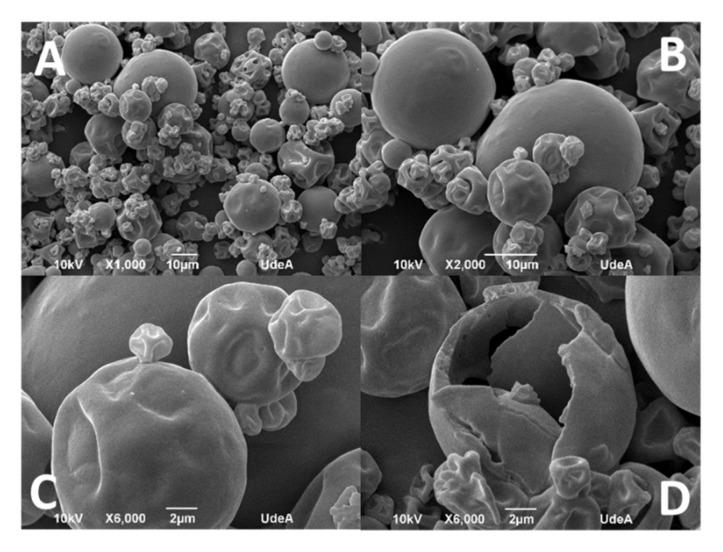
One of the most common ways to protect oils is microencapsulation, which includes the use of encapsulating agents. Due to the environmental problems facing humanity, this study seeks to combine green biopolymers (microcrystalline cellulose and whey protein isolate) that function as encapsulating agents for grapeseed oil. Grapeseed oil that is obtained from agro-industrial waste has shown health benefits, including cardioprotective, anticancer, antimicrobial, and anti-inflammatory properties. These health benefits have been mainly associated with monounsaturated (MUFA) and polyunsaturated (PUFA) fatty acids. In this sense, it has been observed that grapeseed oil can be easily modified by environmental factors such as oxygen, high temperatures, and light, showing the instability and easy degradation of grapeseed oil. In this study, grapeseed oil was encapsulated using the spray-drying technique to conserve its lipidic profile. Powder recovery of the grapeseed oil microcapsules ranged from 65% to 70%. The encapsulation efficiency of the microcapsules varied between 80% and 85%. The FTIR analysis showed chemical interactions that demonstrate chemisorption between the grapeseed oil and the encapsulating material, while the SEM micrographs showed a correct encapsulation in a spherical shape. Gas chromatography showed that the lipid profile of grapeseed oil is preserved thanks to microencapsulation. Release tests showed 80% desorption within the first three hours at pH 5.8. Overall, whey protein and microcrystalline cellulose could be used as a wall material to protect grapeseed oil with the potential application of controlled delivery of fatty acids microcapsules.
保护油脂最常见的方法之一是微胶囊化,这包括使用包囊剂。由于人类面临的环境问题,本研究旨在将绿色生物聚合物(微晶纤维素和乳清蛋白分离物)结合起来,用作葡萄籽油的包囊剂。从农业工业废料中获得的葡萄籽油已显示出对健康有益,包括具有心脏保护、抗癌、抗菌和抗炎特性。这些健康益处主要与单不饱和脂肪酸(MUFA)和多不饱和脂肪酸(PUFA)有关。从这个意义上说,已经观察到葡萄籽油很容易受到氧气、高温和光照等环境因素的影响而发生变化,这表明葡萄籽油具有不稳定性且容易降解。在本研究中,采用喷雾干燥技术对葡萄籽油进行微胶囊化处理,以保持其脂质特性。葡萄籽油微胶囊的粉末回收率在65%至70%之间。微胶囊的包封效率在80%至85%之间。傅里叶变换红外光谱(FTIR)分析显示了化学相互作用,证明了葡萄籽油与包囊材料之间的化学吸附,而扫描电子显微镜(SEM)显微照片显示形成了正确的球形包囊。气相色谱分析表明,由于微胶囊化,葡萄籽油的脂质特性得以保留。释放试验表明,在pH 5.8条件下,前三个小时内的解吸率为80%。总体而言,乳清蛋白和微晶纤维素可作为壁材来保护葡萄籽油,脂肪酸微胶囊在控释方面具有潜在应用价值。

 Zotero 插件