
植物性饮食与心血管疾病的血脂、脂蛋白和炎症生物标志物:观察性和干预性研究综述。
Plant-Based Diets and Lipid, Lipoprotein, and Inflammatory Biomarkers of Cardiovascular Disease: A Review of Observational and Interventional Studies.
机构信息
School of Public Health, Physiotherapy and Sports Science, University College Dublin, Belfield, 4 Dublin, Ireland.
Institute of Food and Health, School of Agriculture and Food Science, University College Dublin, Belfield, 4 Dublin, Ireland.
出版信息
Nutrients. 2022 Dec 17;14(24):5371. doi: 10.3390/nu14245371.
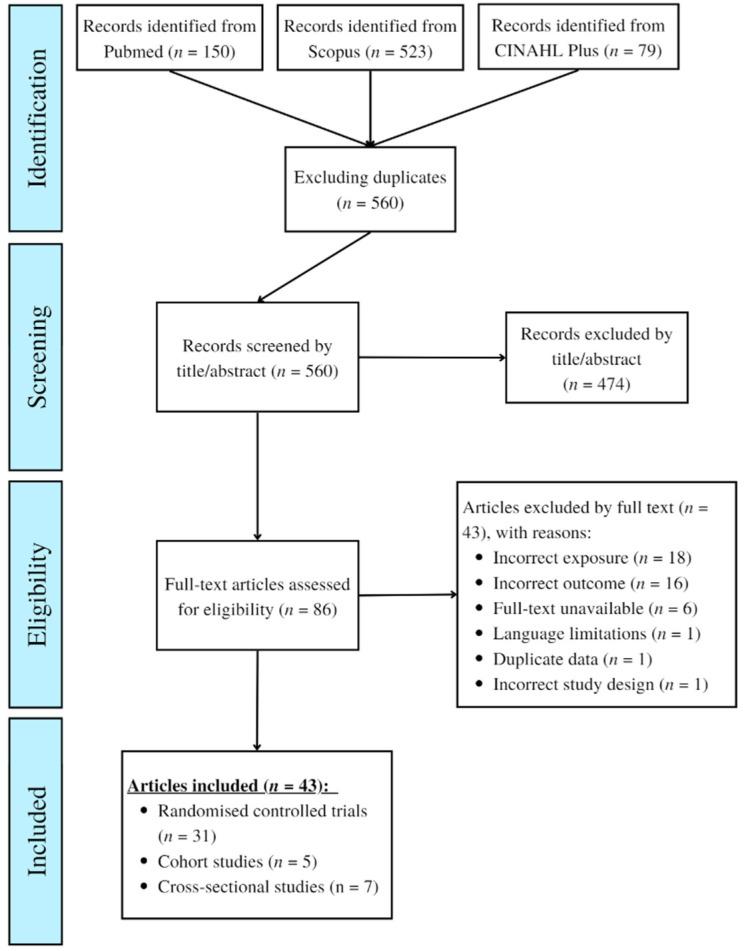
Plant-based diets (PBDs) are becoming increasingly popular. Thus far, the literature has focused on their association with lipid profiles, with less investigation of lipoprotein and inflammatory profiles. Because pro-atherogenic lipid, lipoprotein, and inflammatory processes may facilitate the development of atherosclerosis, understanding the relation between PBDs and these processes is important to inform risk mitigation strategies. Therefore, the objective of this paper was to review the literature on PBDs and lipid, lipoprotein, and inflammatory biomarkers of cardiovascular disease (CVD). A structured literature search was performed, retrieving 752 records, of which 43 articles were included. Plant-based diets generally associated with favourable lipid and lipoprotein profiles, characterised by decreased total cholesterol, low-density lipoprotein cholesterol, and apolipoprotein B concentrations, and less low-grade inflammation, characterised by decreased C-reactive protein concentrations. Effect sizes from PBD interventions were greatest compared to habitual dietary patterns, and for non-low-fat vegan and tightly controlled dietary interventions. Associations between PBD indices and the reviewed biomarkers were less consistent. Findings are discussed with reference to the literature on PBDs and PBD indices and CVD risk, the associations between specific plant food groups and CVD outcomes and the reviewed biomarker outcomes, and the potential mechanisms underpinning associations between PBDs and reduced CVD risk.
植物性饮食(PBD)正变得越来越流行。迄今为止,文献主要集中在它们与脂质谱的相关性上,而对脂蛋白和炎症谱的研究较少。由于促动脉粥样硬化的脂质、脂蛋白和炎症过程可能促进动脉粥样硬化的发展,因此了解 PBD 与这些过程之间的关系对于告知风险缓解策略非常重要。因此,本文的目的是回顾关于 PBD 与心血管疾病(CVD)的脂质、脂蛋白和炎症生物标志物的文献。进行了结构化文献检索,检索到 752 条记录,其中包括 43 篇文章。植物性饮食通常与有利的脂质和脂蛋白谱相关,其特征是总胆固醇、低密度脂蛋白胆固醇和载脂蛋白 B 浓度降低,低度炎症减少,C 反应蛋白浓度降低。与习惯性饮食模式相比,PBD 干预的效果大小最大,而非低脂纯素和严格控制的饮食干预也是如此。PBD 指数与所审查的生物标志物之间的关联不太一致。研究结果与关于 PBD 和 PBD 指数与 CVD 风险的文献、特定植物性食物组与 CVD 结果和所审查的生物标志物结果之间的关联以及 PBD 与降低 CVD 风险的潜在机制相关联进行了讨论。
 Zotero 插件