
生理和转录组分析揭示了番茄与(此处原文缺失信息)在早期相互作用过程中的防御网络。
Physiological and transcriptome profiling revealed defense networks during and tomato interaction at the early stage.
作者信息
Peng Rong, Sun Sheng, Li Na, Kong Lingjuan, Chen Zhifeng, Wang Peng, Xu Lurong, Wang Hehe, Geng Xueqing
机构信息
College of Horticulture, Shanxi Agricultural University, Jinzhong, Shanxi, China.
School of Agriculture and Biology, Shanghai Jiao Tong University, Shanghai, China.
出版信息
Front Plant Sci. 2022 Dec 6;13:1085395. doi: 10.3389/fpls.2022.1085395. eCollection 2022.
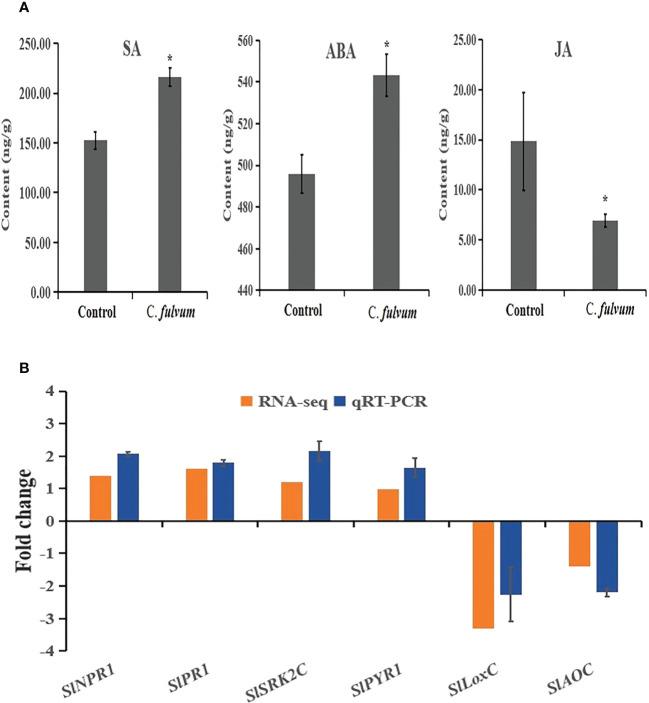
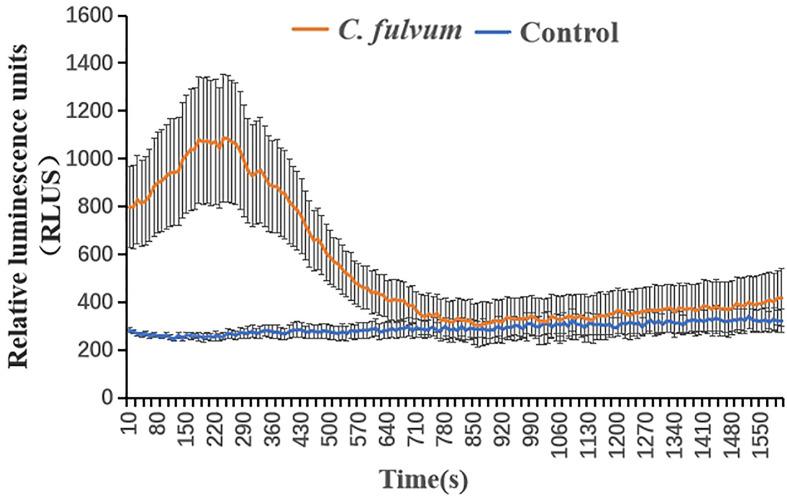
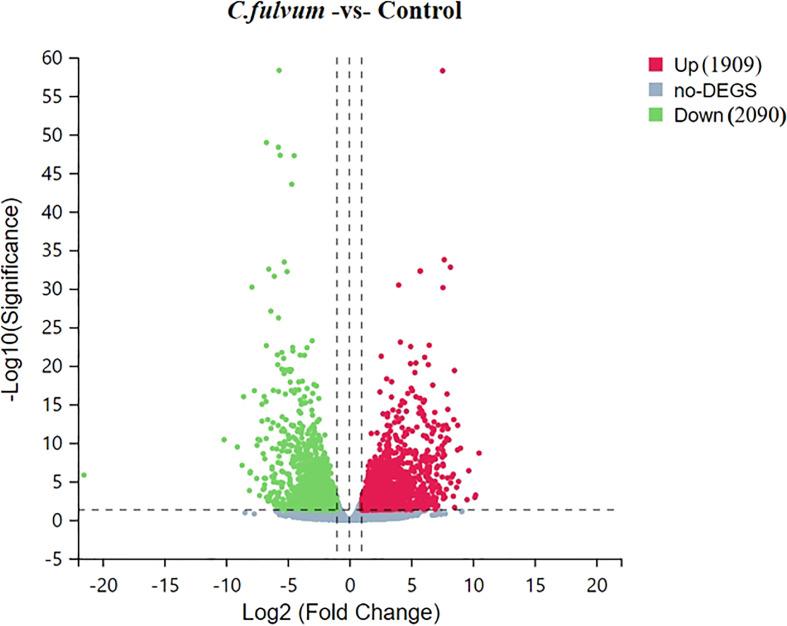
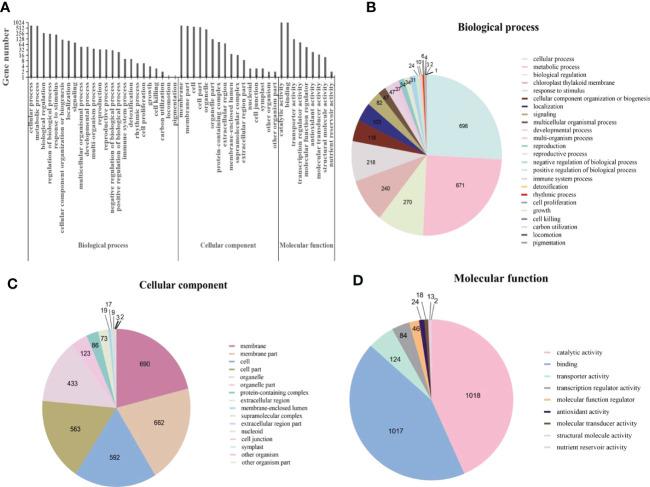
Tomato leaf mold caused by () is a serious fungal disease which results in huge yield losses in tomato cultivation worldwide. In our study, we discovered that ROS (reactive oxygen species) burst was triggered by treatment in tomato leaves. RNA-sequencing was used to identify differentially expressed genes (DEGs) induced by inoculation at the early stage of invasion in susceptible tomato plants. Gene ontology (GO) terms and Kyoto Encyclopedia of Genes and Genomes (KEGG) databases were used to annotate functions of DEGs in tomato plants. Based on our comparative analysis, DEGs related to plant-pathogen interaction pathway, plant hormone signal transduction pathway and the plant phenylpropanoid pathway were further analyzed. Our results discovered that a number of core defense genes against fungal invasion were induced and plant hormone signal transduction pathways were impacted by inoculation. Further, our results showed that SA (salicylic acid) and ABA (abscisic acid) contents were accumulated while JA (jasmonic acid) content decreased after inoculation in comparison with control, and quantitative real-time PCR to detect the relative expression of genes involved in SA, ABA and JA signaling pathway further confirmed our results. Together, results will contribute to understanding the mechanisms of and tomato interaction in future.
由()引起的番茄叶霉病是一种严重的真菌病害,在全球番茄种植中导致巨大的产量损失。在我们的研究中,我们发现番茄叶片经()处理会引发活性氧(ROS)爆发。在感病番茄植株侵染早期,利用RNA测序来鉴定由()接种诱导的差异表达基因(DEGs)。使用基因本体(GO)术语和京都基因与基因组百科全书(KEGG)数据库来注释番茄植株中DEGs的功能。基于我们的比较分析,进一步分析了与植物-病原体相互作用途径、植物激素信号转导途径和植物苯丙烷途径相关的DEGs。我们的结果发现,诱导了许多抗真菌侵染的核心防御基因,并且()接种影响了植物激素信号转导途径。此外,我们的结果表明,与对照相比,接种()后水杨酸(SA)和脱落酸(ABA)含量积累,而茉莉酸(JA)含量下降,并且通过定量实时PCR检测参与SA、ABA和JA信号通路的基因的相对表达进一步证实了我们的结果。总之,这些结果将有助于未来理解()与番茄相互作用的机制。

 Zotero 插件