
蒙古国宫颈癌筛查中自我采样方法印象的结果。
Results of Self-Sampling Methodology Impression for Cervical Cancer Screening in Mongolia.
机构信息
Mongolian National University of Medical Sciences, Mongolia.
National Center for Pathology, Mongolia.
出版信息
Asian Pac J Cancer Prev. 2022 Dec 1;23(12):4099-4107. doi: 10.31557/APJCP.2022.23.12.4099.
OBJECTIVE
Mongolia is a sparsely populated country; however, almost fifty percent of the population lives in the capital city. Medical care services and exceptionally well-organized cervical cancer screening tests are limited in remote areas. To improve cervical cancer screening test coverage, we compared the interest between physicians taking samples and self-sampling among the attendees in this study.
METHODS
A total of 175 women participated in this study. The hundred twelve women visited the Gynecology ward, and the sixty-three women were provided with the cervical self-sampling test kit and filled out a questionnaire. Subsequently, the acceptability of physician taking and self-sampling were evaluated using a questionnaire. All specimens were processed using the TACAS LBC system, and the quality of samples was tested by cytology.
RESULTS
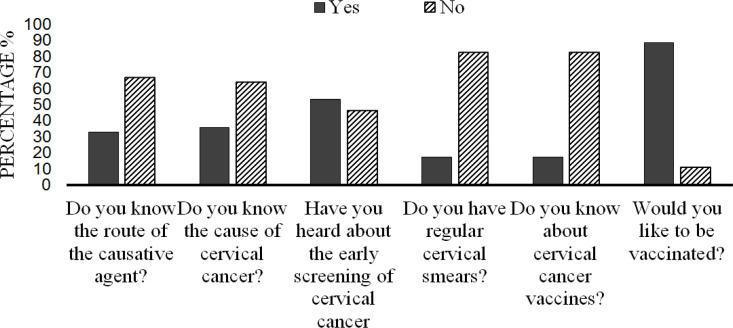
Regarding the acceptability of self-sampling, the selections for subsequent screening were 36% self-sampling and 64% gynecologist-sampling methods. The acceptability rates were higher in the remote areas than the urban areas. However, 64% of the participants lacked knowledge that the causative agent of cervical cancer is the human papillomavirus, and 66.9% mainly were sexually transmitted. In addition, 82.3% of the women surveyed were unaware that there was a vaccine to prevent cervical cancer, but 88.6% wanted to be vaccinated. Of most women, 44.4% chose self-sampling due to no embarrassment in the gynecological examination. The self-sampling preferences were dominant in the old age group (61.6%). The cytology satisfaction rate in physician-sampling (99.1%) was higher than in the self-sampling group (69.8%).
CONCLUSION
The Implementation of the self-sampling tool may be considered a primary screening. The self-sampling test can adopt into the early screening program and may increase the coverage of the screening program and improve the quality.
目的
蒙古是一个人口稀少的国家,但近一半的人口居住在首都。医疗服务和组织良好的宫颈癌筛查在偏远地区非常有限。为了提高宫颈癌筛查的覆盖率,我们比较了在这项研究中参加者的医生取样和自我取样之间的兴趣。
方法
共有 175 名女性参加了这项研究。其中 112 名女性访问了妇科病房,63 名女性提供了宫颈自我采样试剂盒并填写了问卷。随后,通过问卷评估了医生取样和自我取样的可接受性。所有标本均使用 TACAS LBC 系统处理,并通过细胞学检测样本质量。
结果
关于自我采样的可接受性,随后筛查的选择是 36%的自我采样和 64%的妇科医生采样方法。偏远地区的可接受率高于城市地区。然而,64%的参与者不知道宫颈癌的病原体是人乳头瘤病毒,并且 66.9%主要是性传播的。此外,82.3%的被调查妇女不知道有一种预防宫颈癌的疫苗,但 88.6%的人希望接种疫苗。大多数女性中,由于在妇科检查中没有尴尬感,44.4%选择自我采样。自我采样的偏好主要在老年组(61.6%)中占主导地位。医生采样的细胞学满意度(99.1%)高于自我采样组(69.8%)。
结论
可以考虑使用自我采样工具作为初步筛查。自我采样测试可以纳入早期筛查计划,并可能提高筛查计划的覆盖率并提高质量。


 Zotero 插件