
通过表面介导的颗粒摄取,用于将 siRNA 递送至上皮细胞的局部递呈的层状 siRNA 颗粒组装体。
Layer-by-Layer siRNA Particle Assemblies for Localized Delivery of siRNA to Epithelial Cells through Surface-Mediated Particle Uptake.
机构信息
Adolphe Merkle Institute, University of Fribourg, Chemin des Verdiers 4, 1700 Fribourg, Switzerland.
International Iberian Nanotechnology Laboratory, Water Quality Group, Avenue Mestre Jose Veiga s/n, 4715-330 Braga, Portugal.
出版信息
ACS Appl Bio Mater. 2023 Jan 16;6(1):83-92. doi: 10.1021/acsabm.2c00668. Epub 2023 Jan 4.
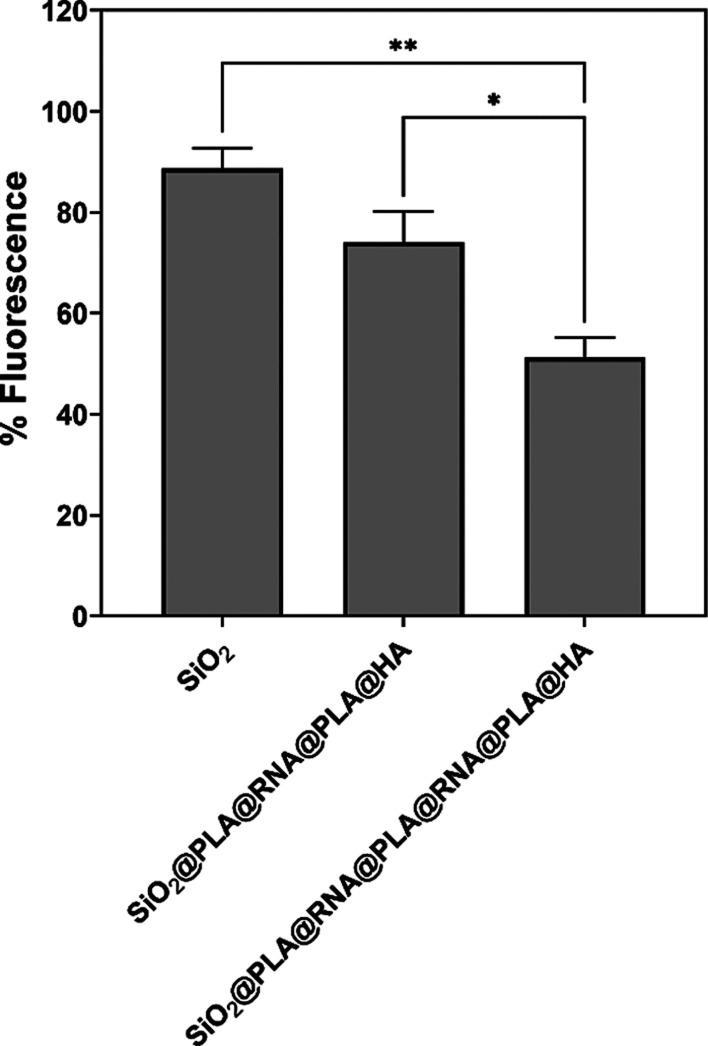
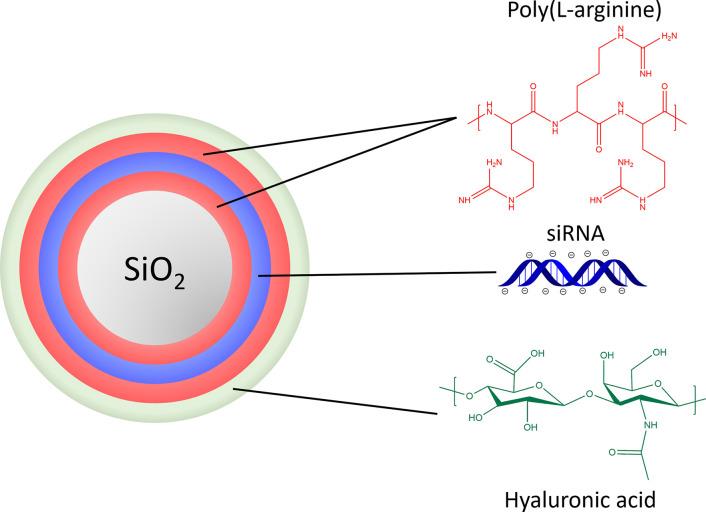
Localized delivery of small interfering RNA (siRNA) is a promising approach for spatial control of cell responses at biomaterial interfaces. Layer-by-layer (LbL) assembly of siRNA with cationic polyelectrolytes has been used in film and nanoparticle vectors for transfection. Herein, we combine the ability of particles to efficiently deliver siRNA with the ability of film polyelectrolyte multilayers to act locally. LbL particles were prepared with alternating layers of poly(l-arginine) and siRNA and capped with hyaluronic acid. Negatively charged LbL particles were subsequently assembled on the poly(l-lysine)-functionalized substrate to form a LbL particle-decorated surface. Cells grown in contact with the particle-decorated surface were able to survive, internalize particles, and undergo gene silencing. This work shows that particle-decorated surfaces can be engineered by using electrostatic interactions and used to deliver therapeutic payloads for cell-instructive biointerfaces.
局部递送小干扰 RNA(siRNA)是一种很有前途的方法,可以在生物材料界面处对细胞反应进行空间控制。带正电荷的聚电解质与 siRNA 的层层(LbL)组装已被用于薄膜和纳米颗粒载体中的转染。在此,我们将颗粒有效递送 siRNA 的能力与薄膜聚电解质多层的局部作用能力结合起来。LbL 颗粒是通过交替的聚(L-精氨酸)和 siRNA 层制备的,并以透明质酸封端。随后,将带负电荷的 LbL 颗粒组装到聚(L-赖氨酸)功能化的基底上,形成 LbL 颗粒修饰的表面。与颗粒修饰的表面接触的细胞能够存活、内化颗粒并进行基因沉默。这项工作表明,可以通过静电相互作用来设计颗粒修饰的表面,并将其用于递送治疗性有效载荷,以构建具有细胞指令功能的生物界面。



 Zotero 插件