
用于生物医学的逐层纳米颗粒组装:机制、技术及通过声流体技术取得的进展
Layer-by-Layer Nanoparticle Assembly for Biomedicine: Mechanisms, Technologies, and Advancement via Acoustofluidics.
作者信息
Rowland Seth, Aghakhani Amirreza, Whalley Richard D, Ferreira Ana Marina, Kotov Nicholas, Gentile Piergiorgio
机构信息
School of Engineering, Newcastle University, Newcastle-upon-Tyne NE1 7RU, United Kingdom.
Institute for Biomaterials and Biomolecular Systems, University of Stuttgart, 70569 Stuttgart, Germany.
出版信息
ACS Appl Nano Mater. 2024 Jul 16;7(14):15874-15902. doi: 10.1021/acsanm.4c02463. eCollection 2024 Jul 26.
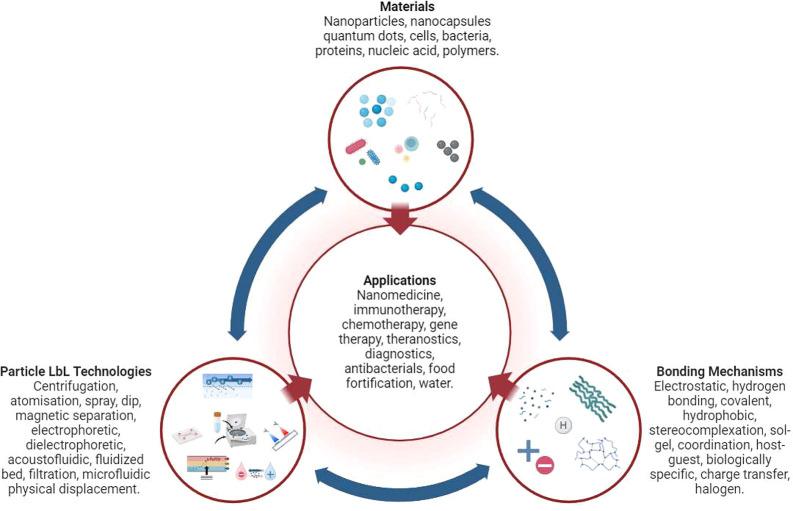
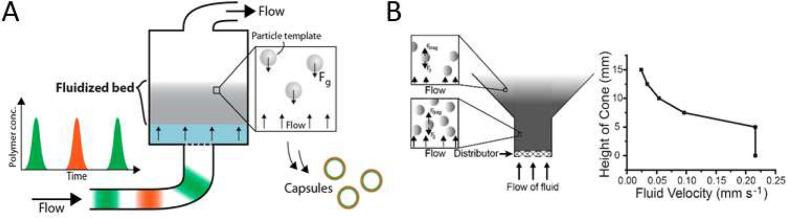
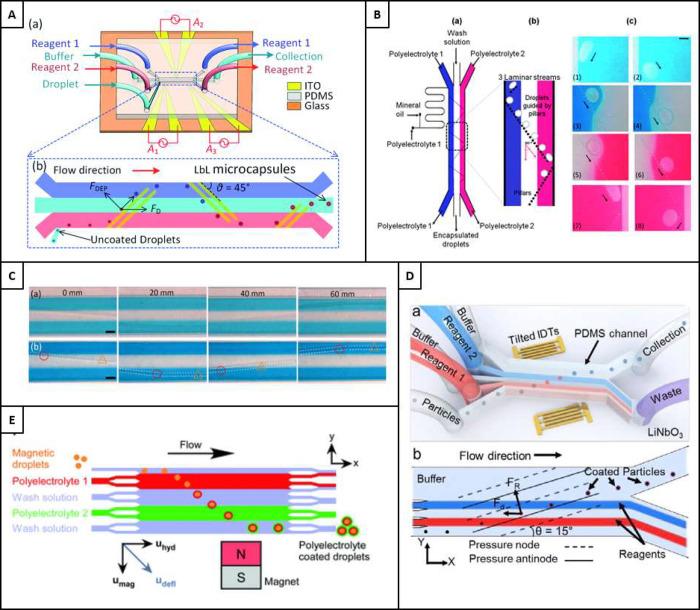
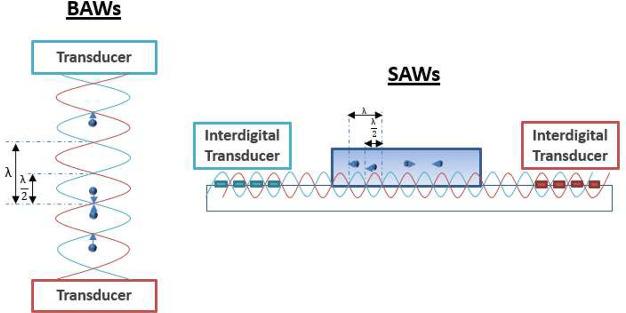
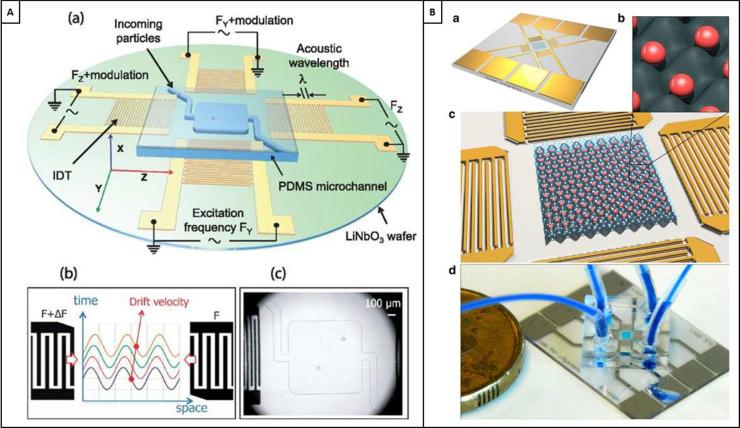
The deposition of thin films plays a crucial role in surface engineering, tailoring structural modifications, and functionalization across diverse applications. Layer-by-layer self-assembly, a prominent thin-film deposition method, has witnessed substantial growth since its mid-20th-century inception, driven by the discovery of eligible materials and innovative assembly technologies. Of these materials, micro- and nanoscopic substrates have received far less interest than their macroscopic counterparts; however, this is changing. The catalogue of eligible materials, including nanoparticles, quantum dots, polymers, proteins, cells and liposomes, along with some well-established layer-by-layer technologies, have combined to unlock impactful applications in biomedicine, as well as other areas like food fortification, and water remediation. To access these fields, several well-established technologies have been used, including tangential flow filtration, fluidized bed, atomization, electrophoretic assembly, and dielectrophoresis. Despite the invention of these technologies, the field of particle layer-by-layer still requires further technological development to achieve a high-yield, automatable, and industrially ready process, a requirement for the diverse, reactionary field of biomedicine and high-throughput pharmaceutical industry. This review provides a background on layer-by-layer, focusing on how its constituent building blocks and bonding mechanisms enable unmatched versatility. The discussion then extends to established and recent technologies employed for coating micro- and nanoscopic matter, evaluating their drawbacks and advantages, and highlighting promising areas in microfluidic approaches, where one distinctly auspicious technology emerges, acoustofluidics. The review also explores the potential and demonstrated application of acoustofluidics in layer-by-layer technology, as well as analyzing existing acoustofluidic technologies beyond LbL coating in areas such as cell trapping, cell sorting, and multidimensional particle manipulation. Finally, the review concludes with future perspectives on layer-by-layer nanoparticle coating and the potential impact of integrating acoustofluidic methods.
薄膜沉积在表面工程、定制结构改性以及各种应用的功能化方面发挥着关键作用。层层自组装作为一种重要的薄膜沉积方法,自20世纪中叶问世以来,由于合格材料的发现和创新的组装技术而得到了显著发展。在这些材料中,微观和纳米级基板受到的关注远少于其宏观对应物;然而,这种情况正在改变。合格材料的目录,包括纳米颗粒、量子点、聚合物、蛋白质、细胞和脂质体,以及一些成熟的层层技术,共同开启了在生物医学以及食品强化和水修复等其他领域的有影响力的应用。为了进入这些领域,人们使用了几种成熟的技术,包括切向流过滤、流化床、雾化、电泳组装和介电电泳。尽管有这些技术的发明,但颗粒层层领域仍需要进一步的技术发展,以实现高产率、自动化和工业就绪的工艺,这是生物医学和高通量制药行业这个多样化、反应迅速的领域所需要的。本综述提供了关于层层组装的背景知识,重点关注其组成构建块和键合机制如何实现无与伦比的多功能性。然后讨论扩展到用于涂覆微观和纳米级物质的现有和最新技术,评估它们的缺点和优点,并突出微流体方法中有前景的领域,其中一种特别有前途的技术——声流体ics出现了。该综述还探讨了声流体ics在层层技术中的潜力和已证明的应用,并分析了除层层涂层之外的现有声流体ic技术在细胞捕获、细胞分选和多维颗粒操纵等领域的应用。最后,该综述以关于层层纳米颗粒涂层的未来展望以及整合声流体ic方法的潜在影响作为结论。






 Zotero 插件