
高通量策略在基于铋的光催化剂的设计、发现和分析中的应用。
High-Throughput Strategies for the Design, Discovery, and Analysis of Bismuth-Based Photocatalysts.
机构信息
School of Mechanical Engineering, Yeungnam University, Gyeongsan 38541, Republic of Korea.
Department of Physics, School of Applied Sciences, REVA University, Bangalore 560064, India.
出版信息
Int J Mol Sci. 2022 Dec 30;24(1):663. doi: 10.3390/ijms24010663.
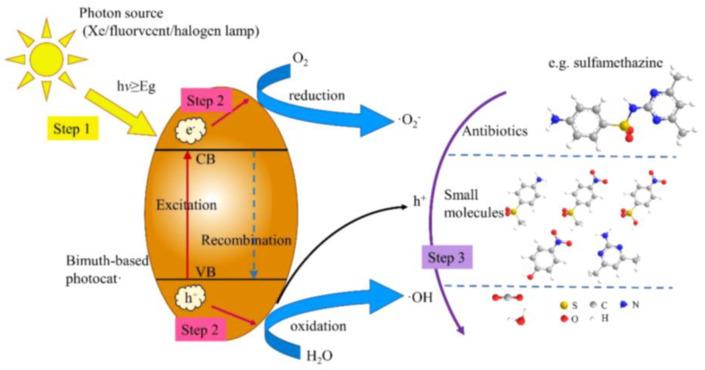
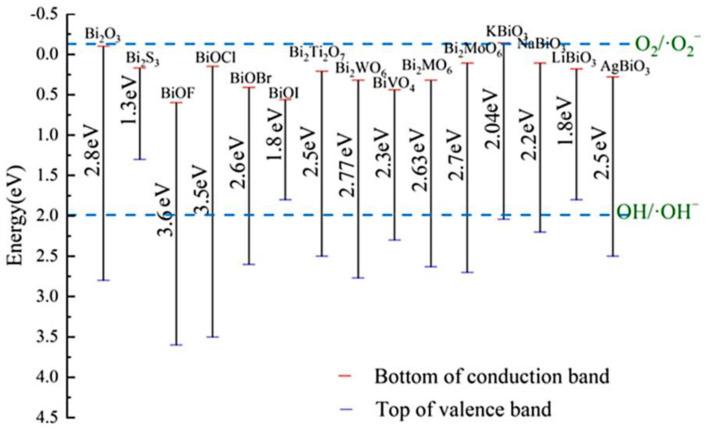
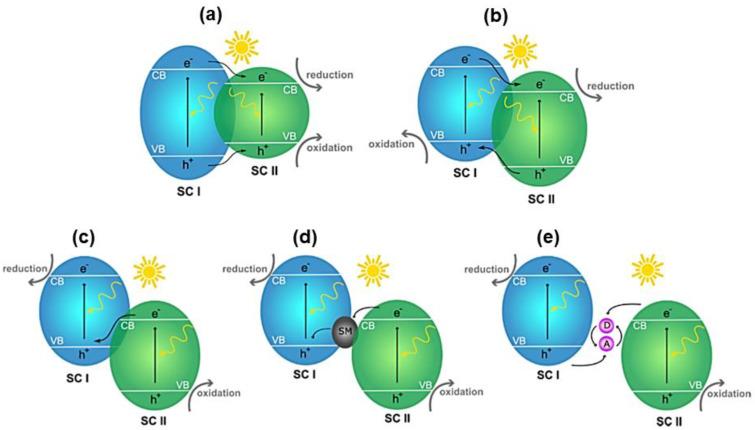
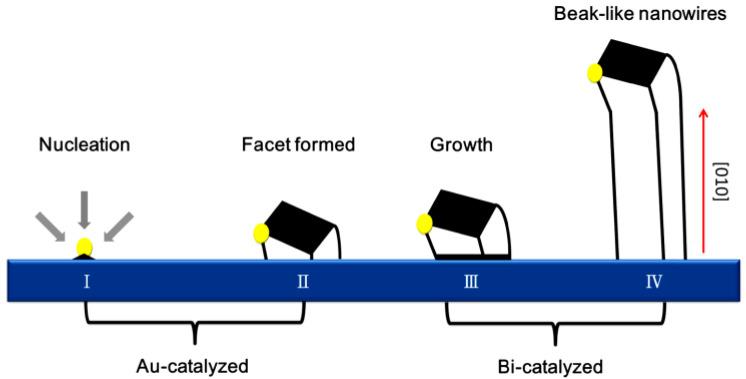
Bismuth-based nanostructures (BBNs) have attracted extensive research attention due to their tremendous development in the fields of photocatalysis and electro-catalysis. BBNs are considered potential photocatalysts because of their easily tuned electronic properties by changing their chemical composition, surface morphology, crystal structure, and band energies. However, their photocatalytic performance is not satisfactory yet, which limits their use in practical applications. To date, the charge carrier behavior of surface-engineered bismuth-based nanostructured photocatalysts has been under study to harness abundant solar energy for pollutant degradation and water splitting. Therefore, in this review, photocatalytic concepts and surface engineering for improving charge transport and the separation of available photocatalysts are first introduced. Afterward, the different strategies mainly implemented for the improvement of the photocatalytic activity are considered, including different synthetic approaches, the engineering of nanostructures, the influence of phase structure, and the active species produced from heterojunctions. Photocatalytic enhancement via the surface plasmon resonance effect is also examined and the photocatalytic performance of the bismuth-based photocatalytic mechanism is elucidated and discussed in detail, considering the different semiconductor junctions. Based on recent reports, current challenges and future directions for designing and developing bismuth-based nanostructured photocatalysts for enhanced photoactivity and stability are summarized.
基于铋的纳米结构(BBNs)由于在光催化和电催化领域的巨大发展而引起了广泛的研究关注。BBNs 被认为是潜在的光催化剂,因为通过改变其化学成分、表面形态、晶体结构和能带能量,可以轻松调整其电子特性。然而,它们的光催化性能还不尽如人意,这限制了它们在实际应用中的使用。迄今为止,已经研究了表面工程铋基纳米结构光催化剂的载流子行为,以利用丰富的太阳能来降解污染物和分解水。因此,在这篇综述中,首先介绍了改善电荷输运和分离可用光催化剂的光催化概念和表面工程。随后,考虑了为提高光催化活性而实施的不同策略,包括不同的合成方法、纳米结构的工程、相结构的影响以及异质结产生的活性物质。还研究了表面等离子体共振效应的光催化增强,并详细阐明和讨论了基于铋的光催化机制的光催化性能,考虑了不同的半导体结。根据最近的报告,总结了设计和开发用于增强光活性和稳定性的基于铋的纳米结构光催化剂的当前挑战和未来方向。







 Zotero 插件