
溶瘤病毒疗法与其他癌症免疫治疗方法的联合应用:一种强大的功能化策略。
Combining of Oncolytic Virotherapy and Other Immunotherapeutic Approaches in Cancer: A Powerful Functionalization Tactic.
作者信息
Zou Hai, Mou Xiao-Zhou, Zhu Biao
机构信息
Department of Critical Care Fudan University Shanghai Cancer Center Shanghai 200032 China.
Department of Oncology Shanghai Medical College Fudan University Shanghai 200032 China.
出版信息
Glob Chall. 2022 Oct 20;7(1):2200094. doi: 10.1002/gch2.202200094. eCollection 2023 Jan.
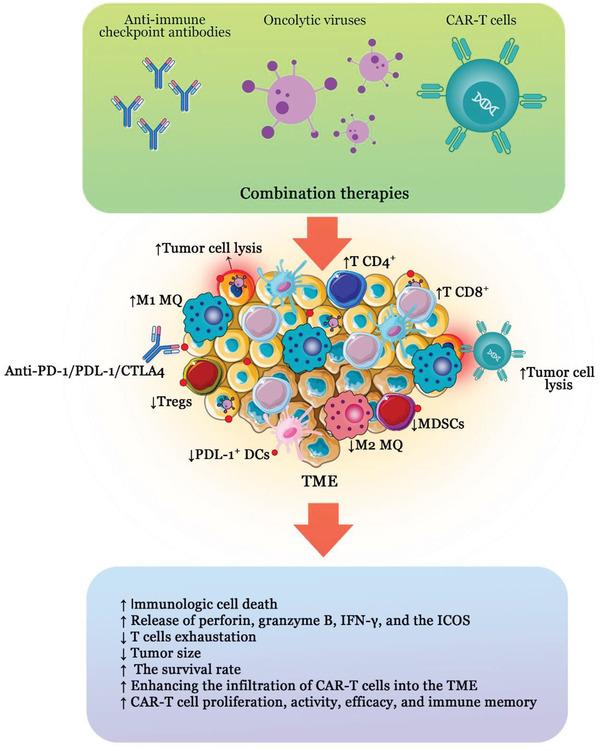
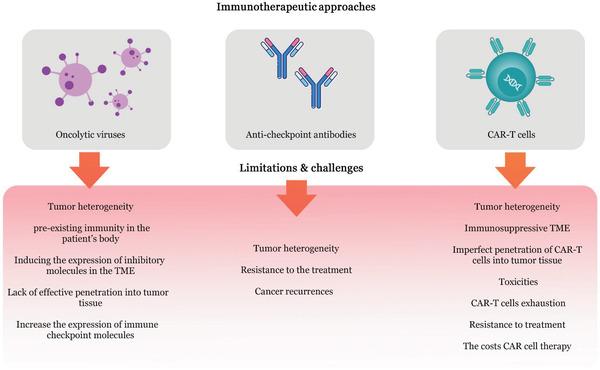
Oncolytic viruses have found a good place in the treatment of cancer. Administering oncolytic viruses directly or by applying genetic changes can be effective in cancer treatment through the lysis of tumor cells and, in some cases, by inducing immune system responses. Moreover, oncolytic viruses induce antitumor immune responses via releasing tumor antigens in the tumor microenvironment (TME) and affect tumor cell growth and metabolism. Despite the success of virotherapy in cancer therapies, there are several challenges and limitations, such as immunosuppressive TME, lack of effective penetration into tumor tissue, low efficiency in hypoxia, antiviral immune responses, and off-targeting. Evidence suggests that oncolytic viruses combined with cancer immunotherapy-based methods such as immune checkpoint inhibitors and adoptive cell therapies can effectively overcome these challenges. This review summarizes the latest data on the use of oncolytic viruses for the treatment of cancer and the challenges of this method. Additionally, the effectiveness of mono, dual, and triple therapies using oncolytic viruses and other anticancer agents has been discussed based on the latest findings.
溶瘤病毒在癌症治疗中已占据一席之地。直接施用溶瘤病毒或通过基因改造来施用溶瘤病毒,可通过裂解肿瘤细胞,在某些情况下还可通过诱导免疫系统反应,从而有效治疗癌症。此外,溶瘤病毒通过在肿瘤微环境(TME)中释放肿瘤抗原诱导抗肿瘤免疫反应,并影响肿瘤细胞的生长和代谢。尽管病毒疗法在癌症治疗中取得了成功,但仍存在一些挑战和局限性,如免疫抑制性TME、缺乏对肿瘤组织的有效渗透、在缺氧环境中效率低下、抗病毒免疫反应以及脱靶效应。有证据表明,溶瘤病毒与基于癌症免疫疗法的方法(如免疫检查点抑制剂和过继性细胞疗法)相结合,可有效克服这些挑战。本综述总结了关于使用溶瘤病毒治疗癌症的最新数据以及该方法面临的挑战。此外,还根据最新研究结果讨论了使用溶瘤病毒和其他抗癌药物的单一、双重和三联疗法的有效性。
 Zotero 插件