
溶瘤病毒在 CAR-T 细胞治疗实体瘤中的可靠佐剂作用。
Oncolytic Viruses as Reliable Adjuvants in CAR-T Cell Therapy for Solid Tumors.
机构信息
Faculty of Medicine, Carol Davila University of Medicine and Pharmacy, 020021 Bucharest, Romania.
Genomics Research and Development Institute, 020021 Bucharest, Romania.
出版信息
Int J Mol Sci. 2024 Oct 16;25(20):11127. doi: 10.3390/ijms252011127.
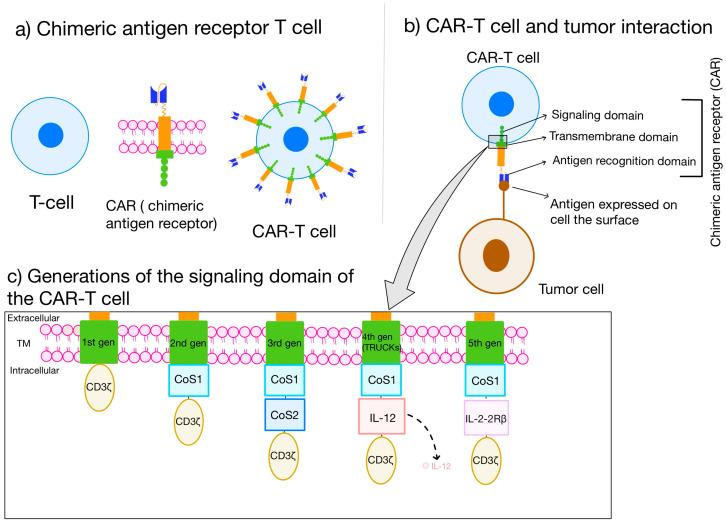
Although impactful scientific advancements have recently been made in cancer therapy, there remains an opportunity for future improvements. Immunotherapy is perhaps one of the most cutting-edge categories of therapies demonstrating potential in the clinical setting. Genetically engineered T cells express chimeric antigen receptors (CARs), which can detect signals expressed by the molecules present on the surface of cancer cells, also called tumor-associated antigens (TAAs). Their effectiveness has been extensively demonstrated in hematological cancers; therefore, these results can establish the groundwork for their applications on a wide range of requirements. However, the application of CAR-T cell technology for solid tumors has several challenges, such as the existence of an immune-suppressing tumor microenvironment and/or inadequate tumor infiltration. Consequently, combining therapies such as CAR-T cell technology with other approaches has been proposed. The effectiveness of combining CAR-T cell with oncolytic virus therapy, with either genetically altered or naturally occurring viruses, to target tumor cells is currently under investigation, with several clinical trials being conducted. This narrative review summarizes the current advancements, opportunities, benefits, and limitations in using each therapy alone and their combination. The use of oncolytic viruses offers an opportunity to address the existing challenges of CAR-T cell therapy, which appear in the process of trying to overcome solid tumors, through the combination of their strengths. Additionally, utilizing oncolytic viruses allows researchers to modify the virus, thus enabling the targeted delivery of specific therapeutic agents within the tumor environment. This, in turn, can potentially enhance the cytotoxic effect and therapeutic potential of CAR-T cell technology on solid malignancies, with impactful results in the clinical setting.
尽管癌症治疗领域最近取得了重大的科学进展,但仍有进一步改进的空间。免疫疗法可能是最先进的治疗类别之一,在临床环境中显示出潜力。基因工程 T 细胞表达嵌合抗原受体(CAR),可以检测癌细胞表面分子表达的信号,这些分子也称为肿瘤相关抗原(TAA)。它们在血液癌症中的有效性已得到广泛证实;因此,这些结果可以为它们在广泛需求中的应用奠定基础。然而,CAR-T 细胞技术在实体瘤中的应用存在一些挑战,例如存在免疫抑制的肿瘤微环境和/或肿瘤浸润不足。因此,已经提出了将 CAR-T 细胞技术与其他方法相结合的治疗方法。目前正在研究将 CAR-T 细胞与溶瘤病毒治疗(包括基因改造或天然存在的病毒)相结合靶向肿瘤细胞的有效性,正在进行多项临床试验。本综述总结了每种疗法单独使用及其联合使用的最新进展、机会、益处和局限性。溶瘤病毒的使用为解决 CAR-T 细胞治疗中存在的挑战提供了机会,这些挑战出现在克服实体瘤的过程中,通过结合它们的优势来解决。此外,利用溶瘤病毒可以使研究人员对病毒进行修饰,从而能够在肿瘤环境中靶向递送特定的治疗剂。这反过来又可以潜在地增强 CAR-T 细胞技术对实体恶性肿瘤的细胞毒性作用和治疗潜力,并在临床环境中产生有影响力的结果。


 Zotero 插件