
深度生成模型的应用产生了针对微生物抗性的新型多样功能肽。
Application of a deep generative model produces novel and diverse functional peptides against microbial resistance.
作者信息
Mao Jiashun, Guan Shenghui, Chen Yongqing, Zeb Amir, Sun Qingxiang, Lu Ranlan, Dong Jie, Wang Jianmin, Cao Dongsheng
机构信息
The Interdisciplinary Graduate Program in Integrative Biotechnology and Translational Medicine, Yonsei University, Incheon 21983, the Republic of Korea.
Department of Biology, School of Life Sciences, Southern University of Science and Technology, Shenzhen 518055, Guangdong, China.
出版信息
Comput Struct Biotechnol J. 2022 Dec 19;21:463-471. doi: 10.1016/j.csbj.2022.12.029. eCollection 2023.
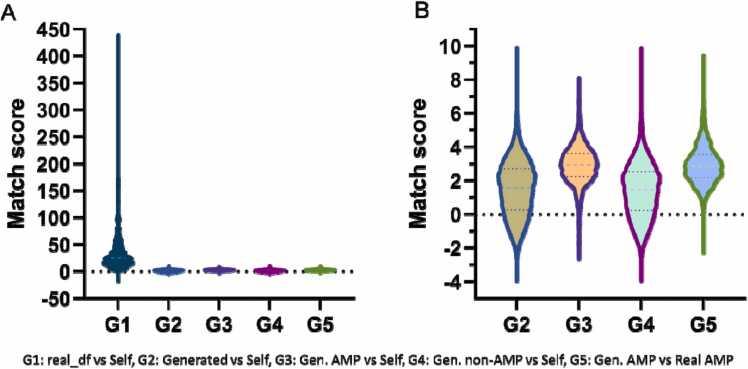
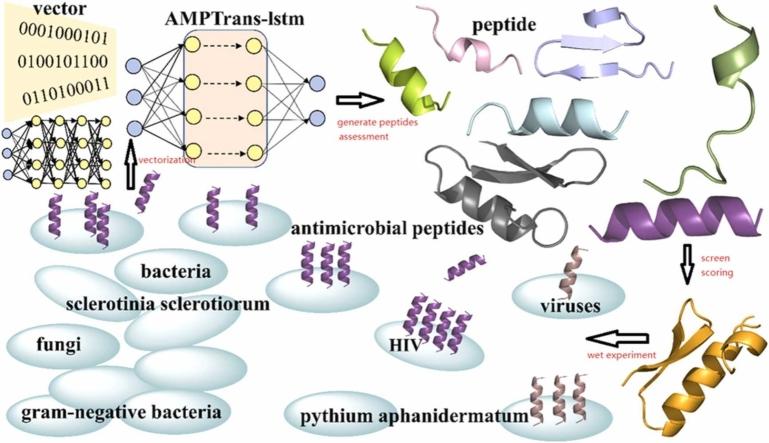
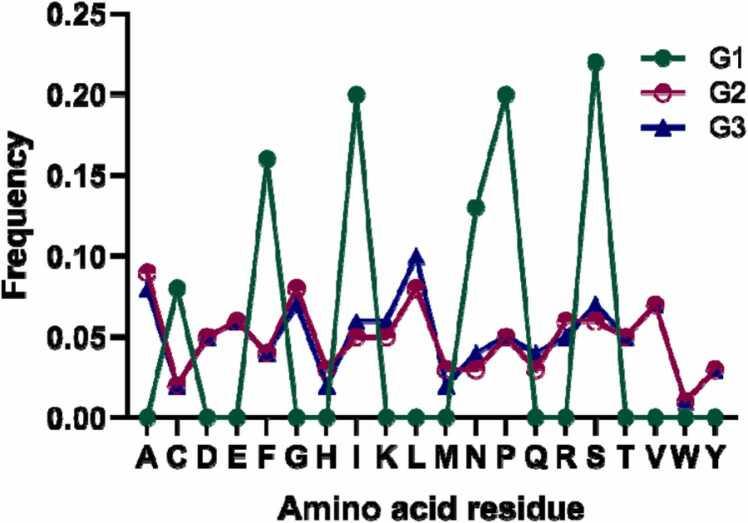
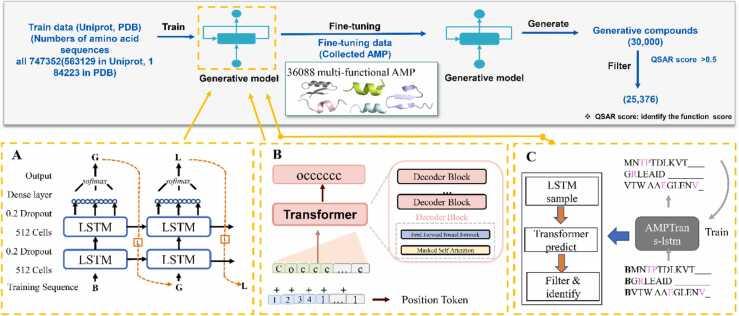
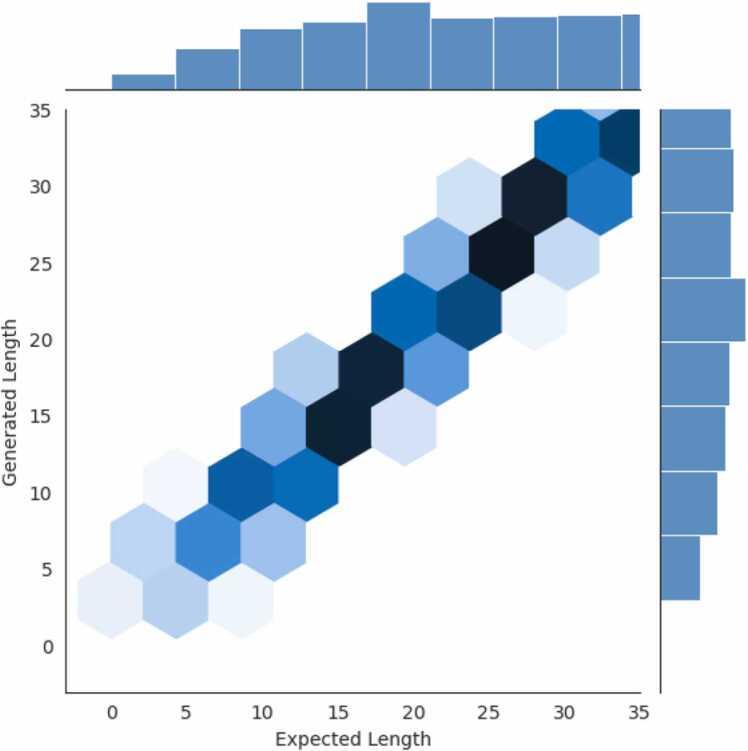
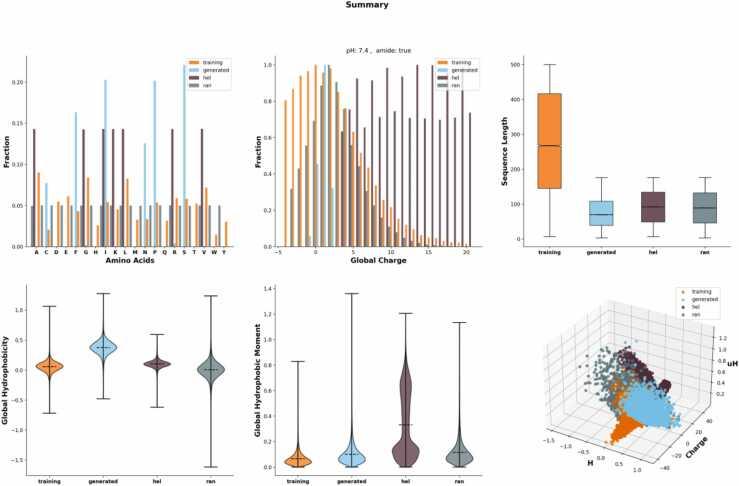
Antimicrobial resistance could threaten millions of lives in the immediate future. Antimicrobial peptides (AMPs) are an alternative to conventional antibiotics practice against infectious diseases. Despite the potential contribution of AMPs to the antibiotic's world, their development and optimization have encountered serious challenges. Cutting-edge methods with novel and improved selectivity toward resistant targets must be established to create AMPs-driven treatments. Here, we present AMPTrans-lstm, a deep generative network-based approach for the rational design of AMPs. The AMPTrans-lstm pipeline involves pre-training, transfer learning, and module identification. The AMPTrans-lstm model has two sub-models, namely, (long short-term memory) LSTM sampler and Transformer converter, which can be connected in series to make full use of the stability of LSTM and the novelty of Transformer model. These elements could generate AMPs candidates, which can then be tailored for specific applications. By analyzing the generated sequence and trained AMPs, we prove that AMPTrans-lstm can expand the design space of the trained AMPs and produce reasonable and brand-new AMPs sequences. AMPTrans-lstm can generate functional peptides for antimicrobial resistance with good novelty and diversity, so it is an efficient AMPs design tool.
抗菌耐药性可能在不久的将来威胁数百万人的生命。抗菌肽(AMPs)是对抗传染病的传统抗生素疗法的一种替代方法。尽管抗菌肽对抗生素领域有潜在贡献,但其开发和优化仍面临严峻挑战。必须建立对耐药靶点具有新颖性和更高选择性的前沿方法,以创造由抗菌肽驱动的治疗方法。在此,我们提出了AMPTrans-lstm,一种基于深度生成网络的抗菌肽合理设计方法。AMPTrans-lstm流程包括预训练、迁移学习和模块识别。AMPTrans-lstm模型有两个子模型,即长短期记忆(LSTM)采样器和Transformer转换器,它们可以串联连接,以充分利用LSTM的稳定性和Transformer模型的新颖性。这些元素可以生成抗菌肽候选物,然后针对特定应用进行定制。通过分析生成的序列和经过训练的抗菌肽,我们证明AMPTrans-lstm可以扩展经过训练的抗菌肽的设计空间,并产生合理且全新的抗菌肽序列。AMPTrans-lstm可以生成具有良好新颖性和多样性的抗抗菌耐药性功能肽,因此它是一种高效的抗菌肽设计工具。

 Zotero 插件