
系统评价和荟萃分析 ACEI/ARB 在东亚 COVID-19 患者中的临床结局。
Systematic review and meta-analysis of the clinical outcomes of ACEI/ARB in East-Asian patients with COVID-19.
机构信息
Department of Cardiology, Affiliated Hangzhou First People's Hospital, Zhejiang University School of Medicine, Hangzhou, China.
Research Division, Institute of Mental Health, Singapore, Singapore.
出版信息
PLoS One. 2023 Jan 12;18(1):e0280280. doi: 10.1371/journal.pone.0280280. eCollection 2023.
BACKGROUND
SARS-CoV-2 invades human cells and leads to COVID-19 by direct associating with angiotensin converting enzyme 2 (ACE2) receptors, the level of which may be increased by treatment with angiotensin-converting enzyme inhibitors (ACEIs) and/or angiotensin receptor blockers (ARBs). This meta-analysis aimed to explore the impact of ACEI/ARB treatment on the clinical outcomes of patients with COVID-19 infections among population in the East-Asia region.
METHODS
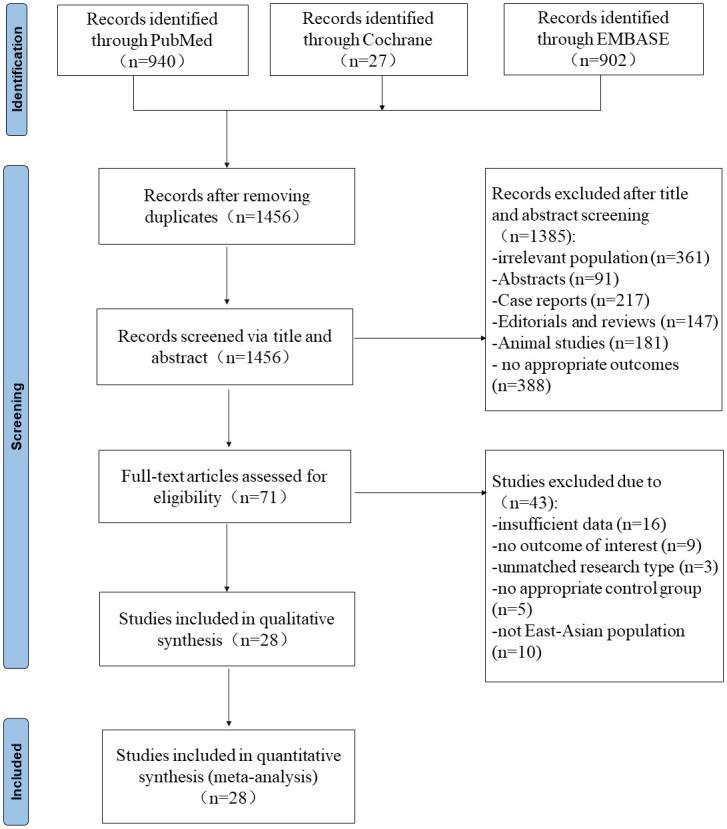
We collected clinical data published from January 2000 to May 2022 in the English databases including PubMed, Embase, and the Cochrane Library. Two reviewers independently screened and identified studies that met the prespecified criteria. Review Manager 5.3 software was used to perform the meta-analysis.
RESULTS
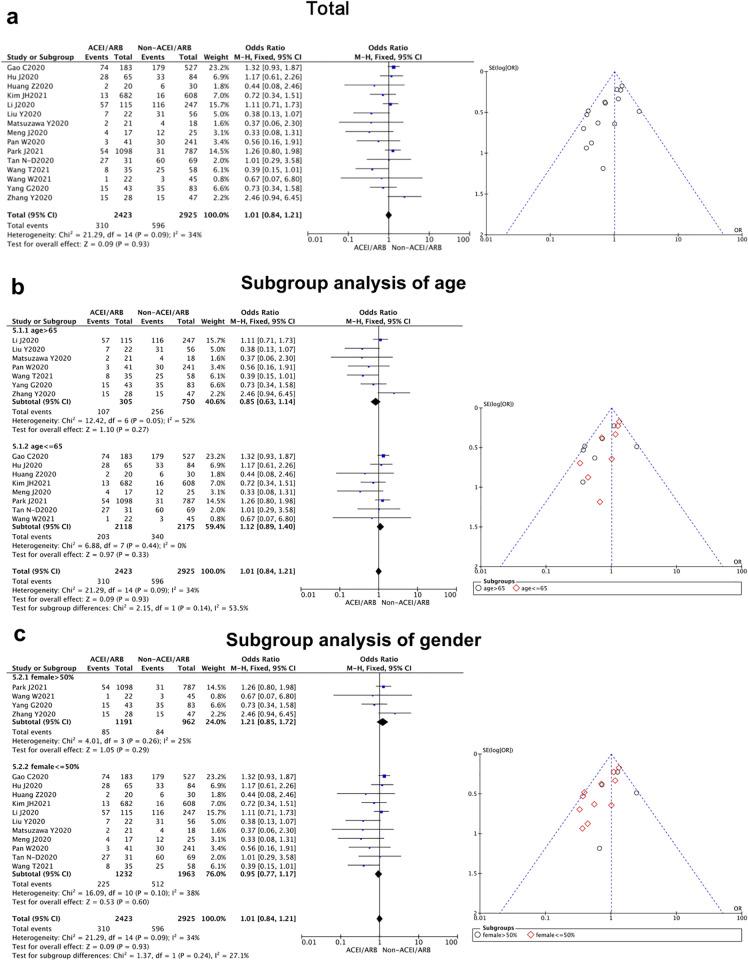
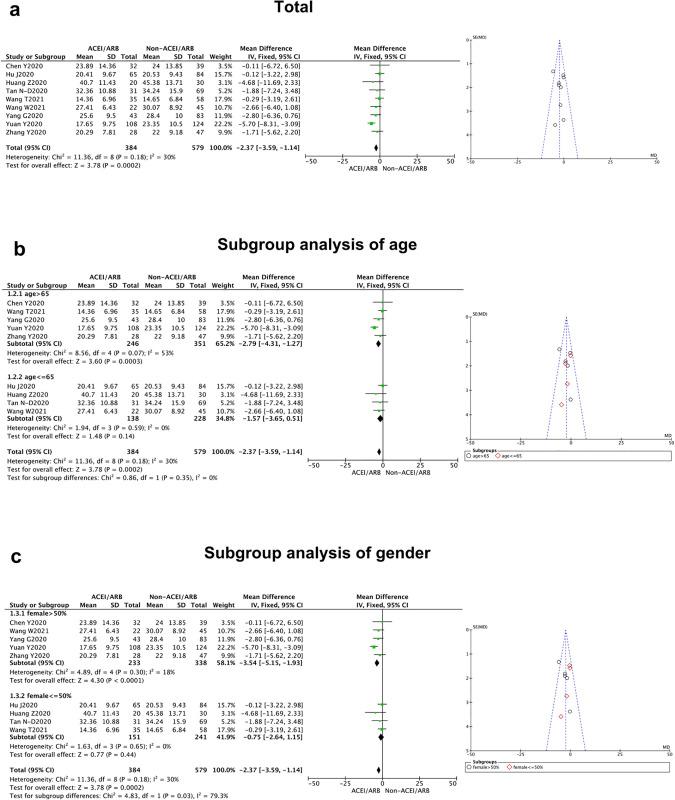
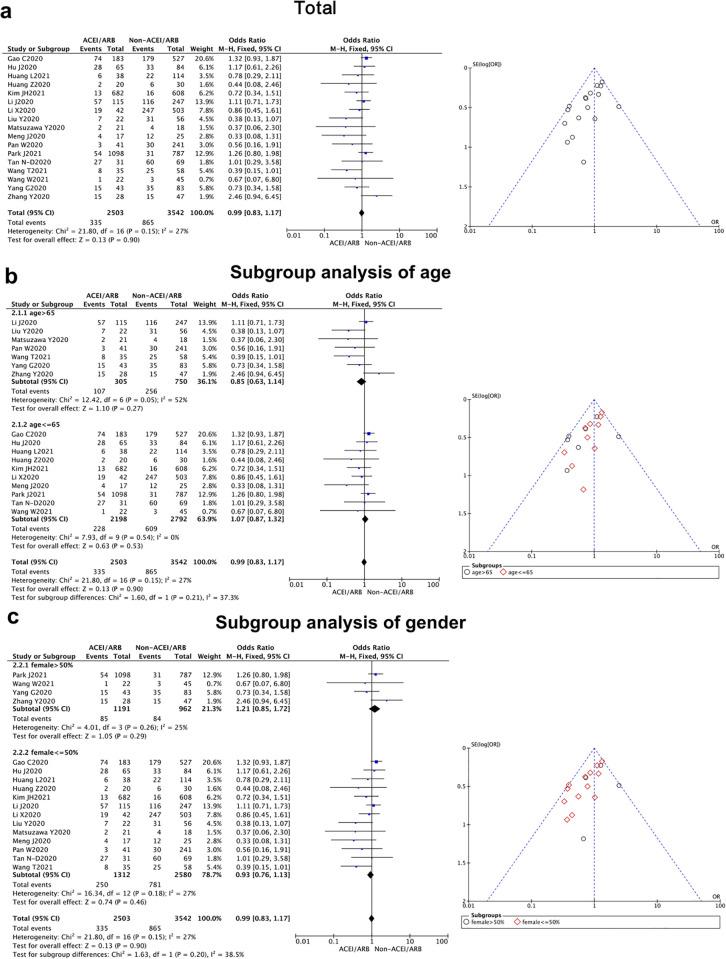
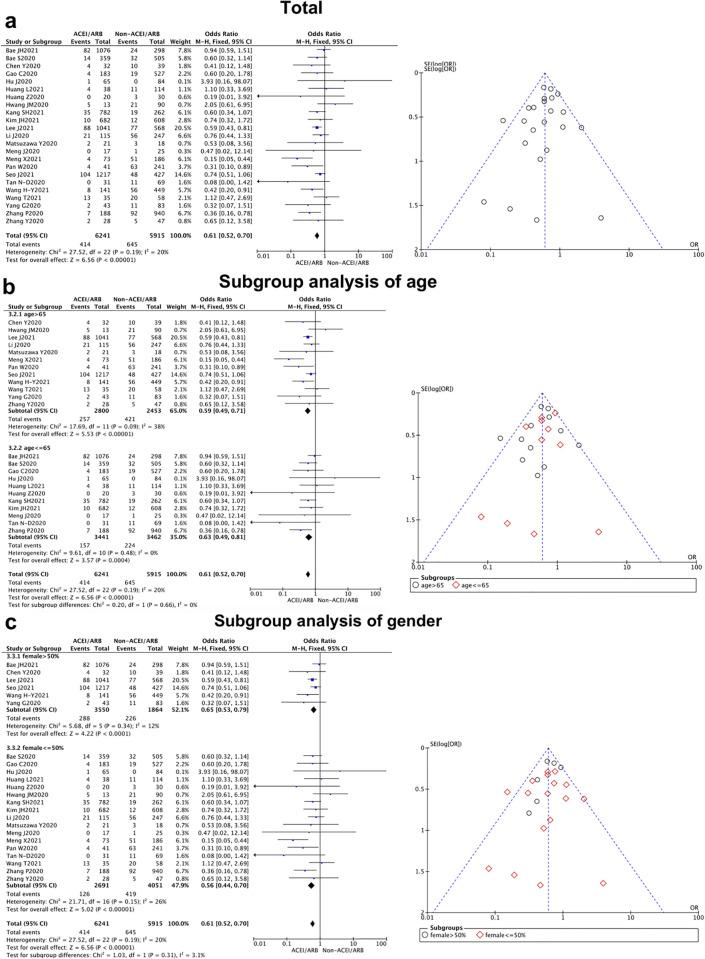
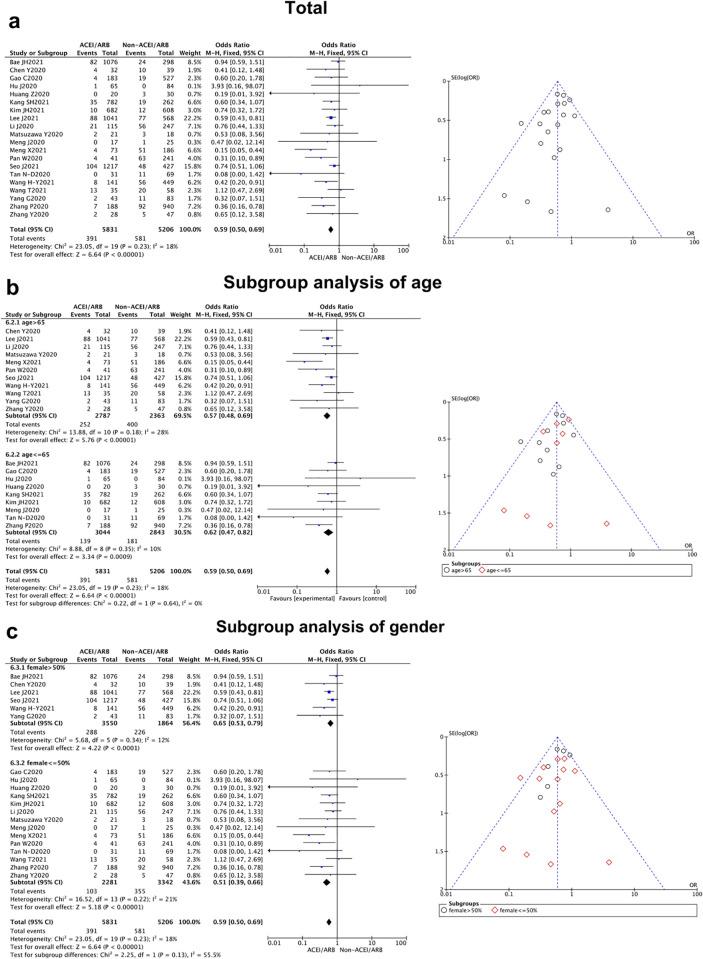
A total of 28 articles were included in this analysis. The results showed that patients who were prescribed with ACEI/ARB had a shorter duration of hospital stay [MD = -2.37, 95%CI (-3.59, -1.14), P = 0.000 2] and a lower mortality rate [OR = 0.61, 95% CI (0.52, 0.70), P<0.000 01] than patients who were not on ACEI/ARB. Furthermore, there was no statistically significant difference in disease severity [OR = 0.99, 95% CI (0.83, 1.17), P = 0.90] between individuals receiving ACEI/ARB or not.
CONCLUSIONS
This meta-analysis suggested that the use of ACEI/ARB was not associated with adverse clinical outcomes in East-Asian Covid-19 patients and a reduced mortality and shorter duration of hospital stay among East-Asian population (especially for female subjects) was found. Thus, ACEI/ARB should be continued in patients infected by Covid-19.
背景
SARS-CoV-2 通过直接与血管紧张素转换酶 2(ACE2)受体结合而入侵人体细胞,并导致 COVID-19,ACE2 受体的水平可能会因血管紧张素转换酶抑制剂(ACEI)和/或血管紧张素受体阻滞剂(ARB)的治疗而增加。本荟萃分析旨在探讨 ACEI/ARB 治疗对东亚地区人群 COVID-19 感染患者临床结局的影响。
方法
我们收集了 2000 年 1 月至 2022 年 5 月在英文数据库(包括 PubMed、Embase 和 Cochrane Library)发表的临床数据。两名评审员独立筛选并确定符合预设标准的研究。使用 Review Manager 5.3 软件进行荟萃分析。
结果
共有 28 篇文章纳入本分析。结果显示,与未服用 ACEI/ARB 的患者相比,服用 ACEI/ARB 的患者住院时间更短[MD=-2.37,95%CI(-3.59,-1.14),P=0.0002],死亡率更低[OR=0.61,95%CI(0.52,0.70),P<0.00001]。此外,服用 ACEI/ARB 与未服用 ACEI/ARB 的患者之间疾病严重程度无统计学差异[OR=0.99,95%CI(0.83,1.17),P=0.90]。
结论
本荟萃分析表明,ACEI/ARB 的使用与东亚 COVID-19 患者的不良临床结局无关,并且在东亚人群(尤其是女性)中发现死亡率降低和住院时间缩短。因此,感染 COVID-19 的患者应继续使用 ACEI/ARB。
 Zotero 插件