
将康复组学纳入多发性硬化症多组学管理方法中:精准医学之路?
Integrating Rehabilomics into the Multi-Omics Approach in the Management of Multiple Sclerosis: The Way for Precision Medicine?
机构信息
REVAL Rehabilitation Research Center, Faculty of Rehabilitation Sciences, Hasselt University, 3590 Diepenbeek, Belgium.
Technology-Supported and Data-Driven Rehabilitation, Data Science Institute, Hasselt University, 3590 Diepenbeek, Belgium.
出版信息
Genes (Basel). 2022 Dec 24;14(1):63. doi: 10.3390/genes14010063.
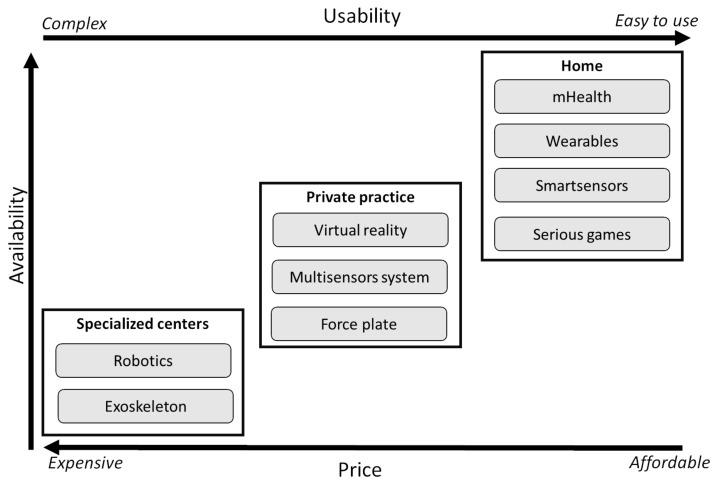
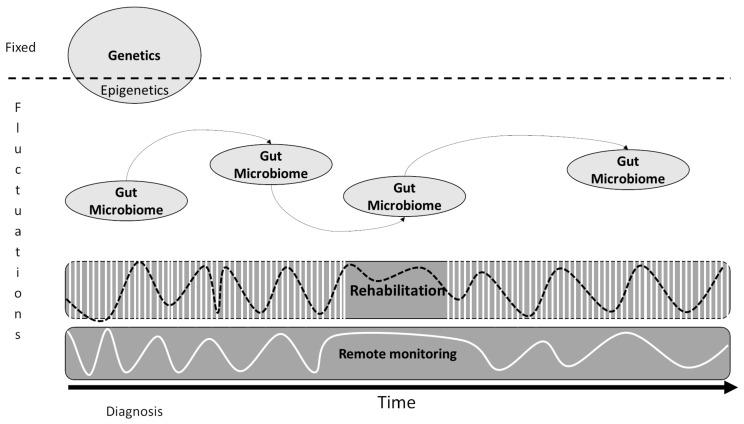
Over recent years, significant improvements have been made in the understanding of (epi)genetics and neuropathophysiological mechanisms driving the different forms of multiple sclerosis (MS). For example, the role and importance of the bidirectional communications between the brain and the gut-also referred to as the gut-brain axis-in the pathogenesis of MS is receiving increasing interest in recent years and is probably one of the most promising areas of research for the management of people with MS. However, despite these important advances, it must be noted that these data are not-yet-used in rehabilitation. Neurorehabilitation is a cornerstone of MS patient management, and there are many techniques available to clinicians and patients, including technology-supported rehabilitation. In this paper, we will discuss how new findings on the gut microbiome could help us to better understand how rehabilitation can improve motor and cognitive functions. We will also see how the data gathered during the rehabilitation can help to get a better diagnosis of the patients. Finally, we will discuss how these new techniques can better guide rehabilitation to lead to precision rehabilitation and ultimately increase the quality of patient care.
近年来,人们对(表观)遗传学和驱动多发性硬化症(MS)不同形式的神经病理生理机制的理解取得了重大进展。例如,大脑和肠道之间的双向交流——也称为肠道-大脑轴——在 MS 发病机制中的作用和重要性近年来受到越来越多的关注,可能是 MS 患者管理中最有前途的研究领域之一。然而,尽管取得了这些重要进展,但必须指出的是,这些数据尚未用于康复。神经康复是 MS 患者管理的基石,临床医生和患者有许多技术可供选择,包括技术支持的康复。在本文中,我们将讨论肠道微生物组的新发现如何帮助我们更好地理解康复如何改善运动和认知功能。我们还将看到康复过程中收集的数据如何帮助对患者进行更好的诊断。最后,我们将讨论这些新技术如何更好地指导康复,从而实现精准康复,最终提高患者护理质量。

 Zotero 插件