
阻塞性睡眠呼吸暂停、昼夜节律紊乱与代谢后果。
Obstructive Sleep Apnea, Circadian Clock Disruption, and Metabolic Consequences.
作者信息
Malicki Mikołaj, Karuga Filip Franciszek, Szmyd Bartosz, Sochal Marcin, Gabryelska Agata
机构信息
Department of Sleep Medicine and Metabolic Disorders, Medical University of Lodz, 92-215 Lodz, Poland.
Department of Pediatrics, Oncology, and Hematology, Medical University of Lodz, 91-738 Lodz, Poland.
出版信息
Metabolites. 2022 Dec 30;13(1):60. doi: 10.3390/metabo13010060.
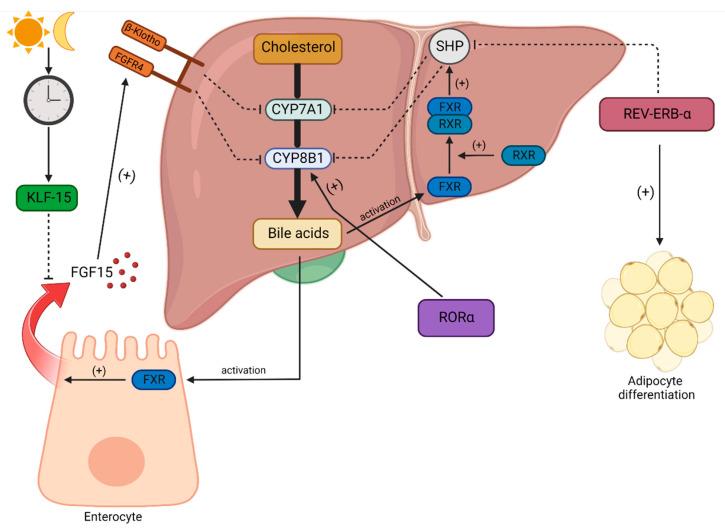
Obstructive sleep apnea (OSA) is a chronic disorder characterized by recurrent episodes of apnea and hypopnea during sleep. It is associated with various cardiovascular and metabolic complications, including type 2 diabetes mellitus (T2DM) and obesity. Many pathways can be responsible for T2DM development in OSA patients, e.g., those related to HIF-1 and SIRT1 expression. Moreover, epigenetic mechanisms, such as or , are postulated to play a pivotal role in this link. It has been proven that OSA increases the occurrence of circadian clock disruption, which is also a risk factor for metabolic disease development. Circadian clock disruption impairs the metabolism of glucose, lipids, and the secretion of bile acids. Therefore, OSA-induced circadian clock disruption may be a potential, complex, underlying pathway involved in developing and exacerbating metabolic diseases among OSA patients. The current paper summarizes the available information pertaining to the relationship between OSA and circadian clock disruption in the context of potential mechanisms leading to metabolic disorders.
阻塞性睡眠呼吸暂停(OSA)是一种慢性疾病,其特征是睡眠期间反复出现呼吸暂停和呼吸不足。它与各种心血管和代谢并发症相关,包括2型糖尿病(T2DM)和肥胖症。许多途径可能导致OSA患者发生T2DM,例如与缺氧诱导因子-1(HIF-1)和沉默调节蛋白1(SIRT1)表达相关的途径。此外,表观遗传机制,如 或 ,被认为在这一关联中起关键作用。已经证明,OSA会增加昼夜节律紊乱的发生率,而昼夜节律紊乱也是代谢疾病发生的一个危险因素。昼夜节律紊乱会损害葡萄糖、脂质的代谢以及胆汁酸的分泌。因此,OSA诱导的昼夜节律紊乱可能是OSA患者发生和加重代谢疾病的一个潜在、复杂的潜在途径。本文总结了在导致代谢紊乱的潜在机制背景下,有关OSA与昼夜节律紊乱之间关系的现有信息。



 Zotero 插件