
线粒体功能障碍会导致大脑中的能量紊乱和神经精神症状。
Dysfunctional mitochondrial processes contribute to energy perturbations in the brain and neuropsychiatric symptoms.
作者信息
Büttiker Pascal, Weissenberger Simon, Esch Tobias, Anders Martin, Raboch Jiri, Ptacek Radek, Kream Richard M, Stefano George B
机构信息
Department of Psychiatry, First Faculty of Medicine, Charles University and General University Hospital in Prague, Czech Republic, Prague, Czechia.
Department of Psychology, University of New York in Prague, Czech Republic, Prague, Czechia.
出版信息
Front Pharmacol. 2023 Jan 5;13:1095923. doi: 10.3389/fphar.2022.1095923. eCollection 2022.
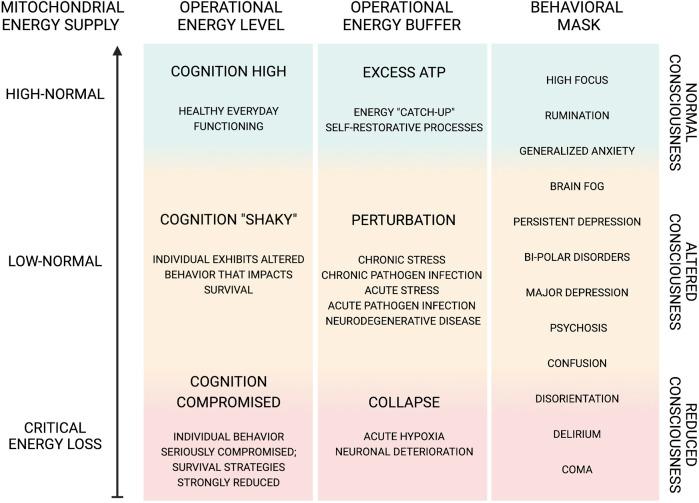
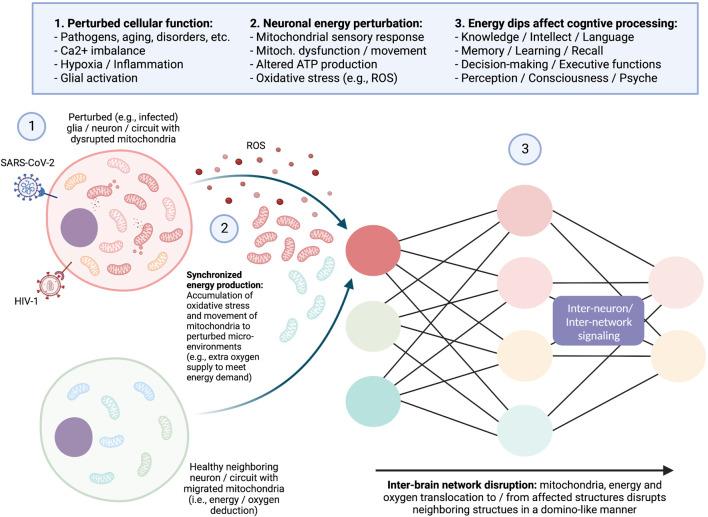
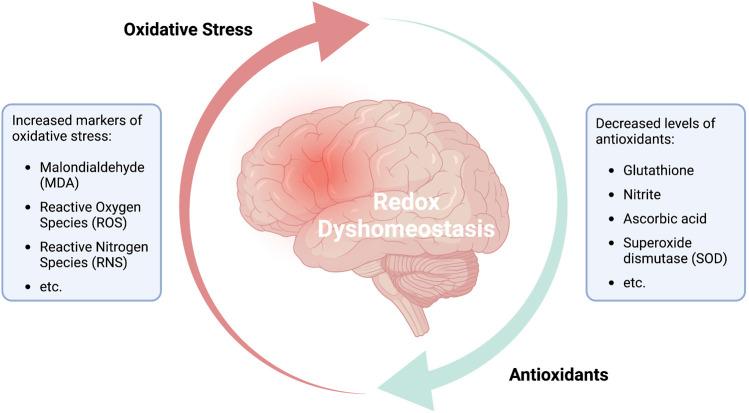
Mitochondria are complex endosymbionts that evolved from primordial purple nonsulfur bacteria. The incorporation of bacteria-derived mitochondria facilitates a more efficient and effective production of energy than what could be achieved based on previous processes alone. In this case, endosymbiosis has resulted in the seamless coupling of cytochrome c oxidase and F-ATPase to maximize energy production. However, this mechanism also results in the generation of reactive oxygen species (ROS), a phenomenon that can have both positive and negative ramifications on the host. Recent studies have revealed that neuropsychiatric disorders have a pro-inflammatory component in which ROS is capable of initiating damage and cognitive malfunction. Our current understanding of cognition suggests that it is the product of a neuronal network that consumes a substantial amount of energy. Thus, alterations or perturbations of mitochondrial function may alter not only brain energy supply and metabolite generation, but also thought processes and behavior. Mitochondrial abnormalities and oxidative stress have been implicated in several well-known psychiatric disorders, including schizophrenia (SCZ) and bipolar disorder (BPD). As cognition is highly energy-dependent, we propose that the neuronal pathways underlying maladaptive cognitive processing and psychiatric symptoms are most likely dependent on mitochondrial function, and thus involve brain energy translocation and the accumulation of the byproducts of oxidative stress. We also hypothesize that neuropsychiatric symptoms (e.g., disrupted emotional processing) may represent the vestiges of an ancient masked evolutionary response that can be used by both hosts and pathogens to promote self-repair and proliferation parasitic and/or symbiotic pathways.
线粒体是从原始紫色非硫细菌进化而来的复杂内共生体。与仅基于先前过程所能实现的能量产生相比,细菌来源的线粒体的并入促进了更高效和有效的能量产生。在这种情况下,内共生导致细胞色素c氧化酶和F-ATP酶的无缝偶联,以最大限度地提高能量产生。然而,这种机制也会导致活性氧(ROS)的产生,这一现象对宿主可能产生正面和负面的影响。最近的研究表明,神经精神疾病具有促炎成分,其中ROS能够引发损伤和认知功能障碍。我们目前对认知的理解表明,它是一个消耗大量能量的神经网络的产物。因此,线粒体功能的改变或扰动不仅可能改变大脑能量供应和代谢物生成,还可能改变思维过程和行为。线粒体异常和氧化应激与包括精神分裂症(SCZ)和双相情感障碍(BPD)在内的几种著名精神疾病有关。由于认知高度依赖能量,我们提出,适应不良的认知加工和精神症状背后的神经通路很可能依赖线粒体功能,因此涉及大脑能量转运和氧化应激副产品的积累。我们还假设,神经精神症状(如情绪加工紊乱)可能代表一种古老的隐蔽进化反应的遗迹,宿主和病原体都可以利用这种反应来促进自我修复和增殖 寄生和/或共生途径。
 Zotero 插件