
深度剖析治疗后 9 年 HIV 得到控制的存档全长病毒基因组。
In-Depth Characterization of Full-Length Archived Viral Genomes after Nine Years of Posttreatment HIV Control.
机构信息
Université Paris Cité, Faculté de Médecine, Paris, France.
INSERM U1016, CNRS UMR8104, Institut Cochin, Paris, France.
出版信息
Microbiol Spectr. 2023 Feb 14;11(1):e0326722. doi: 10.1128/spectrum.03267-22. Epub 2023 Jan 24.
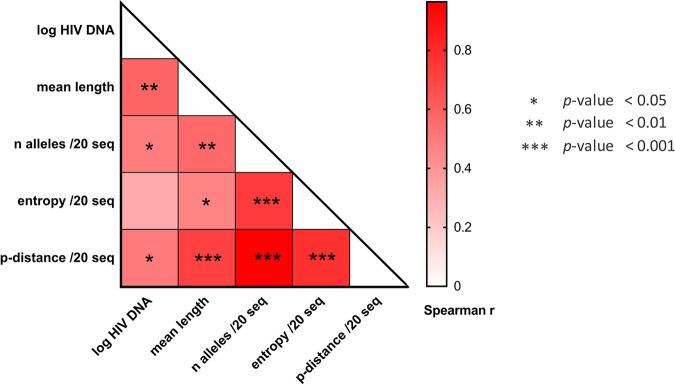
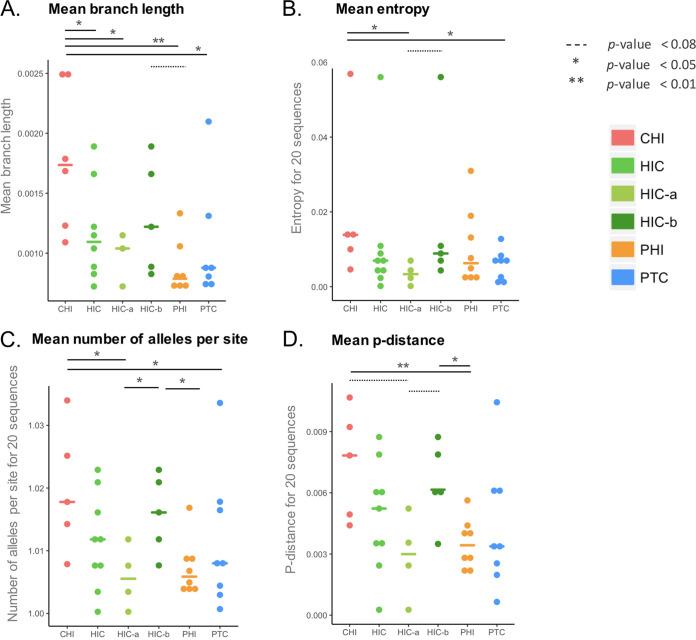
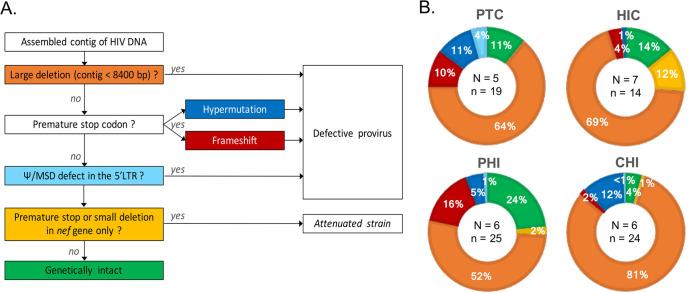
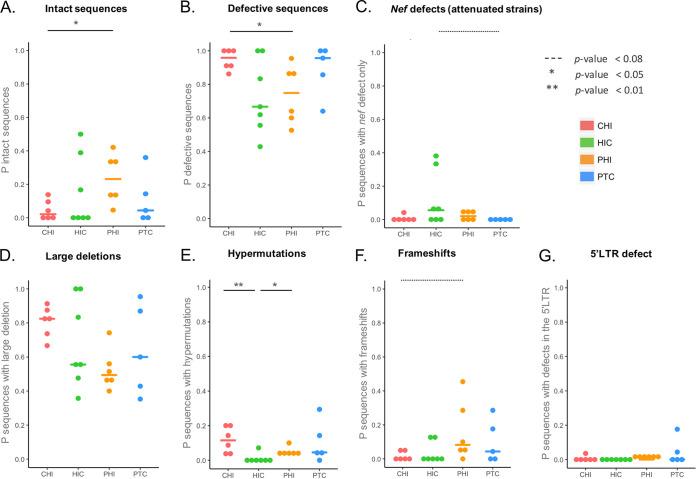
In the search for control of human immunodeficiency virus type 1 (HIV-1) infection without antiretroviral therapy, posttreatment controllers (PTCs) are models of HIV remission. To better understand their mechanisms of control, we characterized the HIV blood reservoirs of 8 PTCs (median of 9.4 years after treatment interruption) in comparison with those of 13 natural HIV infection controllers (HICs) (median of 18 years of infection) and with those of individuals receiving efficient antiretroviral therapy initiated during either primary HIV infection (PHIs; = 8) or chronic HIV infection (CHIs; = 6). This characterization was performed with single-genome amplification and deep sequencing. The proviral diversity, which reflects the history of past viral replication, was lower in the PTCs, PHIs, and aviremic HICs than in the blipper HICs and CHIs. The proportions of intact and defective proviruses among the proviral pool in PTCs were not significantly different from those of other groups. When looking at the quantities of proviruses per million peripheral blood mononuclear cells (PBMCs), they had similar amounts of intact proviruses as other groups but smaller amounts of defective proviruses than CHIs, suggesting a role of these forms in HIV pathogenesis. Two HICs but none of the PTCs harbored only proviruses with deletion in ; these attenuated strains could contribute to viral control in these participants. We show, for the first time, the presence of intact proviruses and low viral diversity in PTCs long after treatment interruption, as well as the absence of evolution of the proviral quasispecies in subsequent samples. This reflects low residual replication over time. Further data are necessary to confirm these results. Most people living with HIV need antiretroviral therapy to control their infection and experience viral relapse in case of treatment interruption, because of viral reservoir (proviruses) persistence. Knowing that proviruses are very diverse and most of them are defective in treated individuals, we aimed to characterize the HIV blood reservoirs of posttreatment controllers (PTCs), rare models of drug-free remission, in comparison with spontaneous controllers and treated individuals. At a median time of 9 years after treatment interruption, which is unprecedented in the literature, we showed that the proportions and quantities of intact proviruses were similar between PTCs and other individuals. Unlike 2/7 spontaneous controllers who harbored only -deleted proviruses, which are attenuated strains, which could contribute to their control, no such case was observed in PTCs. Furthermore, PTCs displayed low viral genetic diversity and no evolution of their reservoirs, indicating very low residual replication, despite the presence of intact proviruses.
在寻找无需抗逆转录病毒治疗即可控制人类免疫缺陷病毒 1 型(HIV-1)感染的方法时,治疗后控制者(PTC)是 HIV 缓解的模型。为了更好地了解他们的控制机制,我们对 8 名 PTC(治疗中断后中位数为 9.4 年)的 HIV 血液储库进行了特征描述,与 13 名自然 HIV 感染控制者(HIC)(感染中位数为 18 年)和接受高效抗逆转录病毒治疗的个体进行了比较治疗开始于原发性 HIV 感染(PHI;n=8)或慢性 HIV 感染(CHI;n=6)。这项特征描述是通过单基因组扩增和深度测序进行的。前病毒多样性反映了过去病毒复制的历史,在 PTC、PHI 和无病毒血症的 HIC 中低于 blipper HIC 和 CHI。在 PTC 中,完整和缺陷前病毒在前病毒池中的比例与其他组没有显著差异。当观察每百万外周血单核细胞(PBMC)中的前病毒数量时,它们与其他组具有相似数量的完整前病毒,但 CHI 的缺陷前病毒数量较少,表明这些形式在 HIV 发病机制中起作用。两名 HIC 但没有一名 PTC 仅携带缺失的前病毒,这些衰减株可能有助于这些参与者的病毒控制。我们首次显示,在治疗中断后很长时间内,PTC 中存在完整的前病毒和低病毒多样性,以及随后样本中前病毒准种没有进化。这反映了随着时间的推移复制量减少。需要进一步的数据来证实这些结果。大多数 HIV 感染者需要抗逆转录病毒治疗来控制感染,并且在治疗中断后会因病毒储库(前病毒)持续存在而经历病毒复发。由于治疗个体中前病毒非常多样化,大多数是缺陷型,因此我们旨在描述治疗后控制者(PTC)的 HIV 血液储库,这些是无需药物即可缓解的罕见模型,与自然控制者和治疗个体进行比较。在治疗中断后的中位数时间为 9 年,这在文献中是前所未有的,我们表明,PTC 和其他个体之间完整前病毒的比例和数量相似。与仅携带 -缺失前病毒的 2/7 名自发控制者不同,这些是衰减株,可能有助于他们的控制,但在 PTC 中没有观察到这种情况。此外,PTC 显示出低病毒遗传多样性,储库没有进化,表明尽管存在完整的前病毒,但残留复制非常低。


 Zotero 插件