
对血红蛋白耗竭的患者外周血进行转录组分析揭示了胶质母细胞瘤生物标志物。
Transcriptomic analyses of patient peripheral blood with hemoglobin depletion reveal glioblastoma biomarkers.
作者信息
Qi Dan, Geng Yiqun, Cardenas Jacob, Gu Jinghua, Yi S Stephen, Huang Jason H, Fonkem Ekokobe, Wu Erxi
机构信息
Department of Neurosurgery and Neuroscience Institute, Baylor Scott & White Health, Temple, TX, 76508, USA.
Laboratory of Molecular Pathology, Shantou University Medical College, 515041, Shantou, China.
出版信息
NPJ Genom Med. 2023 Jan 25;8(1):2. doi: 10.1038/s41525-022-00348-3.
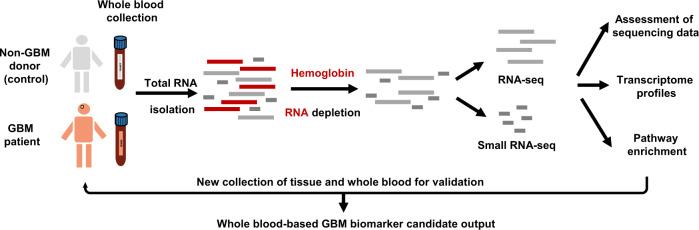
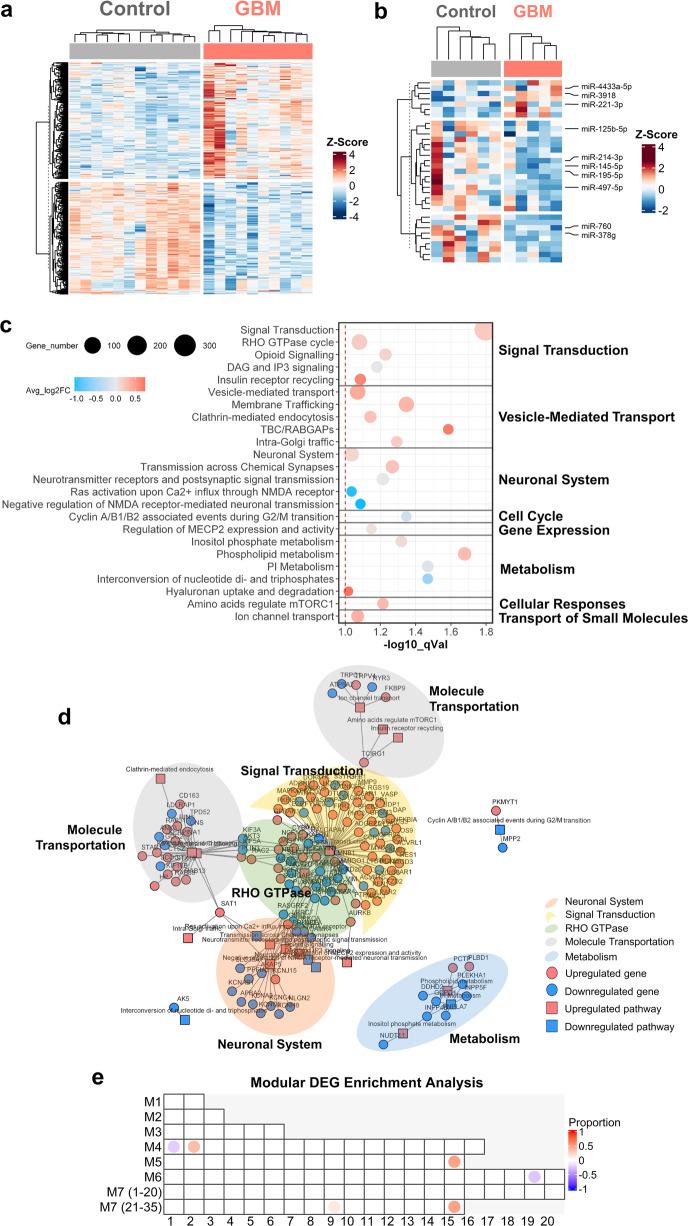
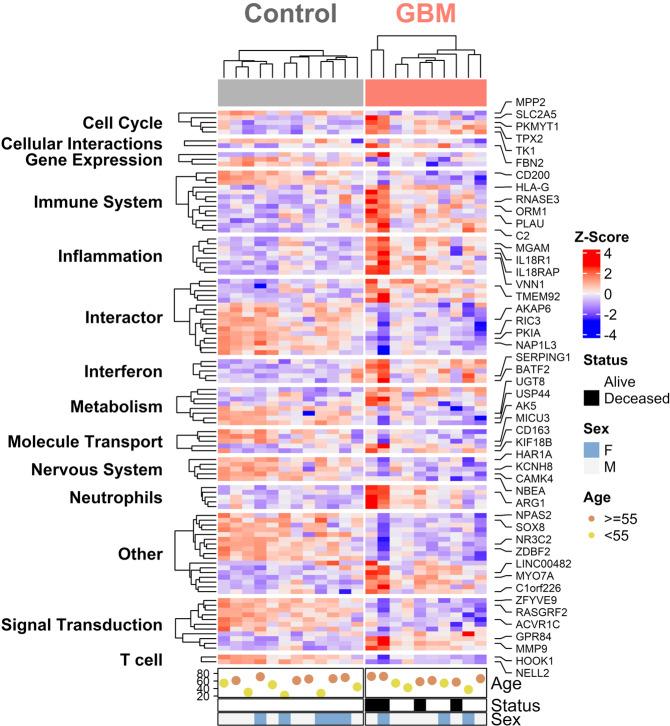
Peripheral blood is gaining prominence as a noninvasive alternative to tissue biopsy to develop biomarkers for glioblastoma (GBM); however, widely utilized blood-based biomarkers in clinical settings have not yet been identified due to the lack of a robust detection approach. Here, we describe the application of globin reduction in RNA sequencing of whole blood (i.e., WBGR) and perform transcriptomic analysis to identify GBM-associated transcriptomic changes. By using WBGR, we improved the detection sensitivity of informatic reads and identified differential gene expression in GBM blood. By analyzing tumor tissues, we identified transcriptomic traits of GBM blood. Further functional enrichment analyses retained the most changed genes in GBM. Subsequent validation elicited a 10-gene panel covering mRNA, long noncoding RNA, and microRNA (i.e., GBM-Dx panel) that has translational potential to aid in the early detection or clinical management of GBM. Here, we report an integrated approach, WBGR, with comprehensive analytic capacity for blood-based marker identification.
外周血作为一种非侵入性的替代组织活检的方法,在开发胶质母细胞瘤(GBM)生物标志物方面正变得越来越重要;然而,由于缺乏强大的检测方法,临床环境中广泛使用的基于血液的生物标志物尚未被确定。在这里,我们描述了血红蛋白减少在全血RNA测序(即WBGR)中的应用,并进行转录组分析以识别与GBM相关的转录组变化。通过使用WBGR,我们提高了信息读数的检测灵敏度,并确定了GBM血液中的差异基因表达。通过分析肿瘤组织,我们确定了GBM血液的转录组特征。进一步的功能富集分析保留了GBM中变化最大的基因。随后的验证产生了一个包含mRNA、长链非编码RNA和微小RNA的10基因面板(即GBM-Dx面板),该面板具有转化潜力,有助于GBM的早期检测或临床管理。在这里,我们报告了一种综合方法WBGR,它具有全面的分析能力,可用于基于血液的标志物识别。



 Zotero 插件