
脊髓损伤后肩痛自我指导网络锻炼计划的认知:定性研究。
Perceptions of a self-guided web-based exercise programme for shoulder pain after spinal cord injury: A qualitative study.
机构信息
Rehabilitation Innovation Centre, School of Clinical Sciences, Auckland University of Technology, Auckland, New Zealand.
Centre for Person Centred Research, School of Clinical Sciences, Auckland University of Technology, Auckland, New Zealand.
出版信息
Spinal Cord. 2023 Apr;61(4):238-243. doi: 10.1038/s41393-023-00877-3. Epub 2023 Jan 26.
STUDY DESIGN
Qualitative study.
OBJECTIVES
The benefits of exercise to reduce shoulder pain in people with spinal cord injury (SCI) are well documented. Digital health interventions offer a potential solution to overcome barriers to access rehabilitation support for exercise. The aim of this project was to gain people's perspectives to inform the development of a self-guided web-based exercise intervention. Shoulder Pain Intervention delivered over the interNet (SPIN) is a self-guided web-based intervention to prescribe, monitor, and progress evidence-based exercises for people living with SCI and shoulder pain.
SETTING
Community in Auckland, New Zealand.
METHODS
The Person-Based Approach was used as the framework. Using an Interpretive Descriptive methodology, data were collected in individual and focus group interviews, exploring participants' perceptions of this intervention idea. Data were analysed using conventional content analysis.
RESULTS
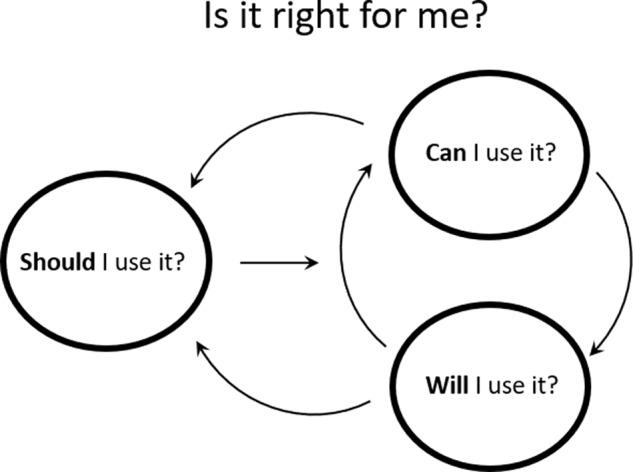
Sixteen participants took part and asked Is it right for me?. This had three main sub-themes. Should I use it?, whether I believe it will work for me right now; Can I use it?, whether I can operate the intervention competently and confidently and Will I use it?, whether it will be responsive to my unique needs, and keep me coming back.
CONCLUSIONS
Participants expressed their expectations and tipping points when considering using an intervention like this. These findings will inform and guide design and development of an acceptable technology-based intervention to increase the likelihood of engagement with a self-guided web-based exercise programme. The model developed from these themes could be used to inform future self-guided intervention development.
研究设计
定性研究。
目的
运动有益于减轻脊髓损伤(SCI)患者的肩部疼痛,这一点已得到充分证实。数字健康干预为克服康复支持锻炼的获取障碍提供了一种潜在的解决方案。本项目旨在了解人们的观点,为开发自我指导的基于网络的运动干预措施提供信息。通过互联网提供的肩部疼痛干预措施(SPIN)是一种自我指导的基于网络的干预措施,用于为患有 SCI 和肩部疼痛的患者规定、监测和推进基于证据的运动。
地点
新西兰奥克兰的社区。
方法
采用以人为中心的方法作为框架。采用解释性描述方法,通过个人和焦点小组访谈收集数据,探讨参与者对这一干预措施的看法。使用常规内容分析对数据进行分析。
结果
16 名参与者参与并提出了“这对我合适吗?”的问题。这有三个主要的子主题。我应该使用它吗?,即我是否相信它现在对我有效;我能使用它吗?,即我是否能够熟练自信地操作干预措施;我会使用它吗?,即它是否会响应我的独特需求,并让我不断回来。
结论
参与者表达了他们在考虑使用此类干预措施时的期望和关键点。这些发现将为基于技术的可接受干预措施的设计和开发提供信息和指导,以提高自我指导的基于网络的运动计划的参与度。从这些主题中开发的模型可以用于指导未来的自我指导干预措施的开发。
 Zotero 插件