
通过深度学习阐明水合作用在准确预测蛋白质-配体结合中的多重作用。
Elucidating the multiple roles of hydration for accurate protein-ligand binding prediction via deep learning.
作者信息
Mahmoud Amr H, Masters Matthew R, Yang Ying, Lill Markus A
机构信息
Department of Medicinal Chemistry and Molecular Pharmacology, College of Pharmacy, Purdue University, 575 Stadium Mall Drive, West Lafayette, IN, 47906, USA.
Department of Pharmaceutical Sciences, University of Basel, Klingelbergstrasse 50, 4056, Basel, Switzerland.
出版信息
Commun Chem. 2020 Feb 11;3(1):19. doi: 10.1038/s42004-020-0261-x.
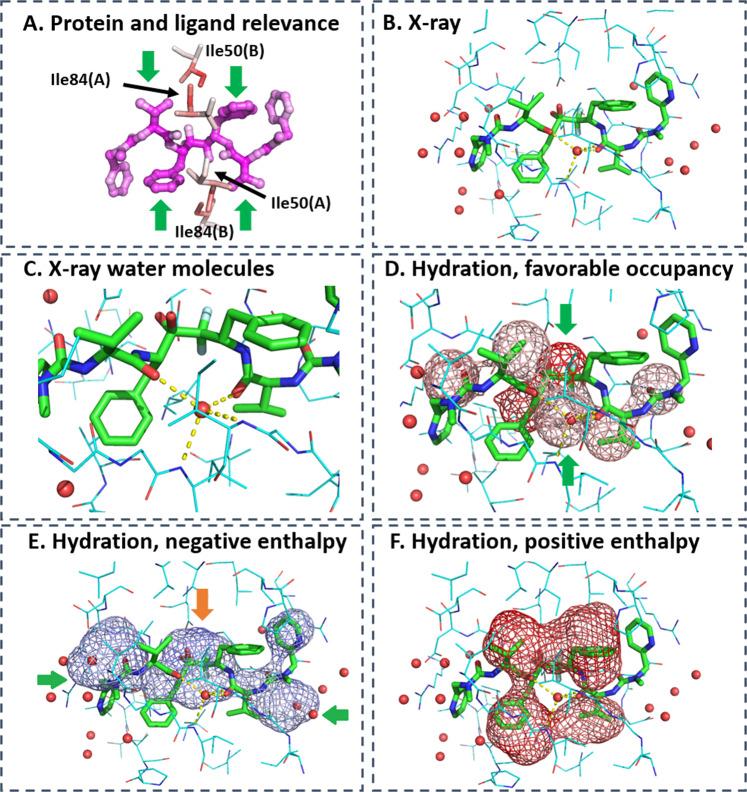
Accurate and efficient prediction of protein-ligand interactions has been a long-lasting dream of practitioners in drug discovery. The insufficient treatment of hydration is widely recognized to be a major limitation for accurate protein-ligand scoring. Using an integration of molecular dynamics simulations on thousands of protein structures with novel big-data analytics based on convolutional neural networks and deep Taylor decomposition, we consistently identify here three different patterns of hydration to be essential for protein-ligand interactions. In addition to desolvation and water-mediated interactions, the formation of enthalpically favorable networks of first-shell water molecules around solvent-exposed ligand moieties is identified to be essential for protein-ligand binding. Despite being currently neglected in drug discovery, this hydration phenomenon could lead to new avenues in optimizing the free energy of ligand binding. Application of deep neural networks incorporating hydration to docking provides 89% accuracy in binding pose ranking, an essential step for rational structure-based drug design.
准确而高效地预测蛋白质-配体相互作用一直是药物研发从业者长久以来的梦想。水合作用处理不足被广泛认为是准确进行蛋白质-配体评分的一个主要限制因素。通过将针对数千种蛋白质结构的分子动力学模拟与基于卷积神经网络和深度泰勒分解的新型大数据分析相结合,我们在此一致确定了三种不同的水合模式对于蛋白质-配体相互作用至关重要。除了去溶剂化作用和水介导的相互作用外,在溶剂暴露的配体部分周围形成焓有利的第一壳层水分子网络被确定为蛋白质-配体结合所必需。尽管目前在药物研发中被忽视,但这种水合现象可能为优化配体结合自由能带来新途径。将包含水合作用的深度神经网络应用于对接,在结合姿态排序方面提供了89%的准确率,这是基于结构的合理药物设计的关键步骤。



 Zotero 插件