
分子间相互作用的计算视角以及溶剂在调节蛋白质性质中的作用
A Computational Perspective to Intermolecular Interactions and the Role of the Solvent on Regulating Protein Properties.
作者信息
Mieres-Perez Joel, Almeida-Hernandez Yasser, Sander Wolfram, Sanchez-Garcia Elsa
机构信息
Chair of Computational Bioengineering, Department of Biochemical and Chemical Engineering, TU Dortmund University, 44227 Dortmund, Germany.
Chair of Organic Chemistry II, Ruhr-Universität Bochum, D-44801 Bochum, Germany.
出版信息
Chem Rev. 2025 Aug 13;125(15):7023-7056. doi: 10.1021/acs.chemrev.4c00807. Epub 2025 Jul 28.
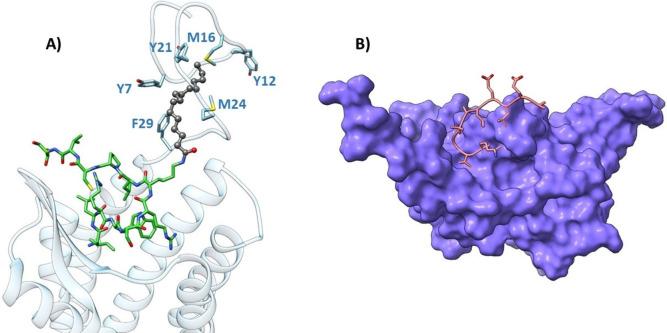
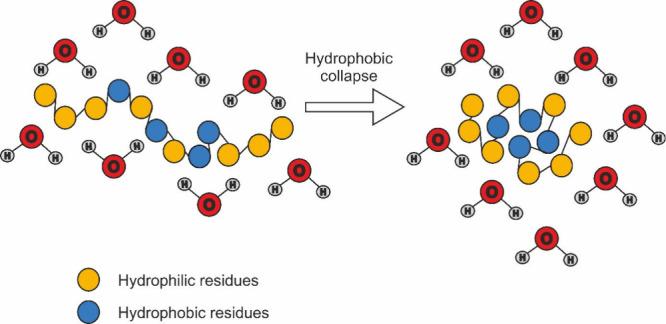
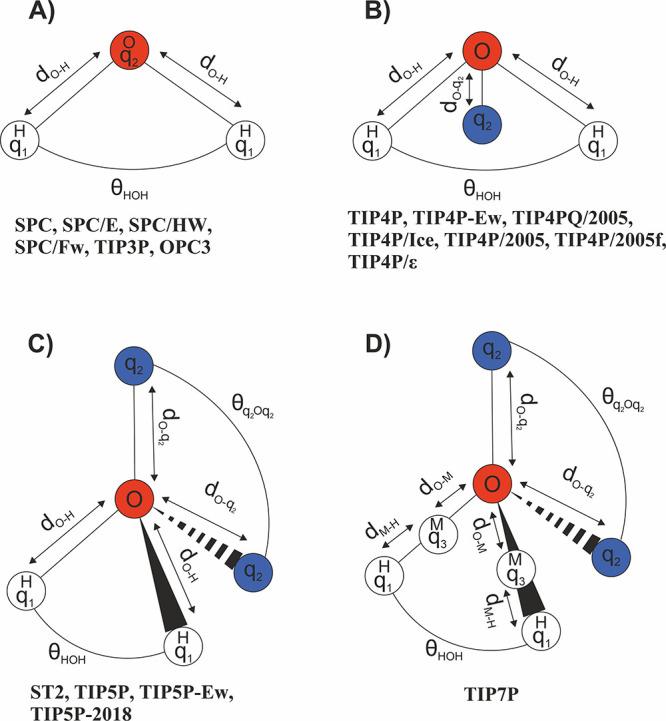
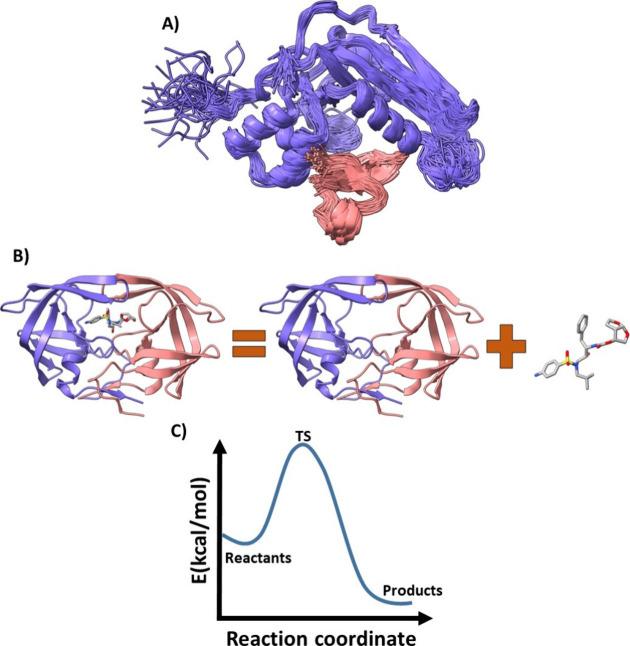
Intermolecular interactions play a key role in determining and tuning the structure and function of proteins. Following a simplified conventional scheme, molecular interactions are often classified as strong (long-range), typically driven by ionic contacts and salt bridges, or as weak (short-range), such as hydrophobic interactions. The reality is more complex, with classical strong interactions having weak contributions and vice versa. The interaction network regulating the properties of biomolecular systems such as proteins and their media goes beyond a single sort of contribution, and instead it is characterized by the interplay between several forces of diverse nature. In this review, we discuss, via selected examples, state of the art methodologies and applications of computational techniques to explore the role of intermolecular interactions, with emphasis on solvent effects on protein folding, enzymatic activity, and protein-peptide binding.
分子间相互作用在决定和调节蛋白质的结构与功能方面起着关键作用。按照一种简化的传统模式,分子相互作用通常被分类为强相互作用(长程),通常由离子接触和盐桥驱动,或者弱相互作用(短程),例如疏水相互作用。实际情况更为复杂,经典的强相互作用有微弱贡献,反之亦然。调节诸如蛋白质及其介质等生物分子系统性质的相互作用网络并非单一类型的贡献,相反,它的特征是多种不同性质的力之间的相互作用。在本综述中,我们通过选定的例子讨论探索分子间相互作用作用的计算技术的最新方法和应用,重点是溶剂对蛋白质折叠、酶活性和蛋白质 - 肽结合的影响。









 Zotero 插件