
左氧氟沙星在 Spondyloarthritis DBA/1 小鼠的肠道、外周和轴向关节转录组中诱导不同的作用:改善肠道菌群失调和整体炎症过程。
Levofloxacin induces differential effects in the transcriptome between the gut, peripheral and axial joints in the Spondyloarthritis DBA/1 mice: Improvement of intestinal dysbiosis and the overall inflammatory process.
机构信息
Facultad de Medicina y Ciencias Biomédicas, Laboratorio PABIOM, Universidad Autónoma de Chihuahua, Chihuahua, México.
Departamento de Medio Ambiente y Energía, CONACyT-Centro de Investigación en Materiales Avanzados, Chihuahua, México.
出版信息
PLoS One. 2023 Feb 2;18(2):e0281265. doi: 10.1371/journal.pone.0281265. eCollection 2023.
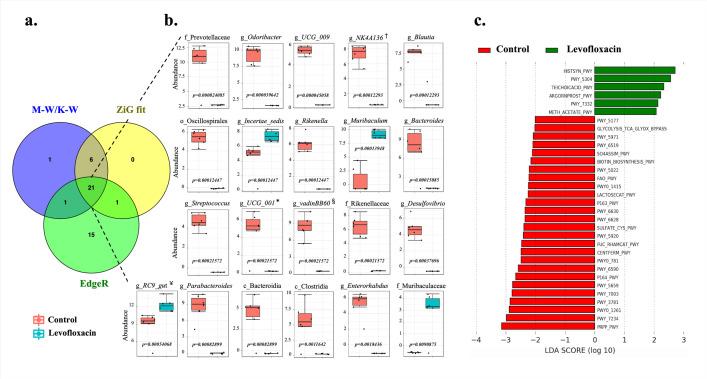
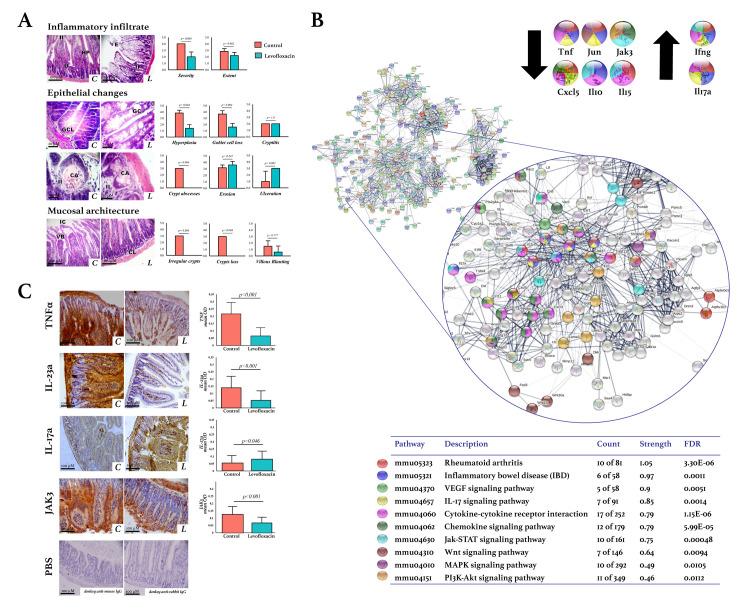
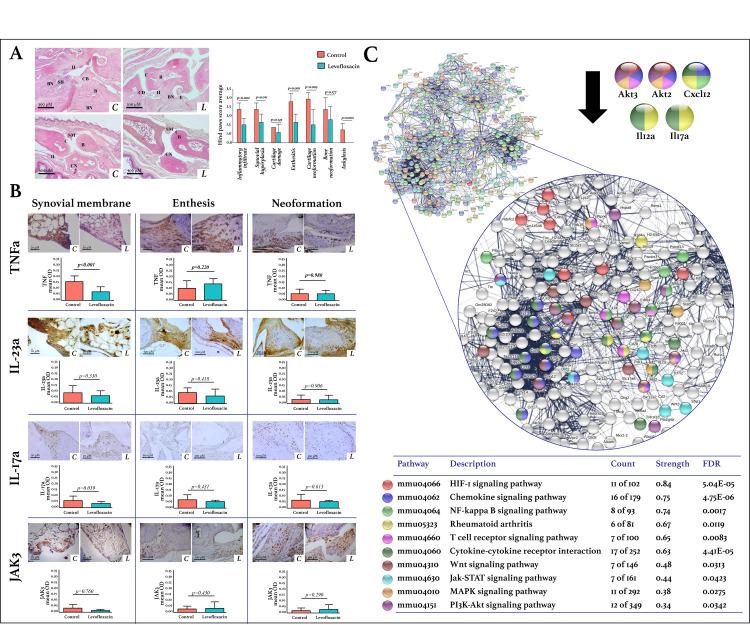
To analyze the effect of levofloxacin-induced intestinal microbiota modifications on intestinal, joint, and systemic inflammation in the DBA/1 mice with spontaneous arthritis. The study included two groups of mice, one of which received levofloxacin. The composition and structure of the microbiota were determined in the mice's stool using 16S rRNA sequencing; the differential taxa and metabolic pathway between mice treated with levofloxacin and control mice were also defied. The effect of levofloxacin was evaluated in the intestines, hind paws, and spines of mice through DNA microarray transcriptome and histopathological analyses; systemic inflammation was measured by flow cytometry. Levofloxacin decreased the pro-inflammatory bacteria, including Prevotellaceae, Odoribacter, and Blautia, and increased the anti-inflammatory Muribaculaceae in mice's stool. Histological analysis confirmed the intestinal inflammation in control mice, while in levofloxacin-treated mice, inflammation was reduced; in the hind paws and spines, levofloxacin also decreased the inflammation. Microarray showed the downregulation of genes and signaling pathways relevant in spondyloarthritis, including several cytokines and chemokines. Levofloxacin-treated mice showed differential transcriptomic profiles between peripheral and axial joints and intestines. Levofloxacin decreased the expression of TNF-α, IL-23a, and JAK3 in the three tissues, but IL-17 behaved differently in the intestine and the joints. Serum TNF-α was also reduced in levofloxacin-treated mice. Our results suggest that the microbiota modification aimed at reducing pro-inflammatory and increasing anti-inflammatory bacteria could potentially be a coadjuvant in treating inflammatory arthropathies.
分析左氧氟沙星诱导的肠道微生物群改变对自发性关节炎 DBA/1 小鼠肠道、关节和全身炎症的影响。该研究包括两组小鼠,一组接受左氧氟沙星治疗。通过 16S rRNA 测序检测小鼠粪便中微生物群的组成和结构;还确定了左氧氟沙星治疗组和对照组小鼠之间的差异分类群和代谢途径。通过 DNA 微阵列转录组和组织病理学分析评估左氧氟沙星对小鼠肠道、后爪和脊柱的影响;通过流式细胞术测量全身炎症。左氧氟沙星减少了肠道中促炎细菌,包括普雷沃氏菌科、恶臭菌属和布劳特氏菌属,增加了抗炎的穆里巴科菌属。组织学分析证实对照组小鼠存在肠道炎症,而左氧氟沙星治疗组小鼠的炎症减轻;在后爪和脊柱中,左氧氟沙星也减少了炎症。微阵列显示与脊柱关节炎相关的基因和信号通路下调,包括几种细胞因子和趋化因子。左氧氟沙星治疗的小鼠在周围关节和轴向关节以及肠道之间显示出不同的转录组谱。左氧氟沙星降低了三种组织中 TNF-α、IL-23a 和 JAK3 的表达,但 IL-17 在肠道和关节中的表现不同。左氧氟沙星治疗的小鼠血清 TNF-α 也减少。我们的研究结果表明,旨在减少促炎和增加抗炎细菌的微生物群修饰可能是治疗炎症性关节病的辅助治疗方法。


 Zotero 插件