
并非最优:钾电压门控通道中互信息的进化。
Not so optimal: The evolution of mutual information in potassium voltage-gated channels.
机构信息
Pioneer Academics, Philadelphia, PA, United States of America.
W. M. Keck Science Department, Pitzer, Scripps, and Claremont McKenna Colleges, Claremont, CA, United States of America.
出版信息
PLoS One. 2023 Feb 3;18(2):e0264424. doi: 10.1371/journal.pone.0264424. eCollection 2023.
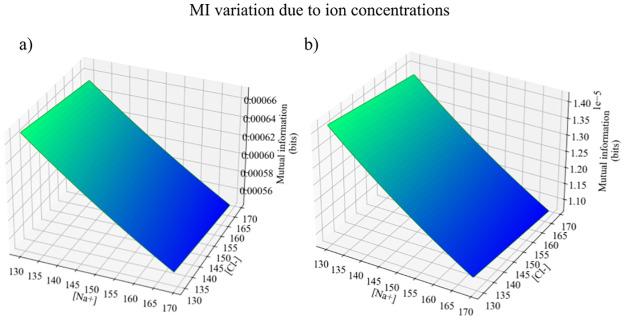
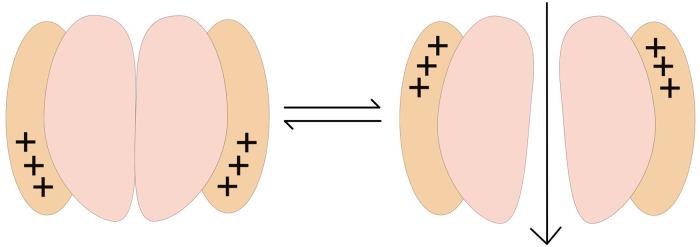
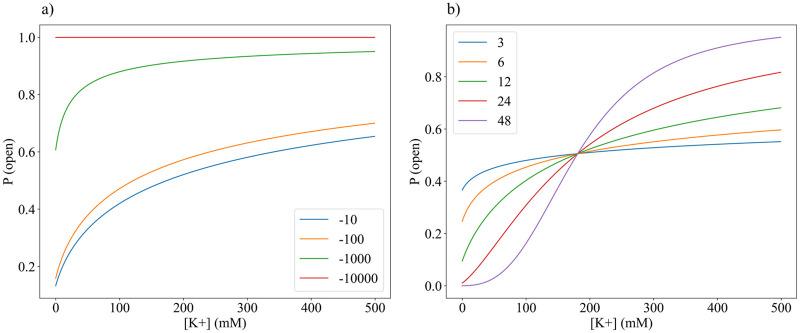
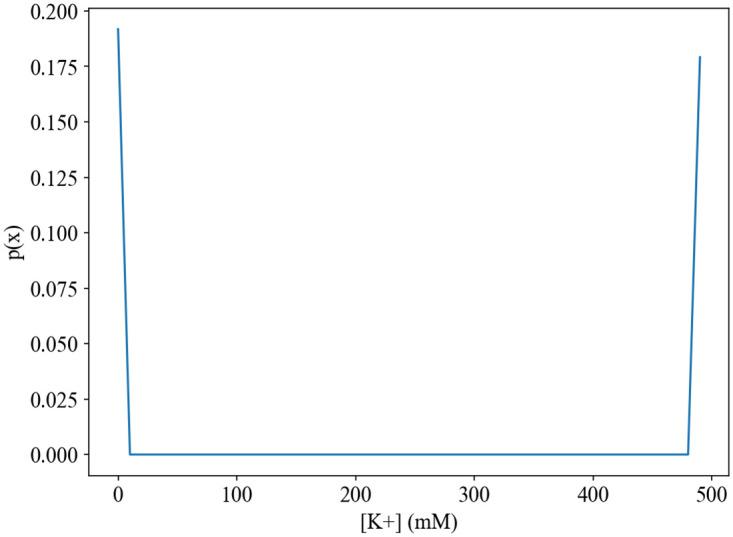
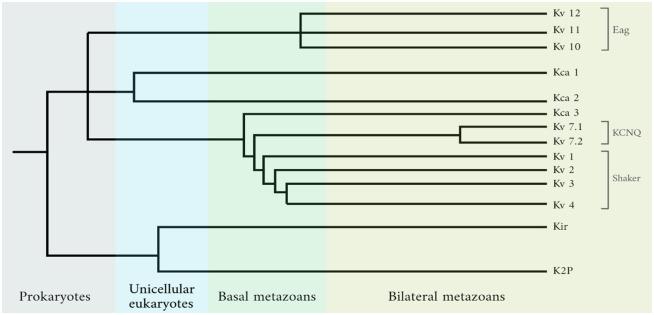
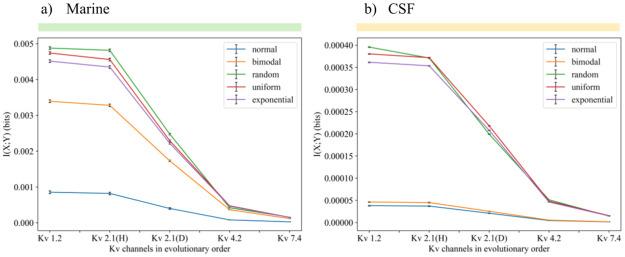
Potassium voltage-gated (Kv) channels need to detect and respond to rapidly changing ionic concentrations in their environment. With an essential role in regulating electric signaling, they would be expected to be optimal sensors that evolved to predict the ionic concentrations. To explore these assumptions, we use statistical mechanics in conjunction with information theory to model how animal Kv channels respond to changes in potassium concentrations in their environment. By measuring mutual information in representative Kv channel types across a variety of environments, we find two things. First, under weak conditions, there is a gating charge that maximizes mutual information with the environment. Second, as Kv channels evolved, they have moved towards decreasing mutual information with the environment. This either suggests that Kv channels do not need to act as sensors of their environment or that Kv channels have other functionalities that interfere with their role as sensors of their environment.
钾电压门控 (Kv) 通道需要检测和响应其环境中迅速变化的离子浓度。在调节电信号方面发挥着重要作用,它们应该是进化到能够预测离子浓度的最佳传感器。为了探索这些假设,我们使用统计力学结合信息论来模拟动物 Kv 通道如何响应其环境中钾浓度的变化。通过测量各种环境下代表性 Kv 通道类型的互信息,我们发现了两件事。首先,在弱条件下,存在一个门控电荷,它与环境的互信息最大化。其次,随着 Kv 通道的进化,它们朝着与环境的互信息减少的方向发展。这要么表明 Kv 通道不需要充当其环境的传感器,要么表明 Kv 通道具有其他干扰其作为环境传感器的功能。


 Zotero 插件