
丁酸通过增强GPR43介导的III型干扰素产生来限制猪流行性腹泻病毒在肠上皮细胞中的复制。
Butyrate limits the replication of porcine epidemic diarrhea virus in intestine epithelial cells by enhancing GPR43-mediated IFN-III production.
作者信息
He Haiyan, Fan Xuelei, Shen Haiyan, Gou Hongchao, Zhang Chunhong, Liu Zhicheng, Zhang Bin, Wuri Nile, Zhang Jianfeng, Liao Ming, Geri Letu
机构信息
College of Veterinary Medicine, Inner Mongolia Agricultural University, Hohhot, China.
Institute of Animal Health, Guangdong Academy of Agricultural Sciences, Guangzhou, China.
出版信息
Front Microbiol. 2023 Jan 20;14:1091807. doi: 10.3389/fmicb.2023.1091807. eCollection 2023.
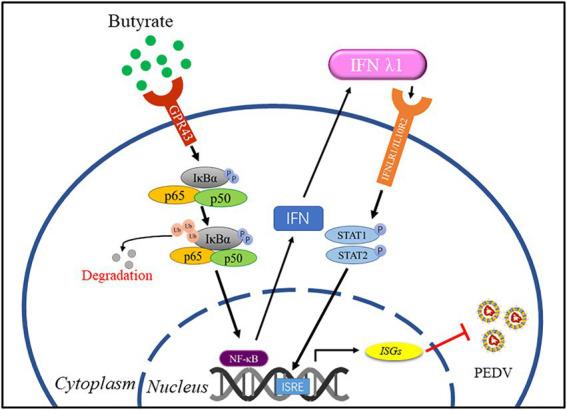
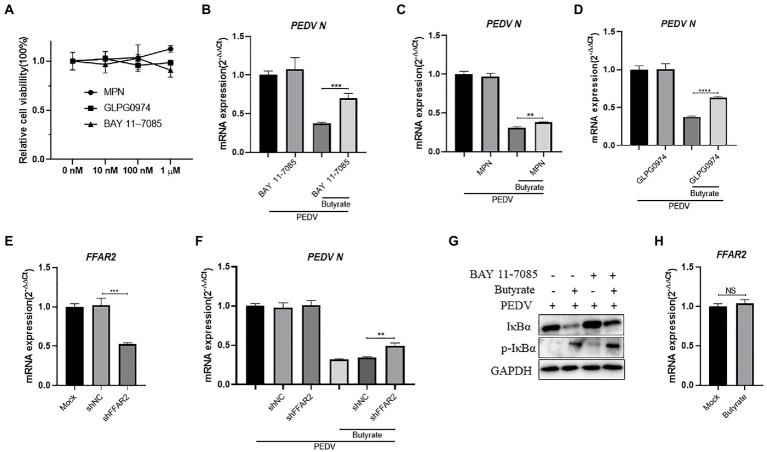
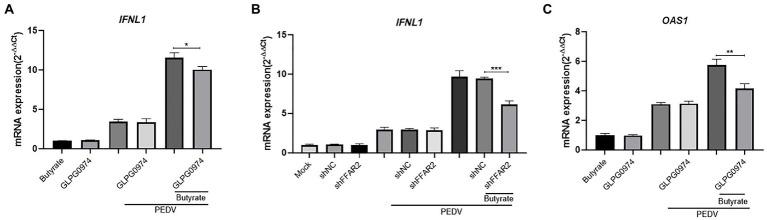
Porcine epidemic diarrhea virus (PEDV) is a threat to the health of newborn piglets and has a significant impact on the swine industry. Short-chain fatty acids (SCFAs) are gut microbial metabolites that regulate intestinal function through different mechanisms to enhance the intestinal barrier and immune function. In this study, we aimed to determine whether butyrate displayed a better effect than other SCFAs on limiting PEDV replication in porcine intestinal epithelial cells. Mechanistically, butyrate treatment activated the interferon (IFN) response and interferon-stimulated gene (ISG) expression. Further experiments showed that inhibition of GPR43 (free fatty acid receptor 2) in intestinal epithelial cells increased virus infection and reduced antiviral effects through IFN λ response. Our findings revealed that butyrate exerts its antiviral effects by inducing GPR43-mediated IFN production in intestinal epithelial cells.
猪流行性腹泻病毒(PEDV)对新生仔猪的健康构成威胁,对养猪业有重大影响。短链脂肪酸(SCFAs)是肠道微生物代谢产物,通过不同机制调节肠道功能,以增强肠道屏障和免疫功能。在本研究中,我们旨在确定丁酸盐在限制猪肠道上皮细胞中PEDV复制方面是否比其他短链脂肪酸表现出更好的效果。从机制上讲,丁酸盐处理激活了干扰素(IFN)反应和干扰素刺激基因(ISG)表达。进一步的实验表明,抑制肠道上皮细胞中的GPR43(游离脂肪酸受体2)会增加病毒感染,并通过IFNλ反应降低抗病毒作用。我们的研究结果表明,丁酸盐通过诱导肠道上皮细胞中GPR43介导的IFN产生发挥其抗病毒作用。


 Zotero 插件