
生酮饮食:其对人类肠道微生物群的影响及潜在的健康后果:一项系统的文献综述
The ketogenic diet: its impact on human gut microbiota and potential consequent health outcomes: a systematic literature review.
作者信息
Rew Leslyn, Harris Miranda D, Goldie Joanna
机构信息
The School of Allied Health and Community, University of Worcester, Henwick Grove, WR2 6AJ, United Kingdom.
出版信息
Gastroenterol Hepatol Bed Bench. 2022;15(4):326-342. doi: 10.22037/ghfbb.v15i4.2600.
AIM
This systematic review examined the diet's impact on the human gut microbiota to identify potential consequent health outcomes.
BACKGROUND
The extreme macronutrient profile of the ketogenic diet (KD) instigates compositional shifts in the gut's microbial community.
METHODS
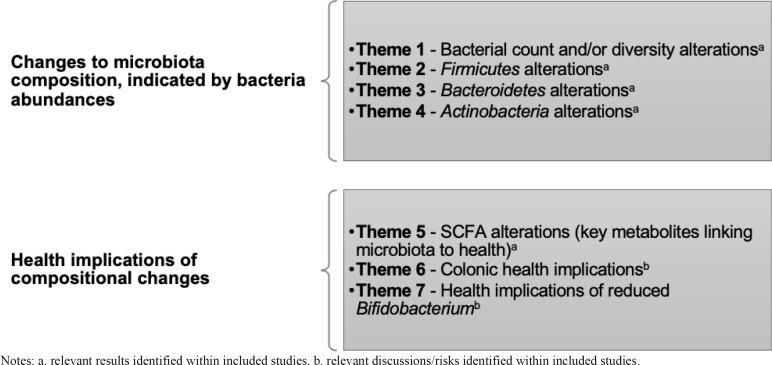
In this systematic literature review, an evidence-based and methodical approach was undertaken, which involved systematic searches of the Medical Literature Analysis and Retrieval System Online (MEDLINE), PubMed and Cumulative Index to Nursing and Allied Health Literature (CINAHL) databases, generating a total of 263 relevant research papers. Following the application of inclusion and exclusion criteria, eight papers were deemed suitable for inclusion. These papers were critically appraised using a checklist tool adapted from the National Institute of Care and Excellence (NICE). The findings were analysed using a simplified thematic analysis.
RESULTS
The results provide strong evidence for a persistent reduction in abundance following KD adherence. A reduced abundance of key utyrate-producing bacteria was found to be a likely impact, although two studies with extended intervention periods indicate this may be time-limited. Studies investigating short-chain fatty acids (SCFA's) indicate KD reduces total faecal SCFA's, acetate, and butyrate.
CONCLUSION
Changes to microbial communities resulting from KD adherence are potentially detrimental to colonic health. The persistent reduction in abundance was concerning, with obesity, type-2 diabetes, and depression highlighted as potential consequent risks. For nutrition and healthcare professionals, the findings emphasize the importance of considering KDs microbial effects and resulting health implications at an individual level.
目的
本系统评价研究了饮食对人体肠道微生物群的影响,以确定可能随之产生的健康结果。
背景
生酮饮食(KD)的极端宏量营养素特征会引发肠道微生物群落的组成变化。
方法
在本系统文献综述中,采用了基于证据的系统方法,包括对医学文献分析和检索系统在线数据库(MEDLINE)、PubMed以及护理学与健康相关文献累积索引数据库(CINAHL)进行系统检索,共获得263篇相关研究论文。在应用纳入和排除标准后,8篇论文被认为适合纳入。使用从英国国家卫生与临床优化研究所(NICE)改编的清单工具对这些论文进行严格评估。研究结果采用简化的主题分析方法进行分析。
结果
结果提供了强有力的证据,表明坚持生酮饮食后丰度持续降低。发现关键产丁酸盐细菌的丰度降低可能是一个影响因素,尽管两项干预期延长的研究表明这可能是有时间限制的。对短链脂肪酸(SCFAs)的研究表明,生酮饮食会降低粪便中总短链脂肪酸、乙酸盐和丁酸盐的含量。
结论
坚持生酮饮食导致的微生物群落变化可能对结肠健康有害。丰度的持续降低令人担忧,肥胖、2型糖尿病和抑郁症被强调为潜在的后续风险。对于营养和医疗保健专业人员来说,这些发现强调了在个体层面考虑生酮饮食对微生物的影响及其对健康的影响的重要性。



 Zotero 插件