
骨髓增生异常综合征的新兴治疗方法:生物学原理与临床转化。
Emerging treatments for myelodysplastic syndromes: Biological rationales and clinical translation.
机构信息
Department of Leukemia, The University of Texas MD Anderson Cancer Center, Houston, TX 77030, USA.
Department of Leukemia, The University of Texas MD Anderson Cancer Center, Houston, TX 77030, USA.
出版信息
Cell Rep Med. 2023 Feb 21;4(2):100940. doi: 10.1016/j.xcrm.2023.100940. Epub 2023 Feb 13.
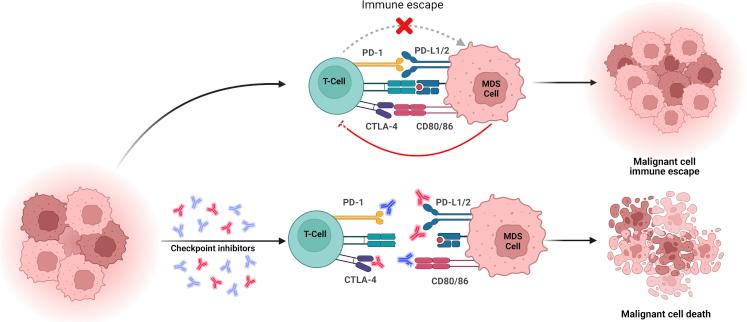
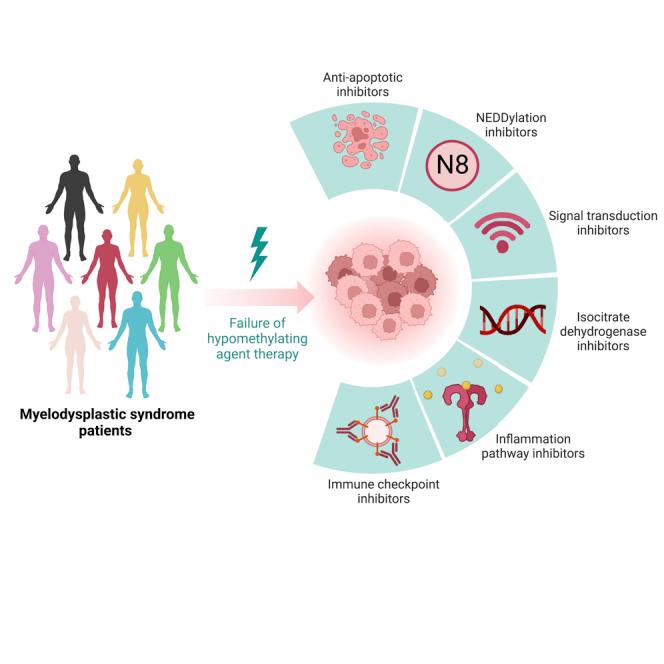
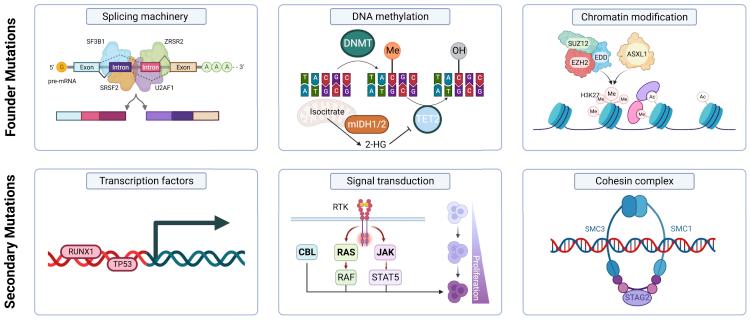
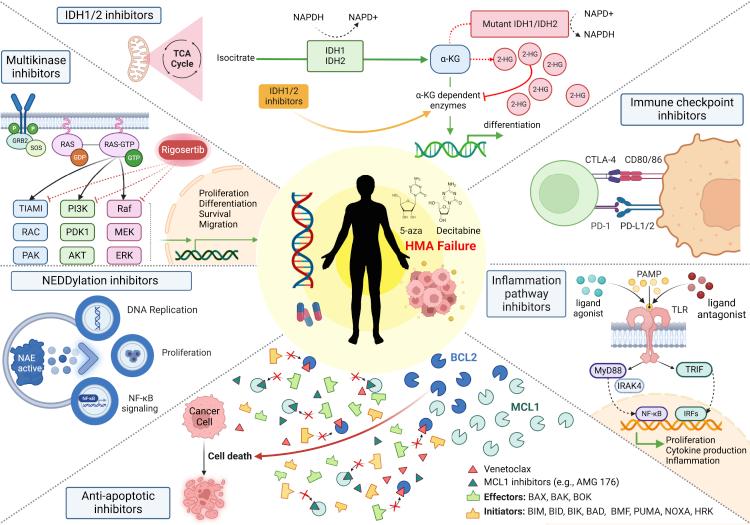
Myelodysplastic syndromes (MDSs) are a heterogeneous group of clonal hematopoietic stem cell disorders characterized by myeloid dysplasia, peripheral blood cytopenias, and increased risk of progression to acute myeloid leukemia (AML). The standard of care for patients with MDS is hypomethylating agent (HMA)-based therapy; however, nearly 50% of patients have no response to the treatment. Patients with MDS in whom HMA therapy has failed have a dismal prognosis and no approved second-line therapy options, so enrollment in clinical trials of experimental agents represents these patients' only chance for improved outcomes. A better understanding of the molecular and biological mechanisms underpinning MDS pathogenesis has enabled the development of new agents that target molecular alterations, cell death regulators, signaling pathways, and immune regulatory proteins in MDS. Here, we review novel therapies for patients with MDS in whom HMA therapy has failed, with an emphasis on the biological rationale for these therapies' development.
骨髓增生异常综合征(MDS)是一组异质性克隆性造血干细胞疾病,其特征为髓系发育不良、外周血细胞减少症以及向急性髓系白血病(AML)进展的风险增加。MDS 患者的标准治疗方法是基于低甲基化剂(HMA)的治疗;然而,近 50%的患者对该治疗无反应。在 HMA 治疗失败的 MDS 患者预后较差,且没有批准的二线治疗选择,因此,参加实验性药物的临床试验代表了这些患者改善结局的唯一机会。对 MDS 发病机制的分子和生物学机制的深入了解,使得靶向分子改变、细胞死亡调节剂、信号通路和 MDS 中的免疫调节蛋白的新型药物得以开发。在这里,我们综述了 HMA 治疗失败的 MDS 患者的新型治疗方法,重点介绍了这些治疗方法开发的生物学依据。
 Zotero 插件