
锂在癌症治疗中:是友是敌?
Lithium in Cancer Therapy: Friend or Foe?
作者信息
Yang Chunhao, Zhu Bo, Zhan Mingjie, Hua Zi-Chun
机构信息
School of Biopharmacy, China Pharmaceutical University, Nanjing 211198, China.
The State Key Laboratory of Pharmaceutical Biotechnology, School of Life Sciences, Nanjing University, Nanjing 210023, China.
出版信息
Cancers (Basel). 2023 Feb 8;15(4):1095. doi: 10.3390/cancers15041095.
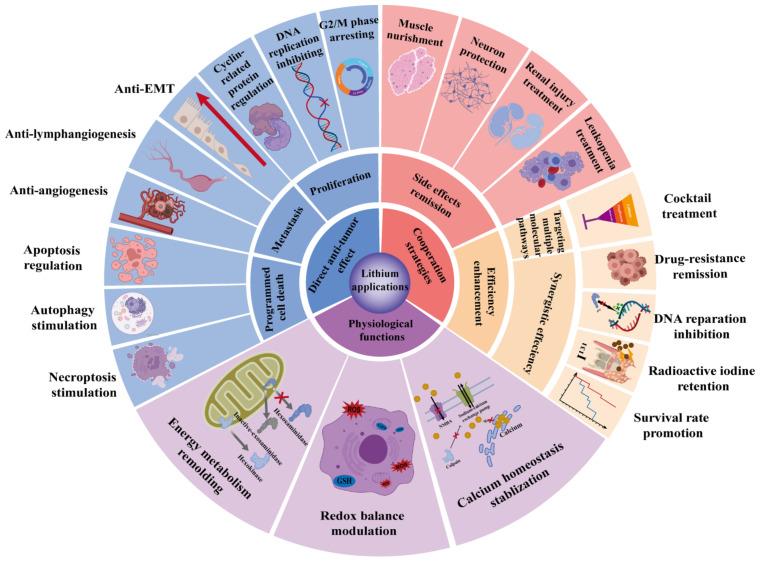
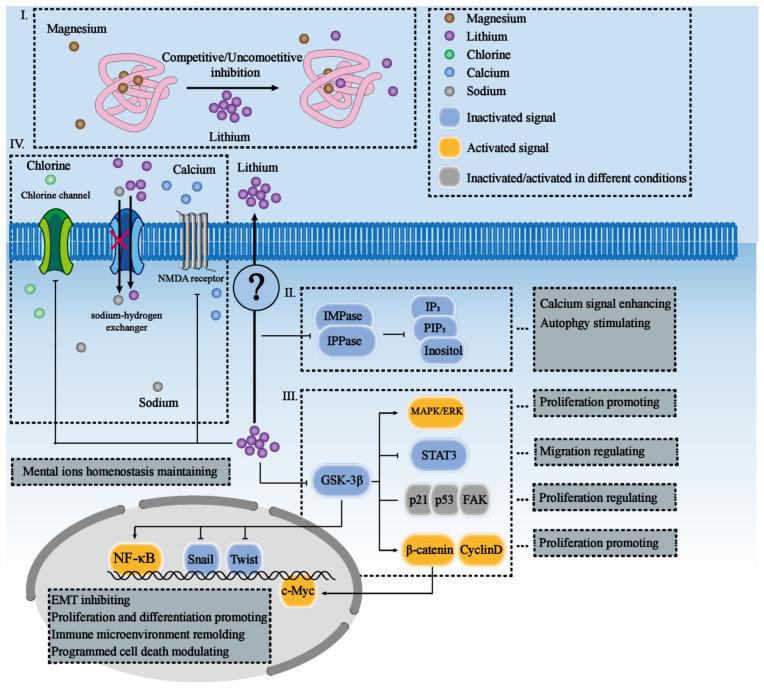
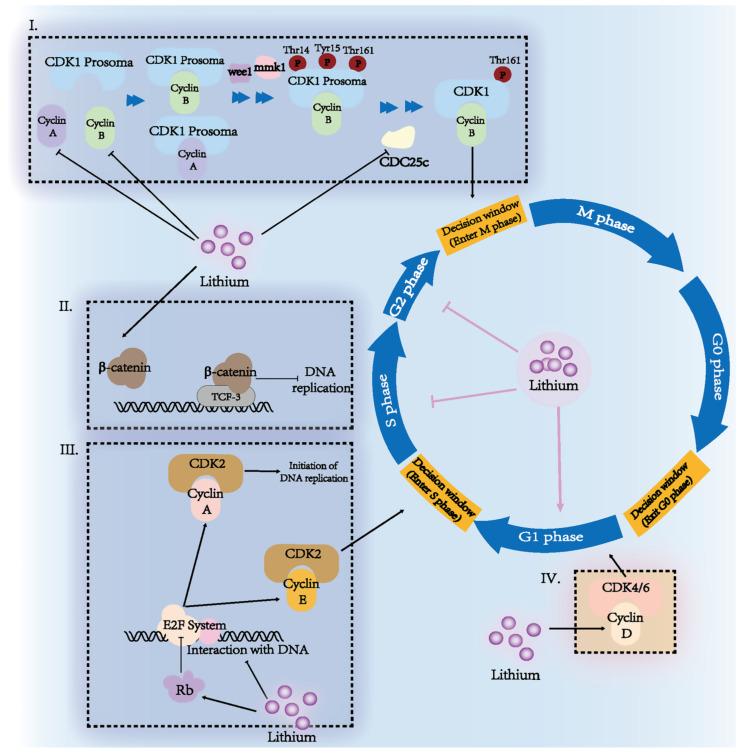
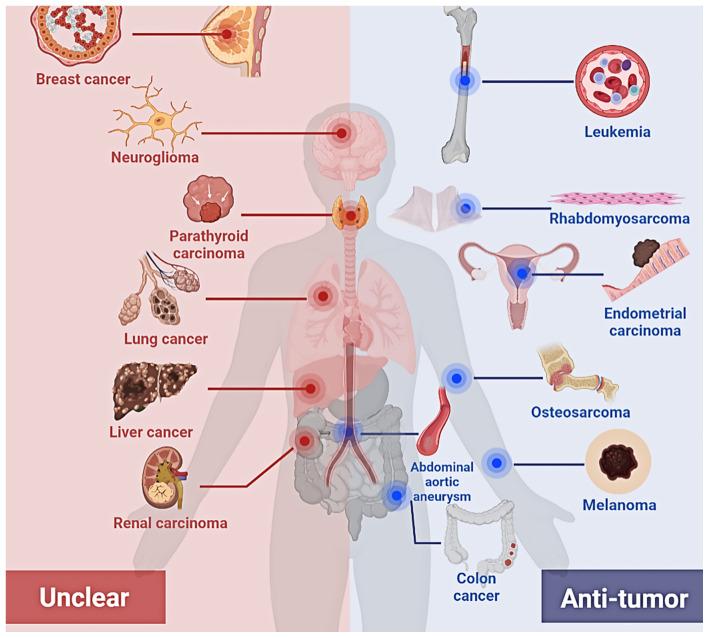
Lithium, a trace element important for fetal health and development, is considered a metal drug with a well-established clinical regime, economical production process, and a mature storage system. Several studies have shown that lithium affects tumor development by regulating inositol monophosphate (IMPase) and glycogen synthase kinase-3 (GSK-3). Lithium can also promote proliferation and programmed cell death (PCD) in tumor cells through a number of new targets, such as the nuclear receptor NR4A1 and Hedgehog-Gli. Lithium may increase cancer treatment efficacy while reducing side effects, suggesting that it can be used as an adjunctive therapy. In this review, we summarize the effects of lithium on tumor progression and discuss the underlying mechanisms. Additionally, we discuss lithium's limitations in antitumor clinical applications, including its narrow therapeutic window and potential pro-cancer effects on the tumor immune system.
锂是一种对胎儿健康和发育至关重要的微量元素,被认为是一种具有成熟临床方案、经济生产工艺和完善储存系统的金属药物。多项研究表明,锂通过调节肌醇单磷酸酶(IMPase)和糖原合酶激酶-3(GSK-3)来影响肿瘤发展。锂还可通过一些新靶点,如核受体NR4A1和Hedgehog-Gli,促进肿瘤细胞的增殖和程序性细胞死亡(PCD)。锂可能在提高癌症治疗效果的同时降低副作用,这表明它可用作辅助治疗。在本综述中,我们总结了锂对肿瘤进展的影响并讨论了其潜在机制。此外,我们还讨论了锂在抗肿瘤临床应用中的局限性,包括其狭窄的治疗窗以及对肿瘤免疫系统潜在的促癌作用。
 Zotero 插件