
免疫细胞在前列腺癌转移肿瘤微环境中的作用
Impact of Immune Cells in the Tumor Microenvironment of Prostate Cancer Metastasis.
作者信息
Messex Justin K, Liou Geou-Yarh
机构信息
Center for Cancer Research and Therapeutic Development, Clark Atlanta University, Atlanta, GA 30314, USA.
Department of Biological Sciences, Clark Atlanta University, Atlanta, GA 30314, USA.
出版信息
Life (Basel). 2023 Jan 26;13(2):333. doi: 10.3390/life13020333.
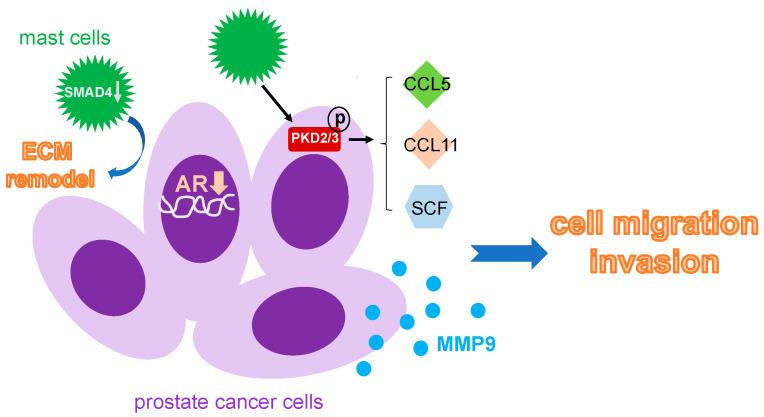
Prostate cancer is the most prevalent type of cancer in senior American men. Currently, the five-year survival rate after the initial diagnosis of prostate cancer is close to 100%. However, it is also the second leading cause of cancer death in senior men due to the dissemination of prostate cancer cells outside of the prostate causing growth in other organs, known as metastatic prostate cancer. The tumor microenvironment (TME) plays a critical role in the development, progression and metastasis of prostate cancer. One of the major components of the TME contains various types of immune cells, often recruited by cancer cells to the cancer formation areas. The interactions among prostate cancer cells and the infiltrating immune cells affect the outcome of prostate cancer. Here, we summarize the mechanisms various infiltrating immune cells use to regulate prostate cancer metastasis and possibly lead to the development of treatment strategies. Furthermore, the information here may also give rise to preventative strategies that focus on targeting the TME of prostate cancer patients.
前列腺癌是美国老年男性中最常见的癌症类型。目前,前列腺癌初诊后的五年生存率接近100%。然而,由于前列腺癌细胞扩散到前列腺以外的其他器官并导致生长,即转移性前列腺癌,它也是老年男性癌症死亡的第二大主要原因。肿瘤微环境(TME)在前列腺癌的发生、发展和转移中起着关键作用。TME的主要成分之一包含各种类型的免疫细胞,这些免疫细胞通常由癌细胞招募到癌症形成区域。前列腺癌细胞与浸润性免疫细胞之间的相互作用会影响前列腺癌的结局。在此,我们总结了各种浸润性免疫细胞用于调节前列腺癌转移的机制,并可能导致治疗策略的发展。此外,这里的信息还可能催生专注于靶向前列腺癌患者TME的预防策略。


 Zotero 插件