
严格意义上的丛枝菌根真菌产生的抗菌化合物的汇编。
Compilation of the Antimicrobial Compounds Produced by Sensu Stricto.
机构信息
Departamento de Microbiología, Escuela Nacional de Ciencias Biológicas, Instituto Politécnico Nacional, Prol. de Carpio y Plan de Ayala S/N Col. Santo Tomás Alc. Miguel Hidalgo, Ciudad de México 11340, Mexico.
Escuela Nacional de Estudios Superiores Unidad León, Universidad Nacional Autónoma de México (ENES-León UNAM), Blvd. UNAM 2011, León, Guanajuato 37684, Mexico.
出版信息
Molecules. 2023 Feb 8;28(4):1646. doi: 10.3390/molecules28041646.
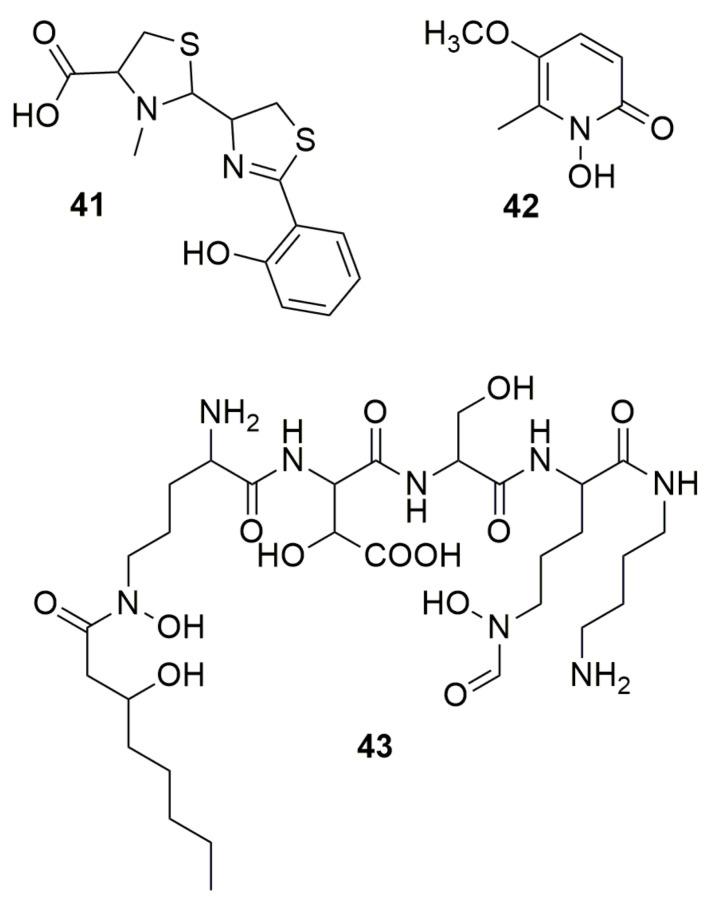
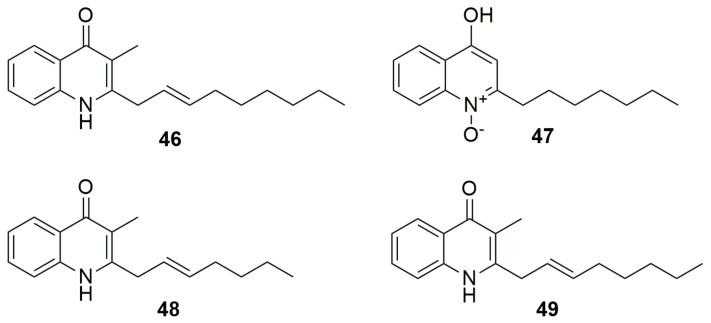
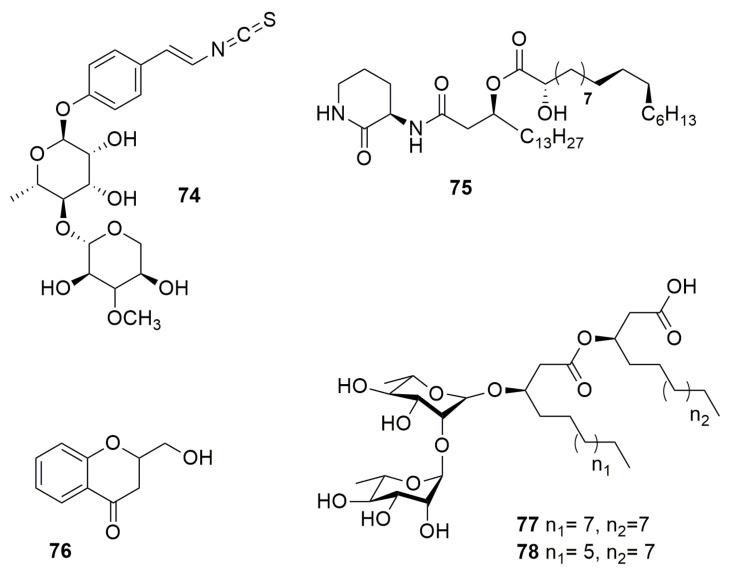
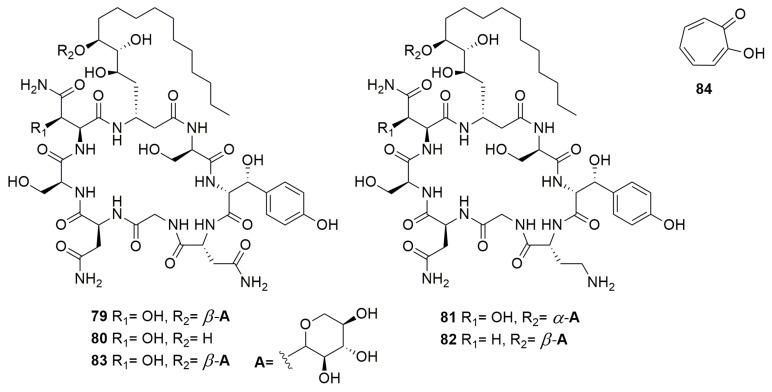
Due to the increase in multidrug-resistant microorganisms, the investigation of novel or more efficient antimicrobial compounds is essential. The World Health Organization issued a list of priority multidrug-resistant bacteria whose eradication will require new antibiotics. Among them, , and Enterobacteriaceae are in the "critical" (most urgent) category. As a result, major investigations are ongoing worldwide to discover new antimicrobial compounds. , specifically sensu stricto, is recognized as an antimicrobial-producing group of species. Highly dissimilar compounds are among the molecules produced by this genus, such as those that are unique to a particular strain (like compound CF66I produced by CF-66) or antimicrobials found in a number of species, e.g., phenazines or ornibactins. The compounds produced by include N-containing heterocycles, volatile organic compounds, polyenes, polyynes, siderophores, macrolides, bacteriocins, quinolones, and other not classified antimicrobials. Some of them might be candidates not only for antimicrobials for both bacteria and fungi, but also as anticancer or antitumor agents. Therefore, in this review, the wide range of antimicrobial compounds produced by is explored, focusing especially on those compounds that were tested in vitro for antimicrobial activity. In addition, information was gathered regarding novel compounds discovered by genome-guided approaches.
由于多药耐药微生物的增加,调查新型或更有效的抗菌化合物是必要的。世界卫生组织发布了一份优先多药耐药细菌清单,这些细菌的根除需要新的抗生素。其中,肠杆菌科和假单胞菌科被列为“危急”(最紧急)类别。因此,全球范围内正在进行重大调查,以发现新的抗菌化合物。严格意义上的不动杆菌属被认为是产生抗菌化合物的物种群。该属产生的分子高度不同,例如那些特定菌株特有的分子(如 CF-66 产生的化合物 CF66I)或在许多物种中发现的抗菌剂,例如吩嗪或奥尼巴汀。不动杆菌产生的化合物包括含氮杂环、挥发性有机化合物、多烯、多炔、铁载体、大环内酯、细菌素、喹诺酮和其他未分类的抗菌剂。其中一些可能不仅是细菌和真菌的抗菌剂候选物,而且可能是抗癌或抗肿瘤药物的候选物。因此,在这篇综述中,探讨了不动杆菌属产生的广泛的抗菌化合物,特别关注那些在体外进行了抗菌活性测试的化合物。此外,还收集了有关基于基因组指导方法发现的新型化合物的信息。




 Zotero 插件