
厄瓜多尔无刺蜂在耳垢罐中加工的蜂蜜的目标氢核磁共振有机图谱中属( 、 、 )的影响及通过相间乳液进行的真实性测试。
Impact of genus (, , ) in the targeted H-NMR organic profile, and authenticity test by interphase emulsion of honey processed in cerumen pots by stingless bees in Ecuador.
作者信息
Vit Patricia, van der Meulen Jane, Diaz Maria, Pedro Silvia R M, Esperança Isabelle, Zakaria Rahimah, Beckh Gudrun, Maza Favian, Meccia Gina, Engel Michael S
机构信息
Food Science Department, Faculty of Pharmacy and Bioanalysis, Universidad de Los Andes, Mérida, 5101, Venezuela.
Quality Services International GmbH, 28199, Bremen, Germany.
出版信息
Curr Res Food Sci. 2022 Nov 12;6:100386. doi: 10.1016/j.crfs.2022.11.005. eCollection 2023.
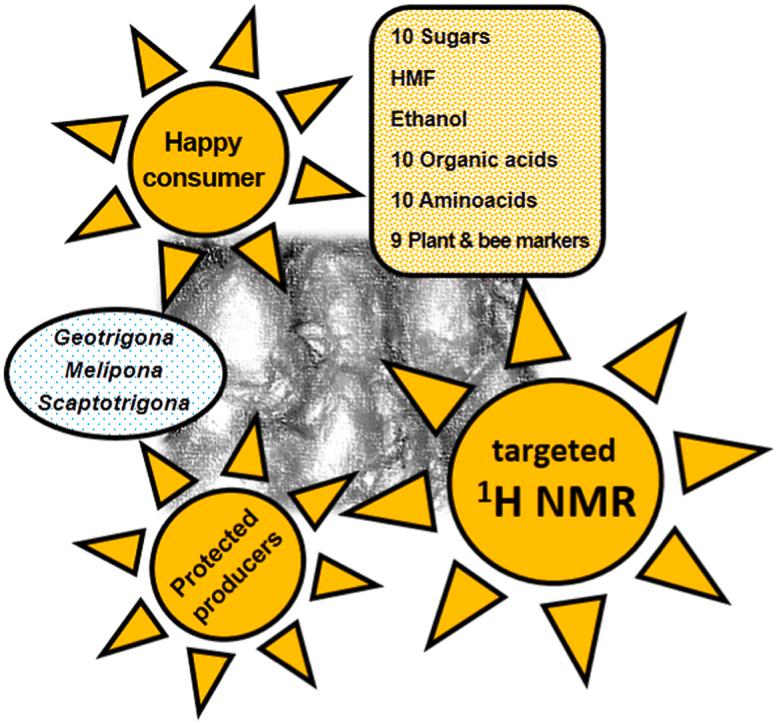
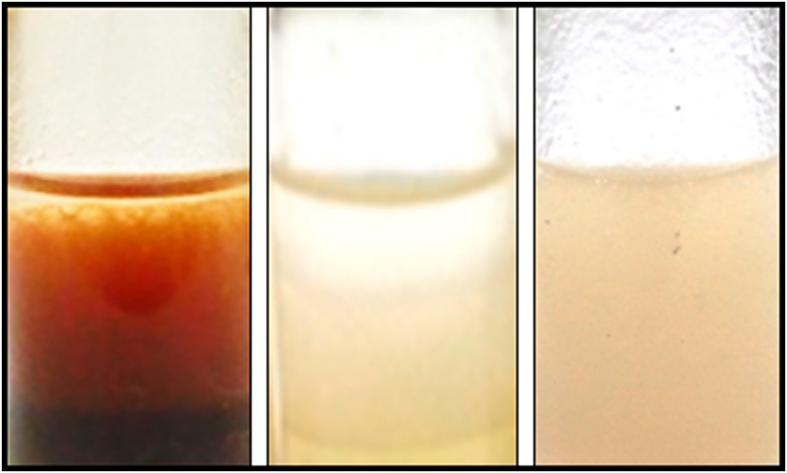
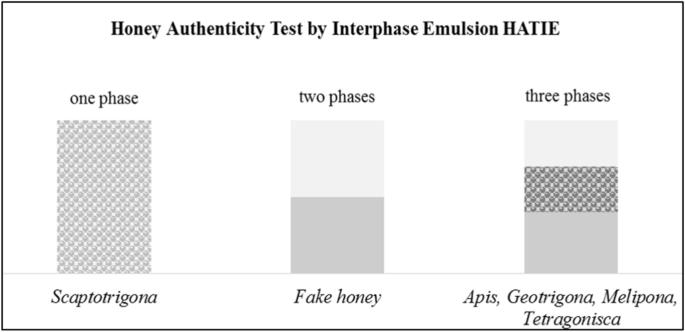
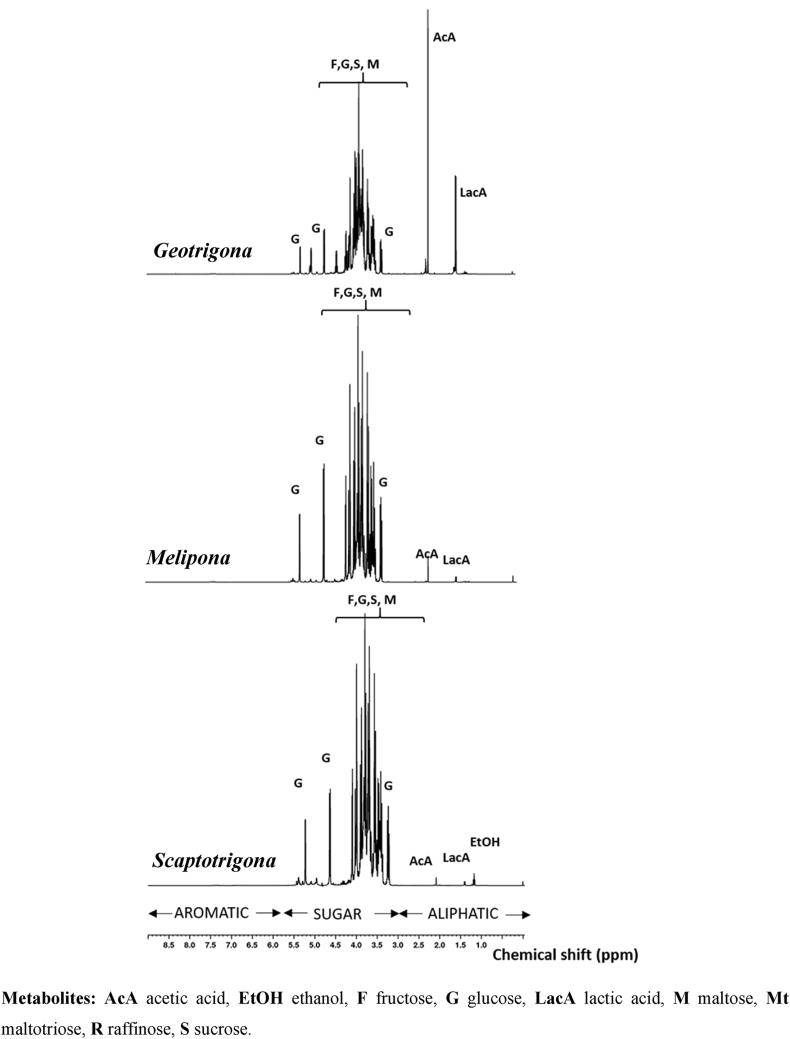
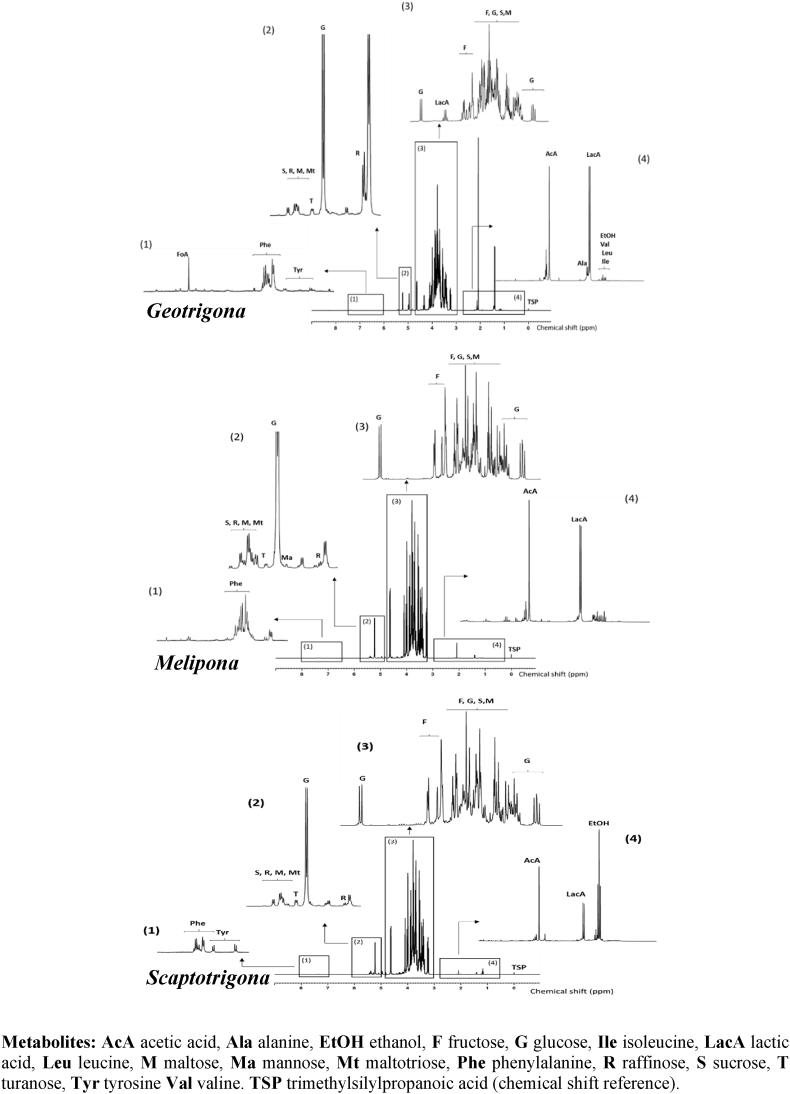
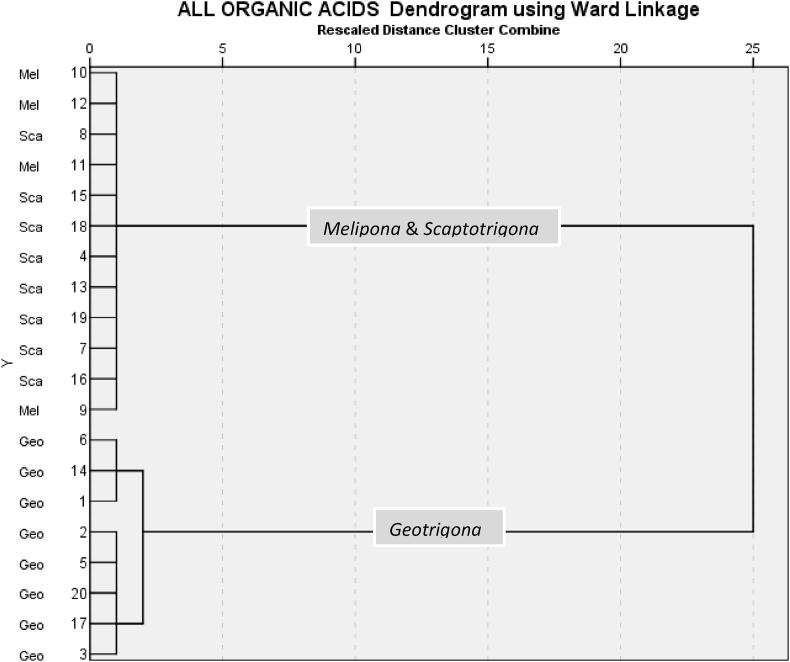
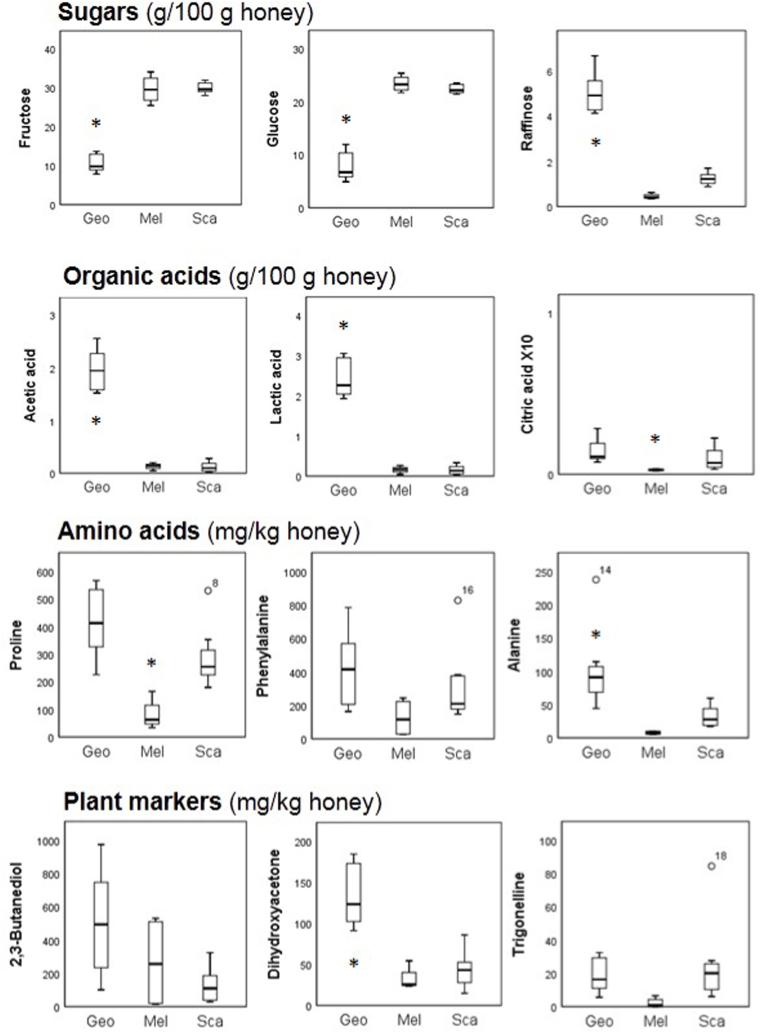
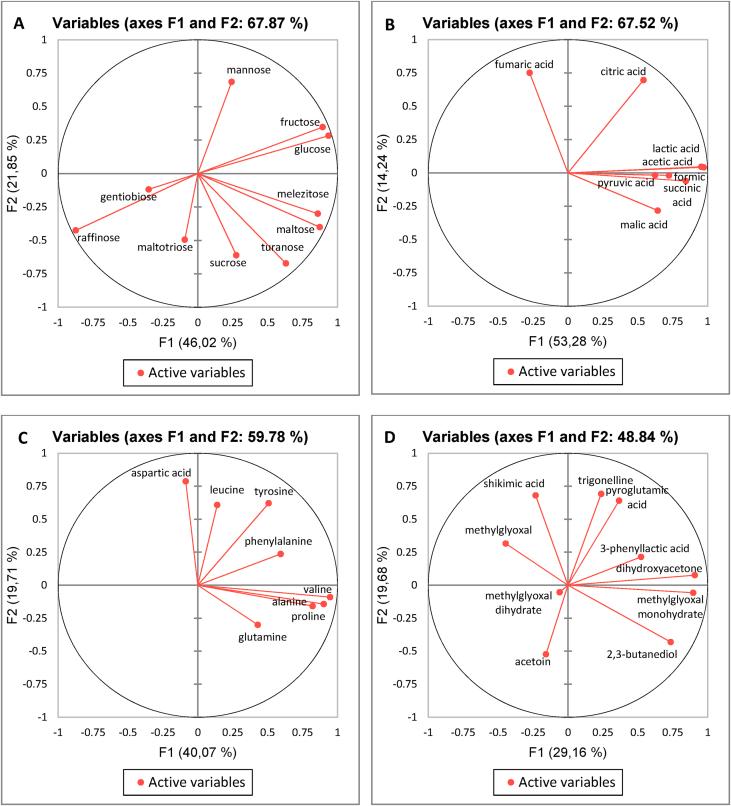
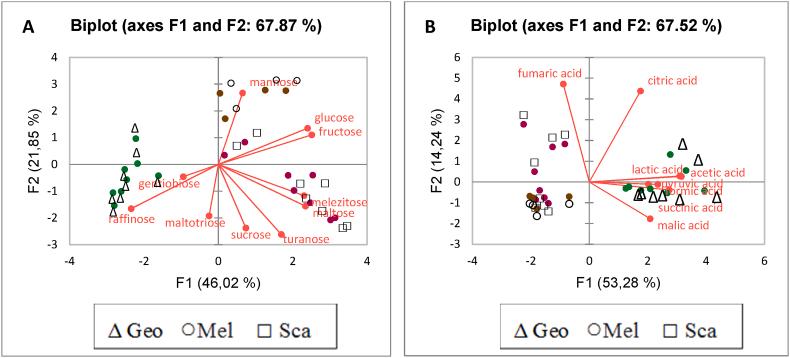
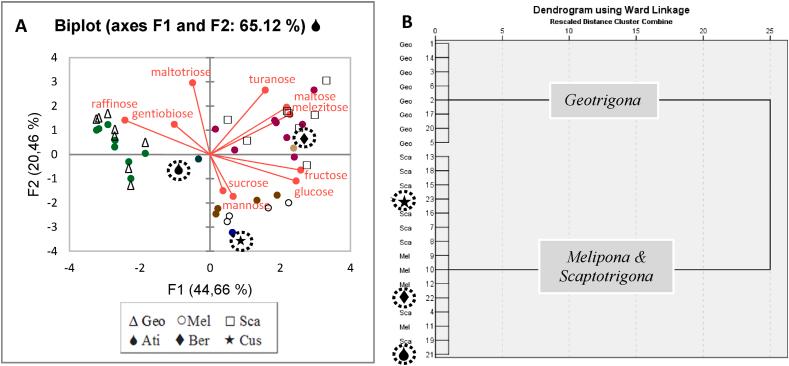
The biodiversity of Ecuadorian stingless bees is almost 200 species. Traditional pot-honey harvest in Ecuador is mostly done from nests of the three genera selected here Moure, 1943, Illiger, 1806, and Moure, 1942. The 20 pot-honey samples collected from cerumen pots and three ethnic honeys "abeja de tierra", "bermejo", and "cushillomishki" were analyzed for qualitative and quantitative targeted H-NMR honey profiling, and for the Honey Authenticity Test by Interphase Emulsion (HATIE). Extensive data of targeted organic compounds (41 parameters) were identified, quantified, and described. The three honey types were compared by ANOVA. Amino acids, ethanol, hydroxymethylfurfural, aliphatic organic acids, sugars, and markers of botanical origin. The number of phases observed with the HATIE were one in and three in and honeys. Acetic acid (19.60 ± 1.45 g/kg) and lactic acid (24.30 ± 1.65 g/kg) were particularly high in honey (in contrast to 1.3 g/kg acetic acid and 1.6 g/kg lactic acid in and ), and with the lowest fructose + glucose (18.39 ± 1.68) g/100g honey compared to (52.87 ± 1.75) and (52.17 ± 0.60). Three local honeys were tested using PCA (Principal Component Analysis), two were assigned with a correct declared bee origin, but "bermejo" was not a and grouped with the cluster. However after HCA (Hierarchical Cluster Analysis) the three honeys were positioned in the - cluster. This research supports targeted H-NMR-based profiling of pot-honey metabolomics approach for multi-parameter visualization of organic compounds, as well as descriptive and pertained multivariate statistics (HCA and PCA) to discriminate the stingless bee genus in a set of , and honey types. The NMR characterization of Ecuadorian honey produced by stingless bees emphasizes the need for regulatory norms. A final note on stingless bee markers in pot-honey metabolites which should be screened for those that may extract phylogenetic signals from nutritional traits of honey. honey revealed biosurfactant activity in the HATIE, originating a fingerprint Honey Biosurfactant Test (HBT) for the genus in this set of pot-honeys.
厄瓜多尔无刺蜂的生物多样性近200种。厄瓜多尔传统的罐蜜采集大多来自这里挑选的三个属的蜂巢(穆雷,1943年;伊利格,1806年;穆雷,1942年)。对从耳垢罐中采集的20个罐蜜样本以及三种民族蜂蜜“abeja de tierra”、“bermejo”和“cushillomishki”进行了定性和定量靶向核磁共振蜂蜜谱分析,以及相间乳液蜂蜜真实性测试(HATIE)。确定、量化并描述了靶向有机化合物的大量数据(41个参数)。通过方差分析对这三种蜂蜜类型进行了比较。分析了氨基酸、乙醇、羟甲基糠醛、脂肪族有机酸、糖类以及植物来源标记物。用HATIE观察到的相数在“abeja de tierra”蜂蜜中为1相,在“bermejo”和“cushillomishki”蜂蜜中为3相。“cushillomishki”蜂蜜中的乙酸(19.60±1.45克/千克)和乳酸(24.30±1.65克/千克)含量特别高(相比之下,“abeja de tierra”蜂蜜中的乙酸为1.3克/千克,乳酸为1.6克/千克),且其果糖 + 葡萄糖含量(18.39±1.68)克/100克蜂蜜是三种蜂蜜中最低的,相比之下,“abeja de tierra”蜂蜜中该含量为(52.87±1.75)克/100克,“bermejo”蜂蜜中为(52.17±0.60)克/100克。使用主成分分析(PCA)对三种当地蜂蜜进行了测试,其中两种被正确认定为具有声明的蜜蜂来源,但“bermejo”并非来自所选属,而是与所选属的聚类归为一组。然而,经过层次聚类分析(HCA)后,这三种蜂蜜被归入所选属的聚类中。本研究支持基于靶向核磁共振的罐蜜代谢组学方法用于有机化合物的多参数可视化分析,以及用于区分一组所选属、所选属和所选属蜂蜜类型中无刺蜂属的描述性和相关多变量统计分析(HCA和PCA)。对厄瓜多尔无刺蜂生产的蜂蜜进行的核磁共振表征强调了制定监管规范的必要性。最后关于罐蜜代谢物中无刺蜂标记物的说明,应筛选那些可能从蜂蜜营养特性中提取系统发育信号的标记物。“cushillomishki”蜂蜜在HATIE中显示出生物表面活性剂活性,由此产生了这组罐蜜中该属的指纹蜂蜜生物表面活性剂测试(HBT)。



 Zotero 插件