
开发一个移动远程教学系统,以协助在新冠疫情期间进行远程耳鼻喉科学习。
Development of a mobile tele-education system to assist remote otolaryngology learning during COVID-19 pandemic.
作者信息
Fang Te-Yung, Hsu Su-Yi, Su Jun-Ming, Wang Pa-Chun
机构信息
Department of Otolaryngology Head Neck Surgery, Cathay General Hospital, Taipei, Taiwan.
School of Medicine, Fu Jen Catholic University, Taipei, Taiwan.
出版信息
Comput Methods Programs Biomed Update. 2023;3:100102. doi: 10.1016/j.cmpbup.2023.100102. Epub 2023 Mar 9.
BACKGROUND
Developing clinical thinking competence (CTC) is crucial for physicians, but effective methods for cultivation and evaluation are a significant challenge. Classroom teaching and paper-and-pencil tests are insufficient, and clinical field learning is difficult to implement, especially during the COVID-19 pandemic. Simulation learning is a useful alternative, but existing methods, e.g., OSCE, 3D AR/VR, and SimMan, have limitations in terms of time, space, and cost.
OBJECTIVE
This study aims to present the design and development of an Otolaryngology Mobile Tele-education System (OMTS) to facilitate CTC learning, and to evaluate the system's usability with senior otolaryngology experts.
METHODS
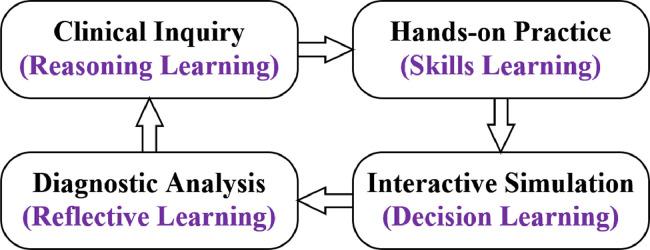
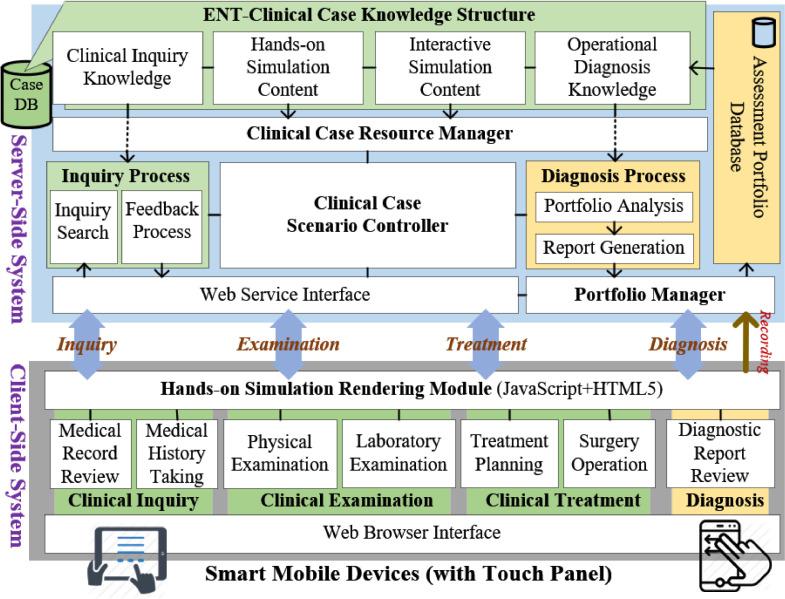
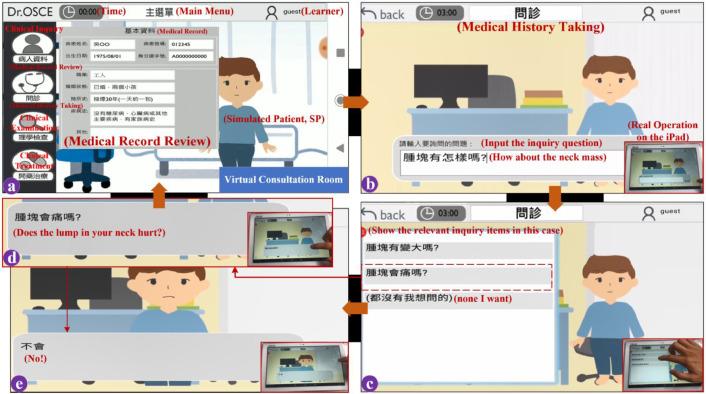
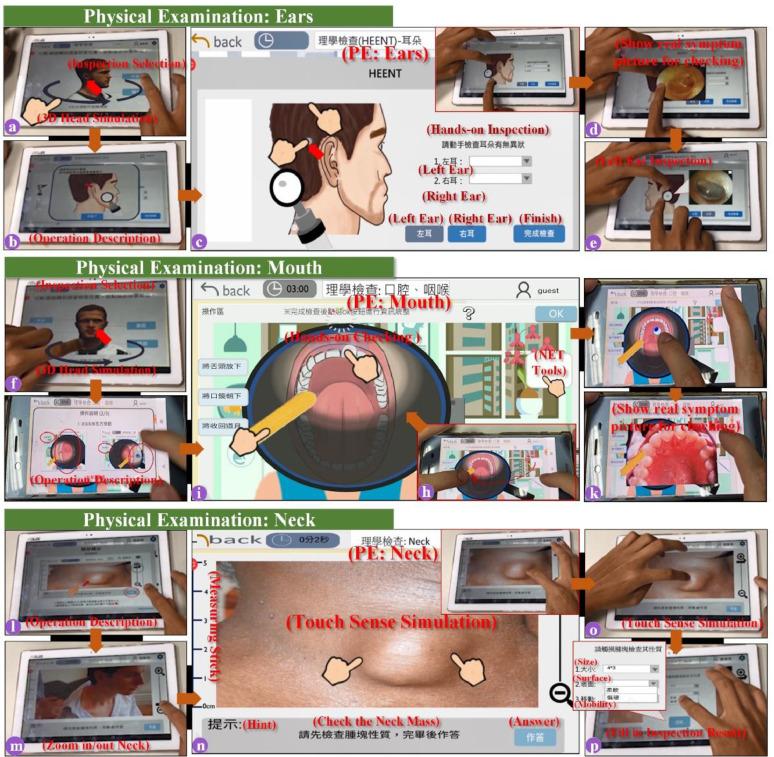
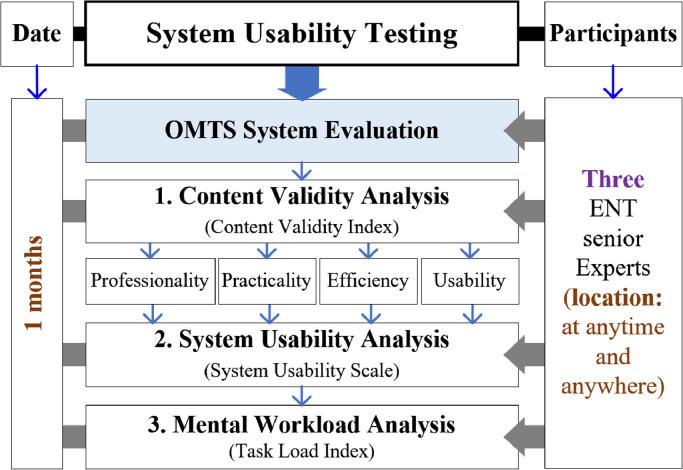
The OMTS system utilizes the convenience of mobile learning and the touch function of mobile devices to assist users (medical students or post-graduate physicians) in learning CTC remotely. Clinical knowledge and system functions in the OMTS system are defined by senior experts based on required CTC learning cases. Through simulated clinical case scenarios, users can engage in interactive clinical inquiry, practice required physical and laboratory examinations, make treatment decisions based on simulated responses, and understand and correct learning problems through a diagnostic report for effective learning. Usability testing of the OMTS system was evaluated by three senior otolaryngology experts using measurements of content validity, system usability, and mental workload during their available time and location.
RESULTS
Statistical results of experts' evaluation showed that the OMTS system has good content validity, marginal-to-acceptable system usability, and moderate mental workload. Experts agreed that the system was efficient, professional, and usable for learning, although the practicality of the clinical inquiry and hands-on practice functions could be improved further.
CONCLUSIONS
Based on the OMTS system, users can efficiently hands-on practice and learn clinical cases in otolaryngology, and understand and correct their problems according to the diagnostic report. Therefore, the OMTS system can be expected to facilitate CTC learning according to experts' evaluation.
背景
培养临床思维能力(CTC)对医生至关重要,但有效的培养和评估方法是一项重大挑战。课堂教学和纸笔测试并不充分,而临床实地学习难以实施,尤其是在新冠疫情期间。模拟学习是一种有用的替代方法,但现有方法,如客观结构化临床考试(OSCE)、3D 增强现实/虚拟现实(AR/VR)和模拟人(SimMan),在时间、空间和成本方面存在局限性。
目的
本研究旨在介绍耳鼻咽喉科移动远程教学系统(OMTS)的设计与开发,以促进 CTC 学习,并与耳鼻咽喉科资深专家一起评估该系统的可用性。
方法
OMTS 系统利用移动学习的便利性和移动设备的触摸功能,帮助用户(医学生或住院医师)远程学习 CTC。OMTS 系统中的临床知识和系统功能由资深专家根据所需的 CTC 学习案例来定义。通过模拟临床病例场景,用户可以进行交互式临床问诊,练习所需的体格检查和实验室检查,根据模拟反应做出治疗决策,并通过诊断报告了解和纠正学习问题,以实现有效学习。三位耳鼻咽喉科资深专家在其方便的时间和地点,通过测量内容效度、系统可用性和心理负荷,对 OMTS 系统进行了可用性测试。
结果
专家评估的统计结果表明,OMTS 系统具有良好的内容效度、勉强可接受的系统可用性和适度的心理负荷。专家们一致认为,该系统高效、专业且可用于学习,尽管临床问诊和实践操作功能的实用性还可进一步提高。
结论
基于 OMTS 系统,用户可以高效地进行耳鼻咽喉科临床病例的实践操作和学习,并根据诊断报告了解和纠正自己的问题。因此,根据专家评估,OMTS 系统有望促进 CTC 学习。




 Zotero 插件