
耐甲氧西林金黄色葡萄球菌中的抗菌药物耐药性
Antimicrobial resistance in methicillin-resistant staphylococcus aureus.
作者信息
Ali Alghamdi Bandar, Al-Johani Intisar, Al-Shamrani Jawhra M, Musamed Alshamrani Hussein, Al-Otaibi Bandar G, Almazmomi Kholod, Yusnoraini Yusof Nik
机构信息
Department of Cardiac Surgery, King Fahad Armed Forces Hospital, Jeddah, Saudi Arabia.
Department of Biotechnology, Taif University, Taif City, Saudi Arabia.
出版信息
Saudi J Biol Sci. 2023 Apr;30(4):103604. doi: 10.1016/j.sjbs.2023.103604. Epub 2023 Feb 28.
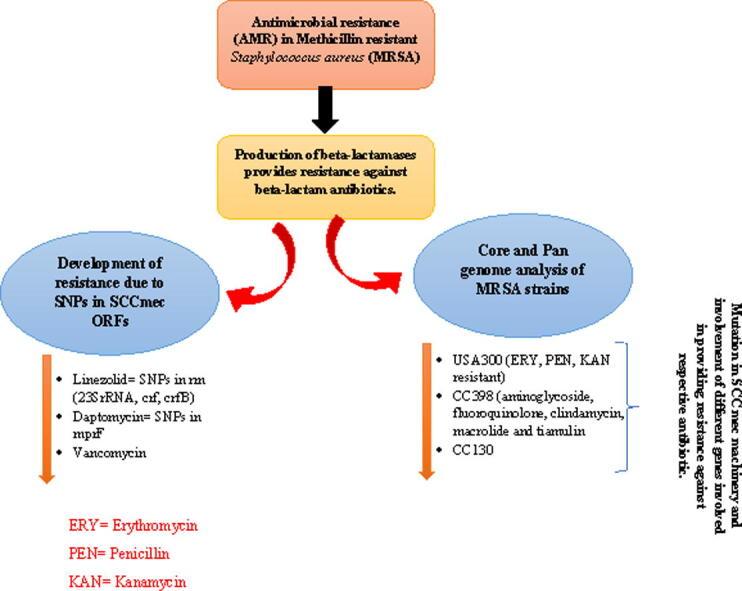
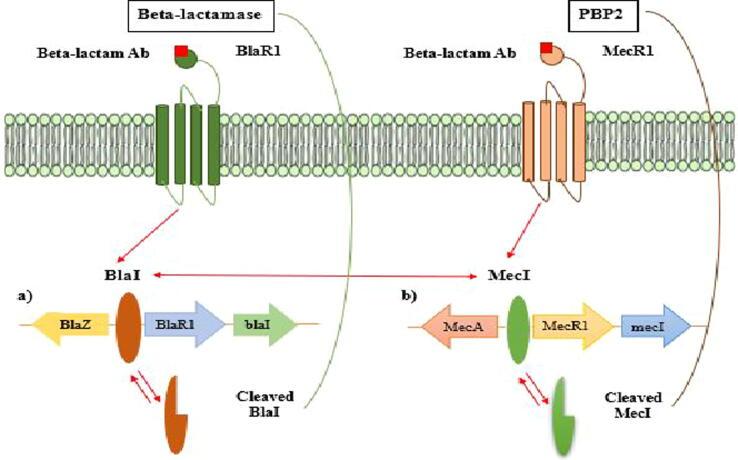
In the medical community, antibiotics are revered as a miracle because they stop diseases brought on by pathogenic bacteria. Antibiotics have become the cornerstone of contemporary medical advancements ever since penicillin was discovered. Antibiotic resistance developed among germs quickly, placing a strain in the medical field. Methicillin-resistant (MRSA), Since 1961, has emerged as the major general antimicrobial resistant bacteria (AMR) worldwide. MRSA can easily transmit across the hospital system and has mostly gained resistance to medications called beta-lactamases. This enzyme destroys the cell wall of beta-lactam antibiotics resulting in resistance against that respective antibiotic. Daptomycin, linezolid and vancomycin were previously used to treat MRSA infections. However, due to mutations and Single nucleotide polymorphisms (SNPs) in Open reading frames (ORFs) and SCCmec machinery of respective antibody, MRSA developed resistance against those antibiotics. The MRSA strains (USA300, CC398, CC130 etc.), when their pan-genomes were analyzed were found the genes involved in invoking resistance against the antibiotics as well as the epidemiology of that respective strain. PENC (penicillin plus potassium clavulanate) is the new antibiotic showing potential in treatment of MRSA though it is itself resistant against penicillin alone. In this review, our main focus is on mechanism of development of AMR in MRSA, how different ORFs are involved in evoking resistance in MRSA and what is the core-genome of different antimicrobial resistant MRSA.
在医学界,抗生素被誉为奇迹,因为它们能阻止由致病细菌引发的疾病。自青霉素被发现以来,抗生素已成为当代医学进步的基石。细菌中很快出现了抗生素耐药性,给医学领域带来了压力。耐甲氧西林金黄色葡萄球菌(MRSA)自1961年以来已成为全球主要的泛耐药抗菌细菌(AMR)。MRSA能轻易在医院系统中传播,并且大多对称为β-内酰胺酶的药物产生了耐药性。这种酶会破坏β-内酰胺类抗生素的细胞壁,从而导致对相应抗生素产生耐药性。达托霉素、利奈唑胺和万古霉素以前用于治疗MRSA感染。然而,由于各自抗体的开放阅读框(ORF)和葡萄球菌染色体盒式 mec 元件(SCCmec)机制中的突变和单核苷酸多态性(SNP),MRSA对这些抗生素产生了耐药性。当分析MRSA菌株(USA300、CC398、CC130等)的泛基因组时,发现了与对抗生素产生耐药性以及该菌株流行病学相关的基因。PENC(青霉素加克拉维酸钾)是一种在治疗MRSA方面显示出潜力的新型抗生素,尽管它本身对单独的青霉素具有耐药性。在本综述中,我们主要关注MRSA中AMR的产生机制、不同的ORF如何参与引发MRSA的耐药性以及不同耐抗菌药物MRSA的核心基因组是什么。
 Zotero 插件