
高质量的基因组组装和遗传图谱揭示了一个调控西瓜果肉颜色的基因()。
High-quality genome assembly and genetic mapping reveal a gene regulating flesh color in watermelon ().
作者信息
Nie Hualin, Kim Moonkyo, Lee Sanghee, Lim Sohee, Lee Mi Sun, Kim Ju Hyeok, Noh Sol Ji, Park Seong Won, Kim Sang-Tae, Shin Ah-Young, Lee Yi, Kwon Suk-Yoon
机构信息
Plant Systems Engineering Research Center, Korea Research Institute of Bioscience and Biotechnology, Daejeon, Republic of Korea.
Department of Industrial Plant Science and Technology, Chungbuk National University, Cheongju, Republic of Korea.
出版信息
Front Plant Sci. 2023 Mar 1;14:1142856. doi: 10.3389/fpls.2023.1142856. eCollection 2023.
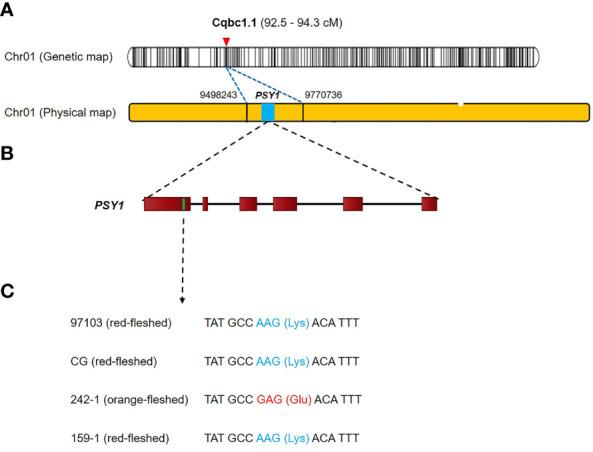
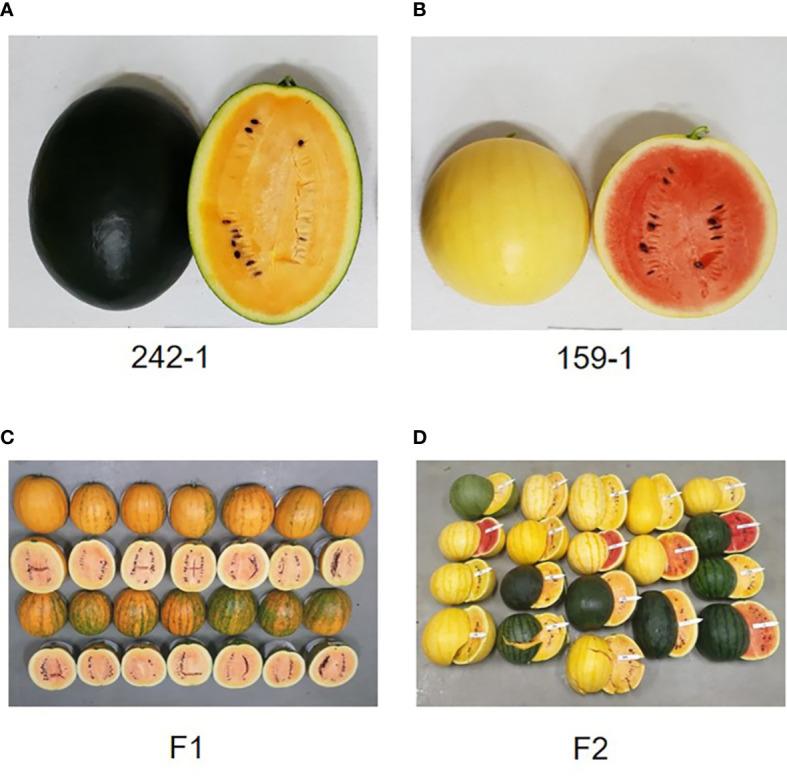
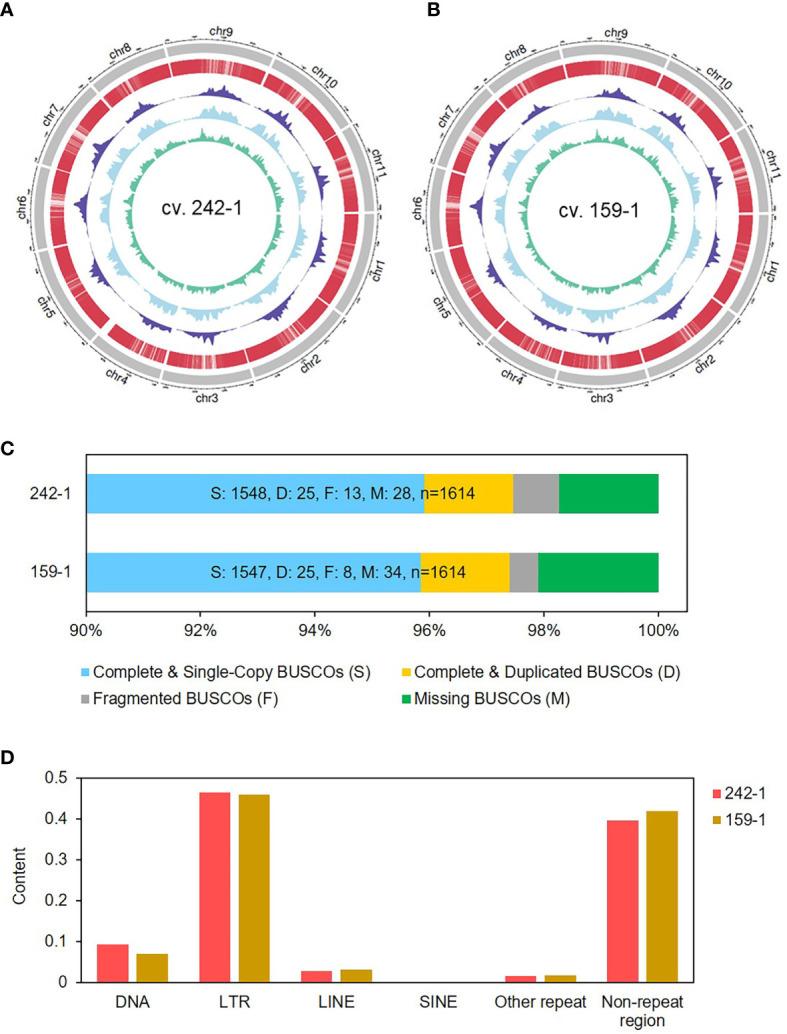
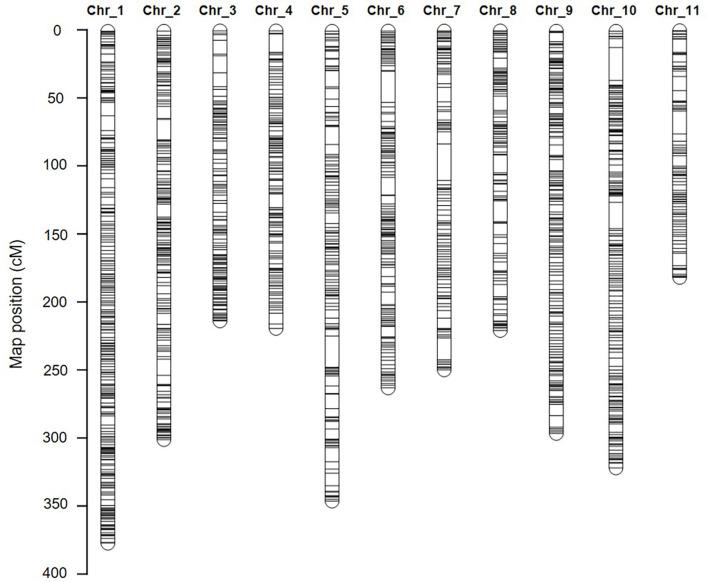
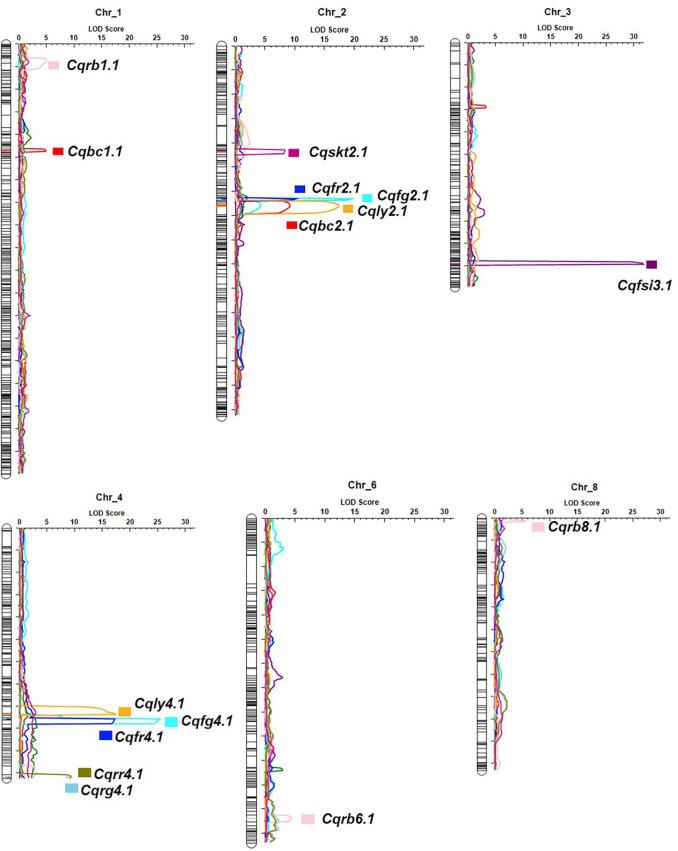
The unique color and type characteristics of watermelon fruits are regulated by many molecular mechanisms. However, it still needs to be combined with more abundant genetic data to fine-tune the positioning. We assembled genomes of two Korean inbred watermelon lines (cv. 242-1 and 159-1) with unique color and fruit-type characteristics and identified 23,921 and 24,451 protein-coding genes in the two genomes, respectively. To obtain more precise results for further study, we resequenced one individual of each parental line and an F population composed of 87 individuals. This identified 1,539 single-nucleotide polymorphisms (SNPs) and 80 InDel markers that provided a high-density genetic linkage map with a total length of 3,036.9 cM. Quantitative trait locus mapping identified 15 QTLs for watermelon fruit quality-related traits, including β-carotene and lycopene content in fruit flesh, fruit shape index, skin thickness, flesh color, and rind color. By investigating the mapping intervals, we identified 33 candidate genes containing variants in the coding sequence. Among them, Cla97C01G008760 was annotated as a phytoene synthase with a single-nucleotide variant (A → G) in the first exon at 9,539,129 bp of chromosome 1 that resulted in the conversion of a lysine to glutamic acid, indicating that this gene might regulate flesh color changes at the protein level. These findings not only prove the importance of a phytoene synthase gene in pigmentation but also explain an important reason for the color change of watermelon flesh.
西瓜果实独特的颜色和类型特征受多种分子机制调控。然而,仍需结合更丰富的遗传数据来精细定位。我们组装了两个具有独特颜色和果实类型特征的韩国自交系西瓜(品种242 - 1和159 - 1)的基因组,分别在这两个基因组中鉴定出23,921个和24,451个蛋白质编码基因。为了获得更精确的结果用于进一步研究,我们对每个亲本系的一个个体以及由87个个体组成的F群体进行了重测序。这鉴定出1,539个单核苷酸多态性(SNP)和80个插入缺失标记,构建了一个全长为3,036.9 cM的高密度遗传连锁图谱。数量性状位点定位确定了15个与西瓜果实品质相关性状的QTL,包括果肉中的β - 胡萝卜素和番茄红素含量、果实形状指数、果皮厚度、果肉颜色和果皮颜色。通过研究定位区间,我们鉴定出33个在编码序列中含有变异的候选基因。其中,Cla97C01G008760被注释为八氢番茄红素合成酶,在1号染色体9,539,129 bp处的第一个外显子中有一个单核苷酸变异(A→G),导致赖氨酸转变为谷氨酸,这表明该基因可能在蛋白质水平上调节果肉颜色变化。这些发现不仅证明了八氢番茄红素合成酶基因在色素沉着中的重要性,也解释了西瓜果肉颜色变化的一个重要原因。

 Zotero 插件