
水系统中的微塑料:对环境的影响及其潜在危害综述
Microplastics in water systems: A review of their impacts on the environment and their potential hazards.
作者信息
Kye Homin, Kim Jiyoon, Ju Seonghyeon, Lee Junho, Lim Chaehwi, Yoon Yeojoon
机构信息
Department of Environmental and Energy Engineering, Yonsei University, Wonju-si, Gangwon-do, Republic of Korea.
出版信息
Heliyon. 2023 Mar 7;9(3):e14359. doi: 10.1016/j.heliyon.2023.e14359. eCollection 2023 Mar.
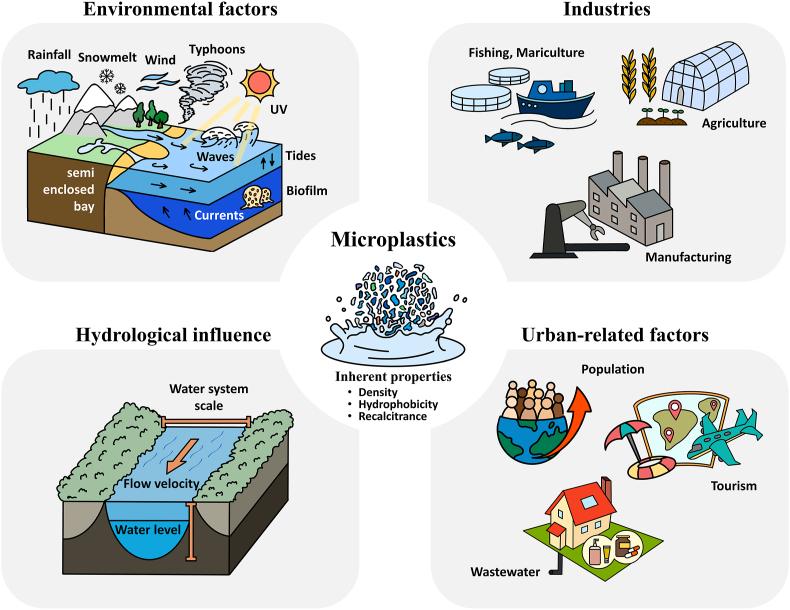
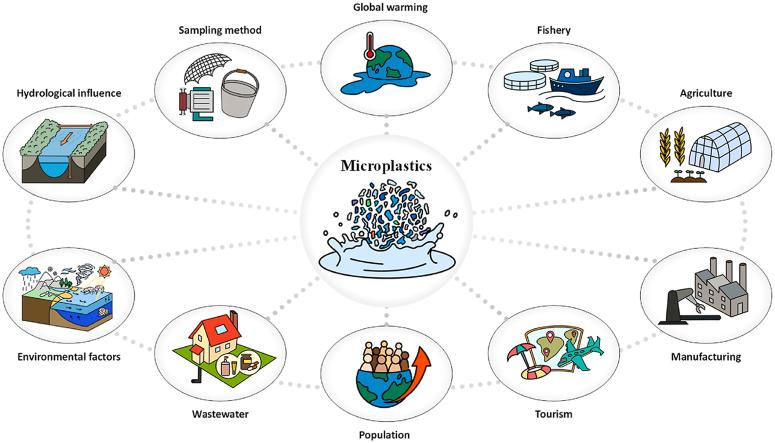
Microplastics, the microscopic plastics, are fragments of any type of plastic that are being produced today as plastic waste originating from anthropogenic activities. Such microplastics are discharged into the environment, and they enter back into the human body through different means. The microplastics spread in the environment due to environmental factors and the inherent properties of microplastics, such as density, hydrophobicity, and recalcitrance, and then eventually enter the water environment. In this study, to better understand the behavior of microplastics in the water environment, an extensive literature review was conducted on the occurrence of microplastics in aquatic environments categorized by seawater, wastewater, and freshwater. We summarized the abundance and distribution of microplastics in the water environment and studied the environmental factors affecting them in detail. In addition, focusing on the sampling and pretreatment processes that can limit the analysis results of microplastics, we discussed in depth the sampling methods, density separation, and organic matter digestion methods for each water environment. Finally, the potential hazards posed by the behavior of aging microplastics, such as adsorption of pollutants or ingestion by aquatic organisms, due to exposure to the environment were also investigated.
微塑料是指微观尺寸的塑料,是当今作为源自人为活动的塑料废弃物而产生的任何类型塑料的碎片。此类微塑料被排放到环境中,并通过不同途径重新进入人体。微塑料由于环境因素以及其自身特性(如密度、疏水性和难降解性)在环境中扩散,最终进入水环境。在本研究中,为了更好地了解微塑料在水环境中的行为,我们对按海水、废水和淡水分类的水生环境中微塑料的存在情况进行了广泛的文献综述。我们总结了水环境中微塑料的丰度和分布,并详细研究了影响它们的环境因素。此外,针对可能限制微塑料分析结果的采样和预处理过程,我们深入讨论了每种水环境的采样方法、密度分离和有机物消解方法。最后,还研究了老化微塑料的行为(如吸附污染物或被水生生物摄取)因暴露于环境而带来的潜在危害。


 Zotero 插件