
用于生物医学诊断的多孔结构微流控装置:综述
Porous Structural Microfluidic Device for Biomedical Diagnosis: A Review.
作者信息
Chen Luyao, Guo Xin, Sun Xidi, Zhang Shuming, Wu Jing, Yu Huiwen, Zhang Tongju, Cheng Wen, Shi Yi, Pan Lijia
机构信息
Collaborative Innovation Center of Advanced Microstructures, School of Electronic Science and Engineering, Nanjing University, Nanjing 210093, China.
出版信息
Micromachines (Basel). 2023 Feb 26;14(3):547. doi: 10.3390/mi14030547.
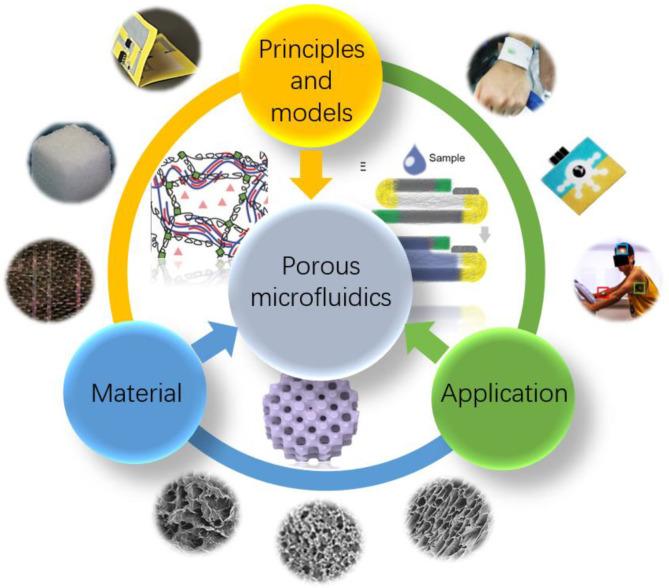
Microfluidics has recently received more and more attention in applications such as biomedical, chemical and medicine. With the development of microelectronics technology as well as material science in recent years, microfluidic devices have made great progress. Porous structures as a discontinuous medium in which the special flow phenomena of fluids lead to their potential and special applications in microfluidics offer a unique way to develop completely new microfluidic chips. In this article, we firstly introduce the fabrication methods for porous structures of different materials. Then, the physical effects of microfluid flow in porous media and their related physical models are discussed. Finally, the state-of-the-art porous microfluidic chips and their applications in biomedicine are summarized, and we present the current problems and future directions in this field.
近年来,微流控技术在生物医学、化学和医学等应用领域受到了越来越多的关注。随着近年来微电子技术以及材料科学的发展,微流控设备取得了巨大的进步。多孔结构作为一种非连续介质,其中流体的特殊流动现象使其在微流控领域具有潜在的特殊应用,为开发全新的微流控芯片提供了独特的途径。在本文中,我们首先介绍了不同材料多孔结构的制造方法。然后,讨论了多孔介质中微流体流动的物理效应及其相关物理模型。最后,总结了当前多孔微流控芯片的研究现状及其在生物医学中的应用,并阐述了该领域目前存在的问题和未来发展方向。


 Zotero 插件