
一种用于验证微流体系统中泄漏检测的工具的开发。
Development of a Tool for Verifying Leakage Detection in Microfluidic Systems.
作者信息
Bozorgnezhad Ali, Herbertson Luke, Guha Suvajyoti
机构信息
Division of Applied Mechanics, Office of Science and Engineering Laboratories, Center for Devices and Radiological Health, U.S. Food and Drug Administration, Silver Spring, MD 20993, USA.
出版信息
Micromachines (Basel). 2025 Jan 22;16(2):124. doi: 10.3390/mi16020124.
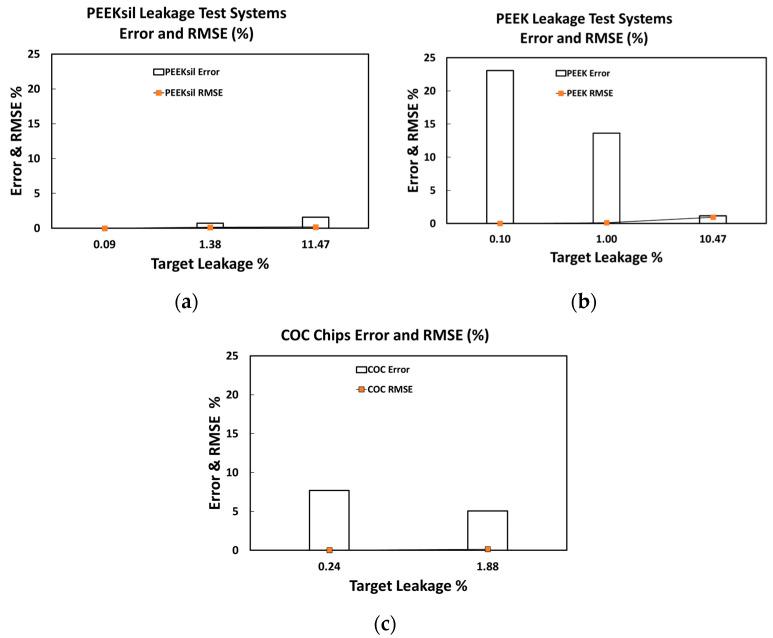
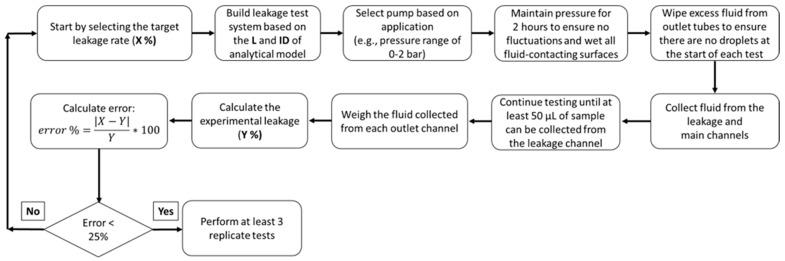
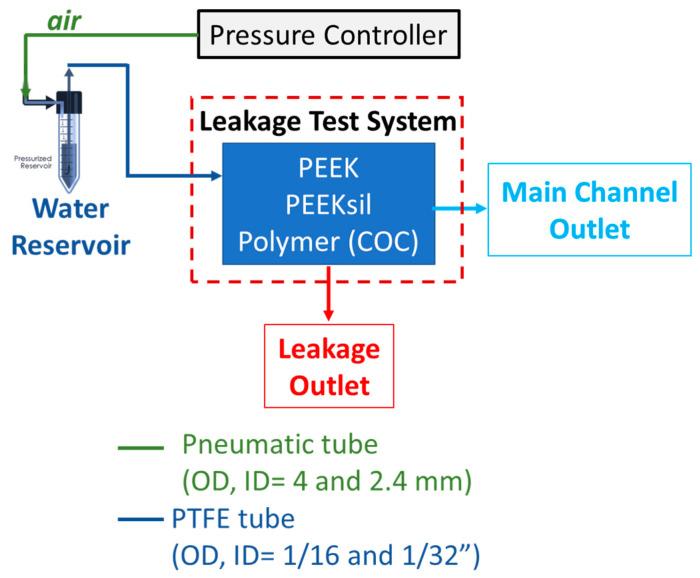
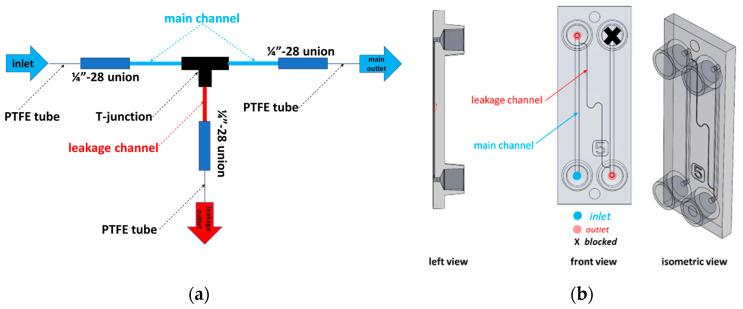
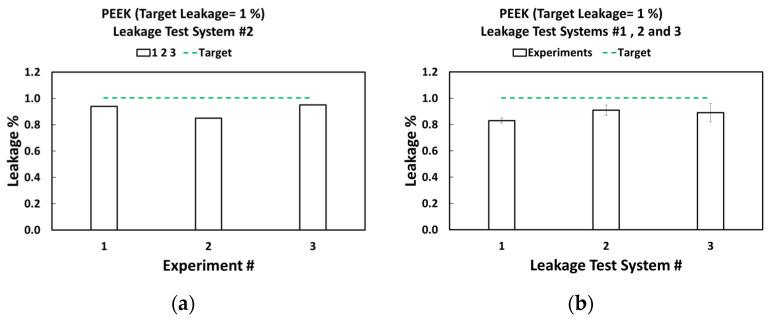
While submissions of microfluidic-based medical devices to the Food and Drug Administration (FDA) have increased in recent years, leakage remains a common but difficult failure mode to detect in microfluidic systems. Here, we have developed a sensitive tool to measure and verify leakages ranging from 0.1% to 10% in leakage detection systems, which can then be used to detect leak in microfluidic devices. Our methodology includes an analytical model that applies hydrodynamic resistance using different fluid-contacting elements (e.g., tubing, junctions, and connectors) to tune the leakage rate based on the application-specific acceptance criteria. We then used three polymer-based microfluidic systems to target leakage rates of approximately 0.1, 1.0, and 10%. The experimental uncertainties in Polyether Ether Ketone (PEEK) tubing were 23.08%, 13.64%, and 1.16%, respectively, while the PEEK-Coated Fused Silica (PEEKsil) tubing system had errors of 0.00%, 0.72%, and 1.59%, respectively, relative to the theoretical values for the same target leak rates. The commonly used commercial grade Cyclic Olefin Copolymer (COC) microfluidic chips produced errors of 7.69% and 5.05%, respectively, for target leakage rates of 0.24% and 1.88%. We anticipate that the proposed bench test method can be useful for device developers as a verification tool for leakage detection systems before assessing flow-mediated leakage failure modes in microfluidic medical devices.
近年来,向美国食品药品监督管理局(FDA)提交的基于微流控的医疗设备数量有所增加,但在微流控系统中,泄漏仍然是一种常见却难以检测的故障模式。在此,我们开发了一种灵敏的工具,用于测量和验证泄漏检测系统中0.1%至10%的泄漏率,进而可用于检测微流控设备中的泄漏情况。我们的方法包括一个分析模型,该模型利用不同的流体接触元件(如管道、接头和连接器)应用流体动力学阻力,以便根据特定应用的验收标准来调整泄漏率。然后,我们使用了三种基于聚合物的微流控系统,目标泄漏率分别约为0.1%、1.0%和10%。聚醚醚酮(PEEK)管道的实验不确定度分别为23.08%、13.64%和1.16%,而聚醚醚酮涂层熔融石英(PEEKsil)管道系统相对于相同目标泄漏率的理论值,误差分别为0.00%、0.72%和1.59%。对于目标泄漏率分别为0.24%和1.88%的情况,常用的商业级环烯烃共聚物(COC)微流控芯片产生的误差分别为7.69%和5.05%。我们预计,所提出的台架测试方法对于设备开发者而言,在评估微流控医疗设备中流动介导的泄漏故障模式之前,可作为泄漏检测系统的验证工具。
 Zotero 插件