
我们是否应该预期长期新冠患者的癌症病例数会增加?
Should We Expect an Increase in the Number of Cancer Cases in People with Long COVID?
作者信息
Amiama-Roig Ana, Pérez-Martínez Laura, Rodríguez Ledo Pilar, Verdugo-Sivianes Eva M, Blanco José-Ramón
机构信息
Centro de Investigación Biomédica de La Rioja (CIBIR), 26006 Logroño, Spain.
Hospital Universitario Lucus Augusti, 27003 Lugo, Spain.
出版信息
Microorganisms. 2023 Mar 9;11(3):713. doi: 10.3390/microorganisms11030713.
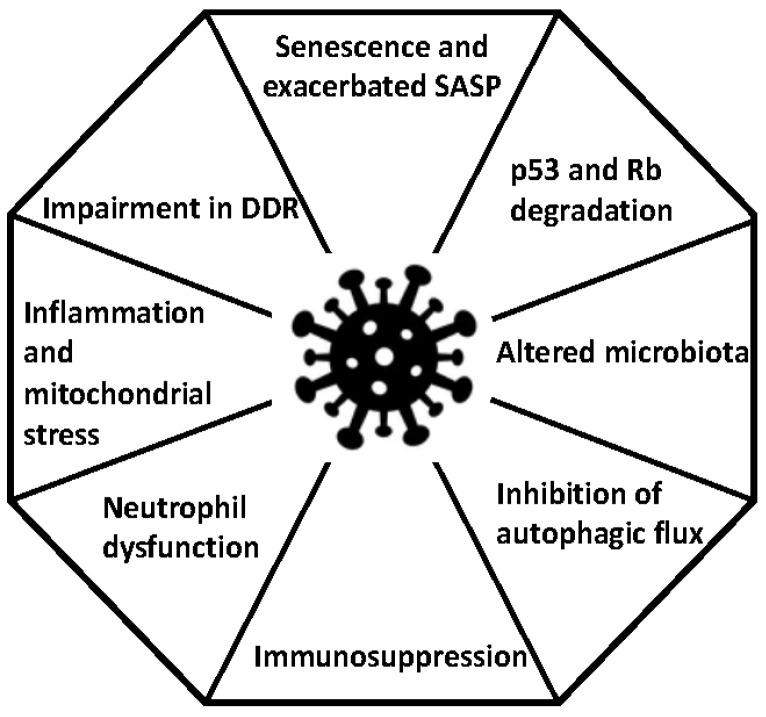
The relationship between viral infections and the risk of developing cancer is well known. Multiple mechanisms participate in and determine this process. The COVID-19 pandemic caused by the SARS-CoV-2 virus has resulted in the deaths of millions of people worldwide. Although the effects of COVID-19 are limited for most people, a large number of people continue to show symptoms for a long period of time (long COVID). Several studies have suggested that cancer could also be a potential long-term complication of the virus; however, the causes of this risk are not yet well understood. In this review, we investigated arguments that could support or reject this possibility.
病毒感染与患癌风险之间的关系众所周知。多种机制参与并决定了这一过程。由严重急性呼吸综合征冠状病毒2(SARS-CoV-2)病毒引起的新冠疫情已导致全球数百万人死亡。尽管新冠疫情对大多数人的影响有限,但仍有大量人群长期出现症状(长新冠)。多项研究表明,癌症也可能是该病毒潜在的长期并发症;然而,这种风险的成因尚未完全明确。在本综述中,我们研究了支持或反驳这种可能性的论据。
 Zotero 插件