
大气臭氧暴露对三种类型糖尿病的影响:一项荟萃分析。
The effect of ambient ozone exposure on three types of diabetes: a meta-analysis.
机构信息
State Key Laboratory of Reproductive Medicine, Center for Global Health, Institute of Toxicology, School of Public Health, Nanjing Medical University, No.101 Longmian Road, Nanjing, 211166, China.
Key Laboratory of Modern Toxicology of Ministry of Education, School of Public Health, Nanjing Medical University, Nanjing, Jiangsu, China.
出版信息
Environ Health. 2023 Mar 30;22(1):32. doi: 10.1186/s12940-023-00981-0.
BACKGROUND
Ozone as an air pollutant is gradually becoming a threat to people's health. However, the effect of ozone exposure on risk of developing diabetes, a fast-growing global metabolic disease, remains controversial.
OBJECTIVE
To evaluate the impact of ambient ozone exposure on the incidence rate of type 1, type 2 and gestational diabetes mellitus.
METHOD
We systematically searched PubMed, Web of Science, and Cochrane Library databases before July 9, 2022, to determine relevant literature. Data were extracted after quality evaluation according to the Newcastle Ottawa Scale (NOS) and the agency for healthcare research and quality (AHRQ) standards, and a meta-analysis was used to evaluate the correlation between ozone exposure and type 1 diabetes mellitus (T1D), type 2 diabetes mellitus (T2D), and gestational diabetes mellitus (GDM). The heterogeneity test, sensitivity analysis, and publication bias were performed using Stata 16.0.
RESULTS
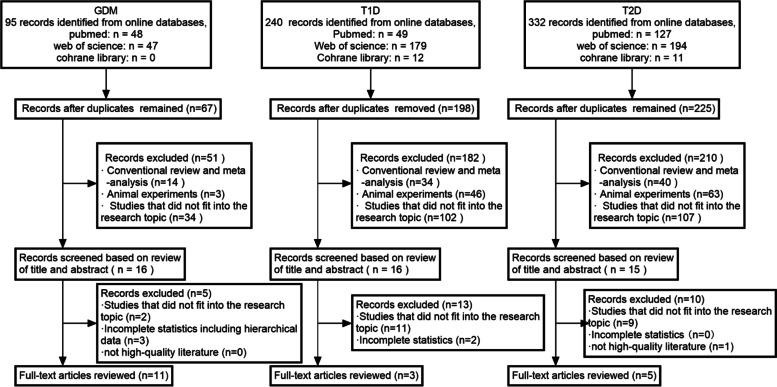
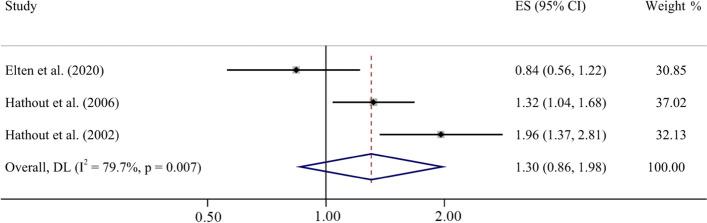
Our search identified 667 studies from three databases, 19 of which were included in our analysis after removing duplicate and ineligible studies. Among the remaining studies, three were on T1D, five were on T2D, and eleven were on GDM. The result showed that ozone exposure was positively correlated with T2D [effect size (ES) = 1.06, 95% CI: 1.02, 1.11] and GDM [pooled odds ratio (OR) = 1.01, 95% CI: 1.00, 1.03]. Subgroup analysis demonstrated that ozone exposure in the first trimester of pregnancy might raise the risk of GDM. However, no significant association was observed between ozone exposure and T1D.
CONCLUSION
Long-term exposure to ozone may increase the risk of T2D, and daily ozone exposure during pregnancy was a hazard factor for developing GDM. Decreasing ambient ozone pollution may reduce the burden of both diseases.
背景
臭氧作为一种空气污染物,正逐渐成为人们健康的威胁。然而,臭氧暴露对糖尿病发病率的影响,一种快速增长的全球代谢疾病,仍存在争议。
目的
评估环境臭氧暴露对 1 型、2 型和妊娠期糖尿病发病率的影响。
方法
我们系统地检索了 PubMed、Web of Science 和 Cochrane Library 数据库,以确定相关文献。根据纽卡斯尔-渥太华量表(NOS)和美国医疗保健研究与质量局(AHRQ)标准进行质量评估后,提取数据,并使用 Meta 分析评估臭氧暴露与 1 型糖尿病(T1D)、2 型糖尿病(T2D)和妊娠期糖尿病(GDM)之间的相关性。使用 Stata 16.0 进行异质性检验、敏感性分析和发表偏倚。
结果
我们从三个数据库中搜索到 667 项研究,排除重复和不合格的研究后,有 19 项研究纳入分析。在剩余的研究中,有 3 项研究 T1D,5 项研究 T2D,11 项研究 GDM。结果表明,臭氧暴露与 T2D 呈正相关[效应量(ES)=1.06,95%置信区间(CI):1.02,1.11]和 GDM[合并优势比(OR)=1.01,95%CI:1.00,1.03]。亚组分析表明,妊娠早期的臭氧暴露可能会增加 GDM 的风险。然而,臭氧暴露与 T1D 之间没有显著关联。
结论
长期暴露于臭氧可能会增加 T2D 的风险,妊娠期间每日臭氧暴露是发生 GDM 的危险因素。降低环境臭氧污染可能会减轻这两种疾病的负担。


 Zotero 插件