
小剂量地塞米松给药对 CD19 CAR-T 细胞治疗后长期血液学毒性的治疗有良好效果。
Low-dose administration of prednisone has a good effect on the treatment of prolonged hematologic toxicity post-CD19 CAR-T cell therapy.
机构信息
Tianjin First Central Hospital, The First Central Clinical College of Tianjin Medical University, Tianjin, China.
出版信息
Front Immunol. 2023 Mar 14;14:1139559. doi: 10.3389/fimmu.2023.1139559. eCollection 2023.
INTRODUCTION
Hematologic toxicity (HT) is a joint adverse event after CAR-T cells infusion. Some patients experience prolonged hematologic toxicity (PHT), which is challenging to treat.
METHODS
We collected clinical data from patients with relapsed refractory B-ALL treated with CD19 CAR-T cells. Patients with PHT who did not respond to erythropoietin, platelet receptor agonists, transfusion, or G-CSF and eventually received low-dose prednisone therapy were included in the analysis. We retrospectively analyzed the efficacy and safety of low-dose prednisone on PHT.
RESULTS
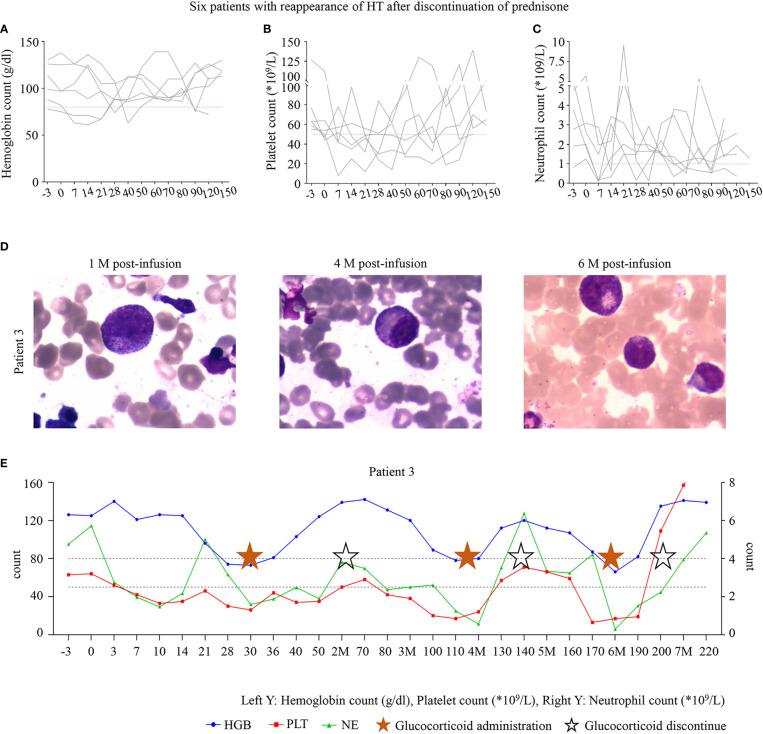
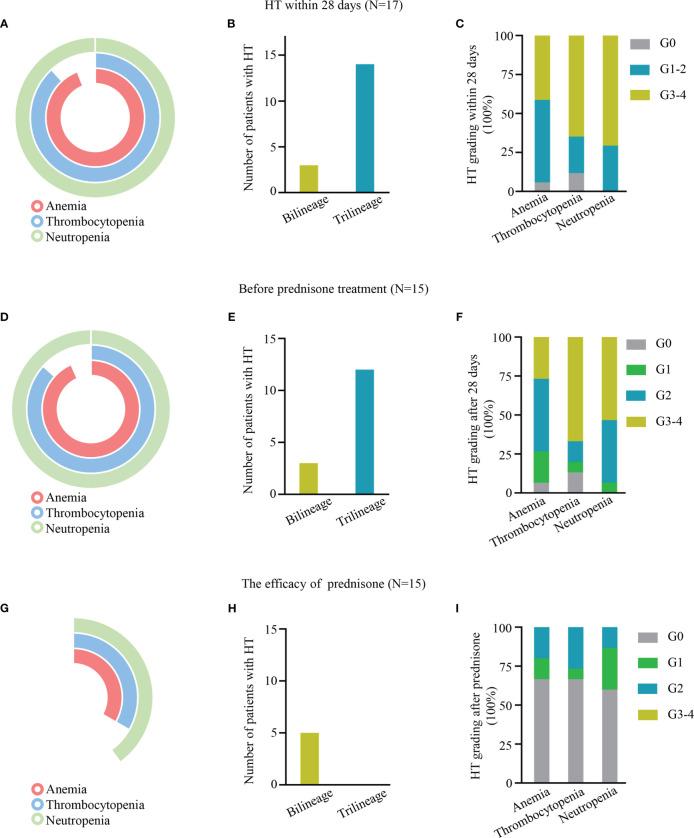
Among 109 patients treated with CD19 CAR-T cells, 78.9% (86/109) of patients were evaluated as PHT. Of these, 15 patients had persistent hematological toxicity after infusion (12 were grade 3/4 cytopenia, 12 were trilineage cytopenia and 3 were bilineage cytopenia), 2 developed cytopenia without apparent cause after D28. The initial prednisone dose was 0.5 mg/kg/day, and the median response time was 21 days (7-40 days). The recovery rate of blood count was 100%, and the complete recovery rate ranged from 60% to 66.67%. Especially exciting was that HT recurred in 6 patients after stopping prednisone. They were relieved again after the administration of prednisone. The median follow-up time was 14.97 months (4.1-31.2 months). Twelve-month duration of PFS and OS rates were 58.8% (±11.9%) and 64.7% (±11.6%). We did not observe any other side effects of prednisone apart from drug-controllable hyperglycemia and hypertension.
DISCUSSION
We suggest that low-dose prednisone is a beneficial and tolerable therapy for PHT after CAR-T cells. The trials have been registered at www.chictr.org.cn as ChiCTR-ONN-16009862 (November 14, 2016) and ChiCTR1800015164 (March 11, 2018).
简介
造血系统毒性(HT)是 CAR-T 细胞输注后的联合不良事件。部分患者出现迁延性造血系统毒性(PHT),治疗较为棘手。
方法
我们收集了接受 CD19 CAR-T 细胞治疗的复发/难治性 B-ALL 患者的临床数据。纳入未对促红细胞生成素、血小板受体激动剂、输血或 G-CSF 治疗有反应,最终接受低剂量泼尼松治疗的 PHT 患者进行分析。我们回顾性分析了低剂量泼尼松治疗 PHT 的疗效和安全性。
结果
在接受 CD19 CAR-T 细胞治疗的 109 例患者中,78.9%(86/109)的患者被评估为 PHT。其中,15 例患者输注后出现持续性血液学毒性(12 例为 3/4 级血细胞减少,12 例为三系血细胞减少,3 例为双系血细胞减少),28 天后 2 例出现无明显原因的血细胞减少。初始泼尼松剂量为 0.5mg/kg/d,中位反应时间为 21 天(7-40 天)。血细胞计数恢复率为 100%,完全缓解率为 60%-66.67%。特别令人兴奋的是,6 例患者在停用泼尼松后 HT 复发,再次使用泼尼松后缓解。中位随访时间为 14.97 个月(4.1-31.2 个月)。12 个月时 PFS 和 OS 率分别为 58.8%(±11.9%)和 64.7%(±11.6%)。除药物可控性高血糖和高血压外,我们未观察到泼尼松的其他不良反应。
讨论
我们建议低剂量泼尼松是 CAR-T 细胞后 PHT 的一种有益且可耐受的治疗方法。这些试验已在 www.chictr.org.cn 上注册,注册号分别为 ChiCTR-ONN-16009862(2016 年 11 月 14 日)和 ChiCTR1800015164(2018 年 3 月 11 日)。

 Zotero 插件