
金属有机框架材料与塑料:一种新兴的协同伙伴关系。
Metal-organic frameworks and plastic: an emerging synergic partnership.
作者信息
Mastropietro Teresa F
机构信息
Department of Chemistry & Chemical Technologies, University of Calabria, Rende, Italy.
出版信息
Sci Technol Adv Mater. 2023 Mar 28;24(1):2189890. doi: 10.1080/14686996.2023.2189890. eCollection 2023.
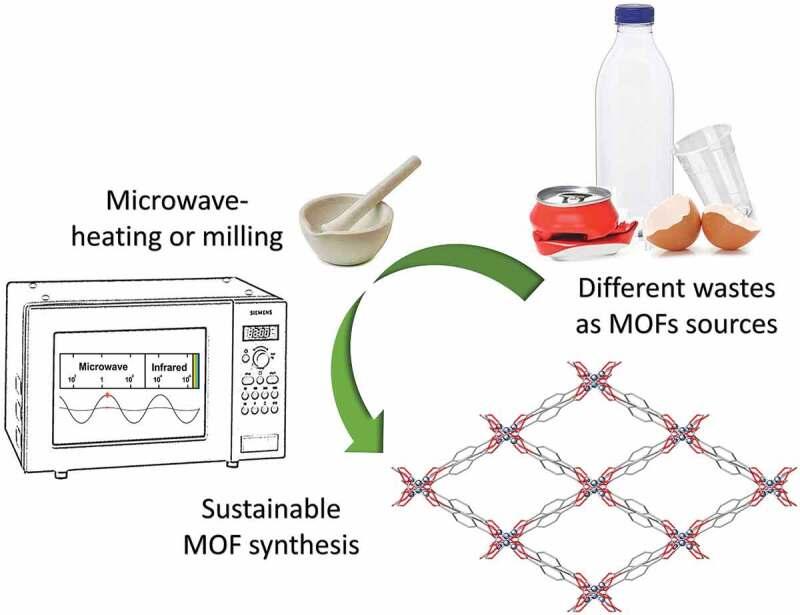
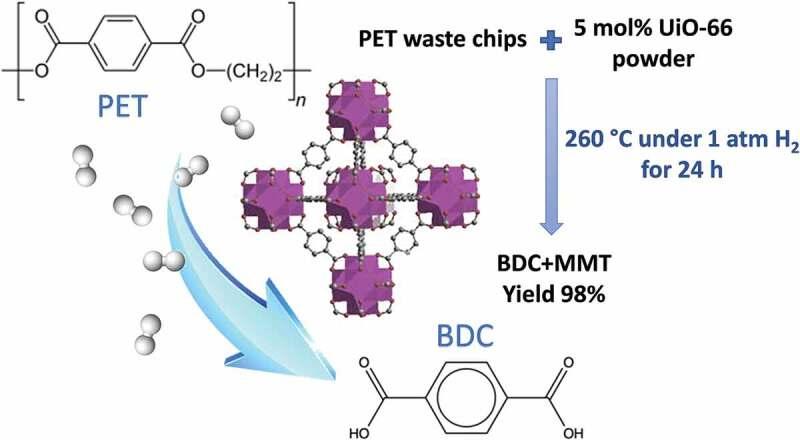
Mismanagement of plastic waste results in its ubiquitous presence in the environment. Despite being durable and persistent materials, plastics are reduced by weathering phenomena into debris with a particle size down to nanometers. The fate and ecotoxicological effects of these solid micropollutants are not fully understood yet, but they are raising increasing concerns for the environment and people's health. Even if different current technologies have the potential to remove plastic particles, the efficiency of these processes is modest, especially for nanoparticles. Metal-organic frameworks (MOFs) are crystalline nano-porous materials with unique properties, have unique properties, such as strong coordination bonds, large and robustus porous structures, high accessible surface areas and adsorption capacity, which make them suitable adsorbent materials for micropollutants. This review examines the preliminary results reported in literature indicating that MOFs are promising adsorbents for the removal of plastic particles from water, especially when MOFs are integrated in porous composite materials or membranes, where they are able to assure high removal efficiency, superior water flux and antifouling properties, even in the presence of other dissolved co-pollutants. Moreover, a recent trend for the alternative preparation of MOFs starting from plastic waste, especially polyethylene terephthalate, as a sustainable source of organic linkers is also reviewed, as it represents a promising route for mitigating the impact of the costs deriving from the widescale MOFs production and application. This connubial between MOFs and plastic has the potential to contribute at implementing a more effective waste management and the circular economy principles in the polymer life cycle.
塑料垃圾管理不善导致其在环境中无处不在。尽管塑料是耐用且持久的材料,但通过风化现象会被降解为粒径达纳米级的碎片。这些固体微污染物的归宿和生态毒理学效应尚未完全明了,但它们对环境和人类健康的影响正日益引起关注。即使目前不同的技术有潜力去除塑料颗粒,这些过程的效率也不高,尤其是对于纳米颗粒。金属有机框架(MOFs)是具有独特性质的结晶性纳米多孔材料,具有诸如强配位键、大而坚固的多孔结构、高可及表面积和吸附容量等独特性质,这使其成为适用于微污染物的吸附材料。本综述考察了文献中报道的初步结果,这些结果表明MOFs是从水中去除塑料颗粒的有前景的吸附剂,特别是当MOFs整合到多孔复合材料或膜中时,即使在存在其他溶解的共污染物的情况下,它们也能够确保高去除效率、优异的水通量和抗污染性能。此外,还综述了一种最近的趋势,即从塑料垃圾,特别是聚对苯二甲酸乙二酯开始,作为有机连接体的可持续来源来制备MOFs的替代方法,因为这代表了一条有前景的途径,可减轻大规模生产和应用MOFs所产生成本的影响。MOFs与塑料之间的这种结合有潜力在聚合物生命周期中促进实施更有效的废物管理和循环经济原则。



 Zotero 插件