
加纳北部农村的季节性与营养敏感型农业
Seasonality and nutrition-sensitive farming in rural Northern Ghana.
作者信息
de Jager Ilse, van de Ven Gerrie W J, Giller Ken E, Brouwer Inge D
机构信息
Division of Human Nutrition and Health, Wageningen University, P.O. Box 17, 6700 AA Wageningen, The Netherlands.
Plant Production Systems Group, Wageningen University, P.O. Box 430, 6700 AK Wageningen, The Netherlands.
出版信息
Food Secur. 2023;15(2):381-394. doi: 10.1007/s12571-022-01325-5. Epub 2022 Nov 23.
UNLABELLED
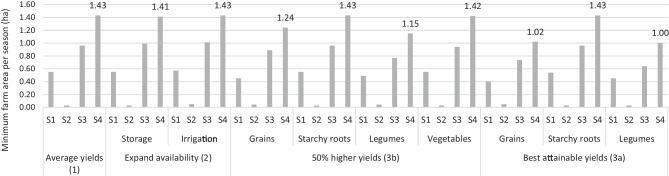
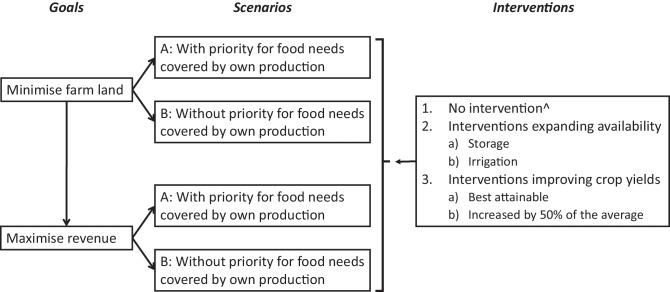
In rural sub-Saharan Africa, where malnutrition in all its forms is rife, the greatest gap between the availability of foods and the foods needed for a nutritious diet are faced during the 'hunger season'. We investigated what rural households in Northern Ghana would need to grow to ensure year-round availability of a nutrient adequate diet or the income required to fulfil their dietary needs. We applied linear programming to model different scenarios and interventions. Our results provide three major insights. First, considering seasonality is crucial in nutrition-sensitive farming. Ensuring a nutritious diet year-round requires enhanced availability of vegetables and fruits throughout the year. Second, although staple crops do not provide the full range of essential nutrients, increasing their yields allows for a reduction of field size, freeing up space for the production of other foods belonging to a nutritious diet, such as vegetables. Third, small farms are unable to produce sufficient food to cover their needs. They depend on income both from agriculture and other sources, and the availability of types of foods on markets to meet their dietary needs. Our study shows the value of modelling the range of dietary effects from agricultural interventions in a specific context, using a local feasible nutritious diet as a starting point and taking seasonality into account.
SUPPLEMENTARY INFORMATION
The online version contains supplementary material available at 10.1007/s12571-022-01325-5.
未标注
在撒哈拉以南非洲农村地区,各种形式的营养不良现象普遍存在,在“饥饿季节”,食物供应量与营养饮食所需食物之间的差距最为明显。我们调查了加纳北部农村家庭需要种植什么作物,以确保全年都能获得营养充足的饮食,或者获得满足其饮食需求所需的收入。我们应用线性规划对不同情景和干预措施进行建模。我们的研究结果提供了三个主要见解。第一,考虑季节性对于营养敏感型农业至关重要。确保全年营养饮食需要全年增加蔬菜和水果的供应量。第二,虽然主食作物不能提供所有必需营养素,但提高其产量可以缩小耕地面积,为生产其他属于营养饮食的食物(如蔬菜)腾出空间。第三,小农场无法生产足够的食物来满足自身需求。它们依赖农业和其他来源的收入,以及市场上食物种类的供应来满足其饮食需求。我们的研究表明,以当地可行的营养饮食为起点并考虑季节性,在特定背景下对农业干预措施的一系列饮食影响进行建模具有重要价值。
补充信息
在线版本包含可在10.1007/s12571-022-01325-5获取的补充材料。
 Zotero 插件