
验证类器官衍生的人肠单层细胞用于囊性纤维化的个体化治疗。
Validating organoid-derived human intestinal monolayers for personalized therapy in cystic fibrosis.
机构信息
Department of Paediatrics, Division of Gastroenterology, Hepatology and Nutrition, University of Toronto, Toronto, Canada.
Translational Medicine, The Hospital for Sick Children, Toronto, Canada.
出版信息
Life Sci Alliance. 2023 Apr 5;6(6). doi: 10.26508/lsa.202201857. Print 2023 Jun.
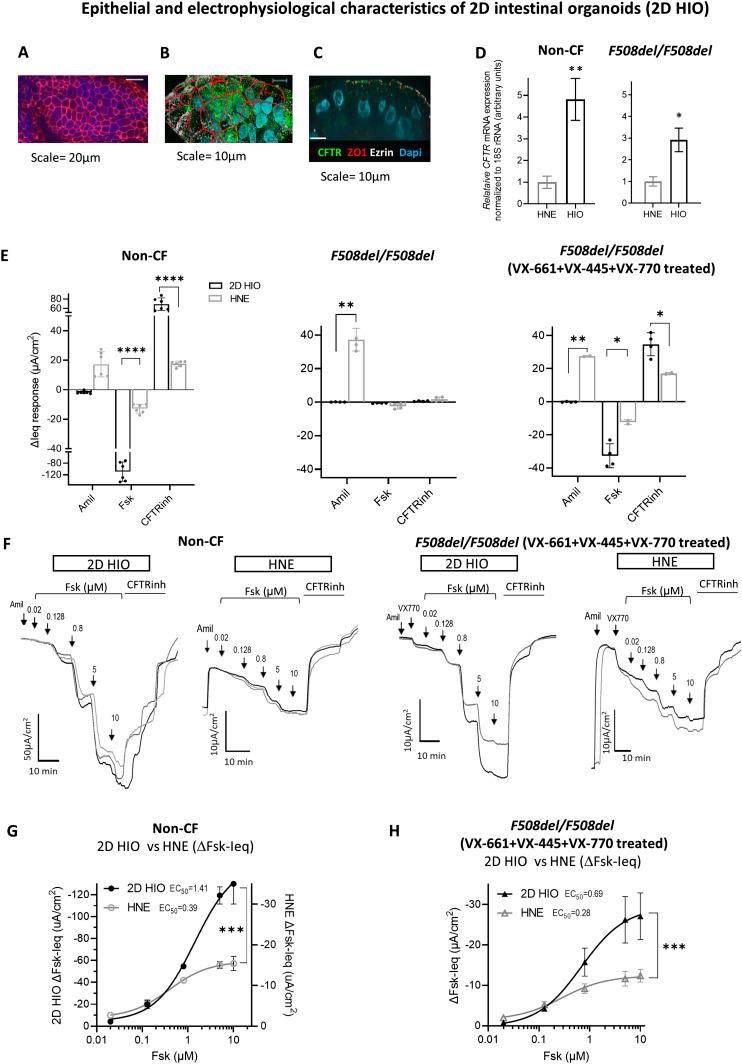
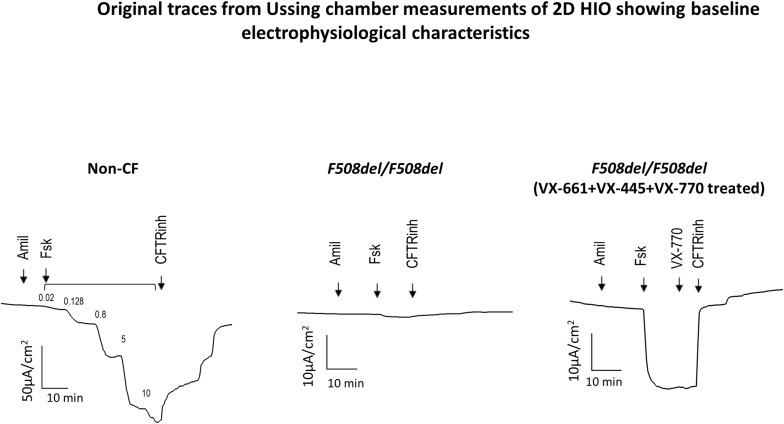
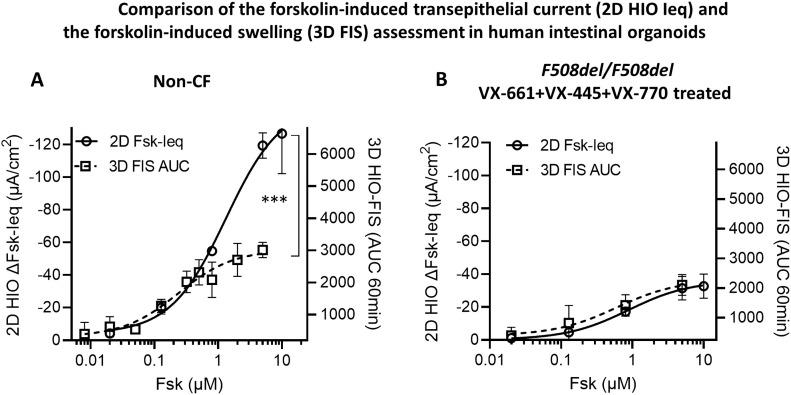
Highly effective drugs modulating the defective protein encoded by the CFTR gene have revolutionized cystic fibrosis (CF) therapy. Preclinical drug-testing on human nasal epithelial (HNE) cell cultures and 3-dimensional human intestinal organoids (3D HIO) are used to address patient-specific variation in drug response and to optimize individual treatment for people with CF. This study is the first to report comparable CFTR functional responses to CFTR modulator treatment among patients with different classes of CFTR gene variants using the three methods of 2D HIO, 3D HIO, and HNE. Furthermore, 2D HIO showed good correlation to clinical outcome markers. A larger measurable CFTR functional range and access to the apical membrane were identified as advantages of 2D HIO over HNE and 3D HIO, respectively. Our study thus expands the utility of 2D intestinal monolayers as a preclinical drug testing tool for CF.
高活性药物可调节 CFTR 基因编码的缺陷蛋白,从而彻底改变囊性纤维化(CF)的治疗方法。人们使用人鼻腔上皮(HNE)细胞培养物和 3D 人肠道类器官(3D HIO)进行临床前药物测试,以解决药物反应的个体差异,并为 CF 患者优化个体化治疗。本研究首次报道了使用 2D HIO、3D HIO 和 HNE 三种方法,对不同 CFTR 基因突变类型的患者进行 CFTR 调节剂治疗后,具有可比的 CFTR 功能反应。此外,2D HIO 与临床结局标志物具有良好的相关性。与 HNE 和 3D HIO 相比,2D HIO 具有更大的可测量 CFTR 功能范围和对顶端膜的可接近性,这分别被认为是 2D HIO 的优势。因此,本研究扩展了 2D 肠道单层作为 CF 临床前药物测试工具的用途。



 Zotero 插件