
综合代谢谱分析和全基因组分析揭示肝细胞癌的治疗方式
Comprehensive Metabolic Profiling and Genome-wide Analysis Reveal Therapeutic Modalities for Hepatocellular Carcinoma.
作者信息
Qi Feng, Li Jia, Qi Zhuoran, Zhang Jian, Zhou Bin, Yang Biwei, Qin Wenxing, Cui Wenguo, Xia Jinglin
机构信息
Department of Oncology, Ruijin Hospital, Shanghai Jiao Tong University School of Medicine, Shanghai 200000, China.
National Medical Center and National Clinical Research Center for Interventional Medicine, Liver Cancer Institute, Zhongshan Hospital, Fudan University, 180 Fenglin Road, Shanghai 200032, China.
出版信息
Research (Wash D C). 2023;6:0036. doi: 10.34133/research.0036. Epub 2023 Jan 13.
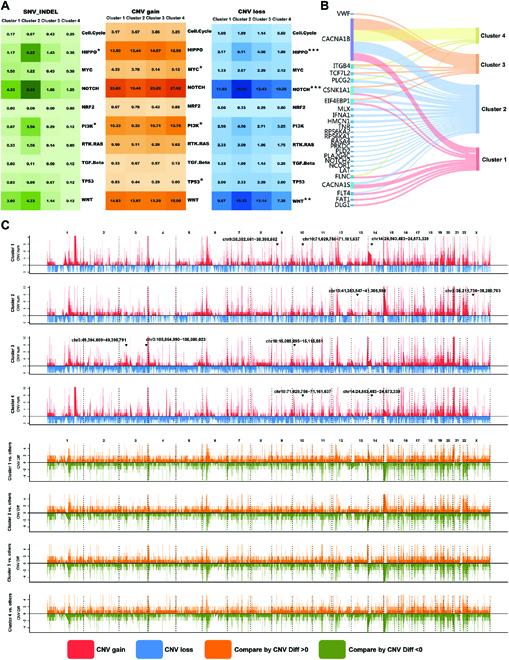
Understanding the details of metabolic reprogramming in hepatocellular carcinoma (HCC) is critical to improve stratification for therapy. Both multiomics analysis and cross-cohort validation were performed to investigate the metabolic dysregulation of 562 HCC patients from 4 cohorts. On the basis of the identified dynamic network biomarkers, 227 substantial metabolic genes were identified and a total of 343 HCC patients were classified into 4 heterogeneous metabolic clusters with distinct metabolic characteristics: cluster 1, the pyruvate subtype, associated with upregulated pyruvate metabolism; cluster 2, the amino acid subtype, with dysregulated amino acid metabolism as the reference; cluster 3, the mixed subtype, in which lipid metabolism, amino acid metabolism, and glycan metabolism are dysregulated; and cluster 4, the glycolytic subtype, associated with the dysregulated carbohydrate metabolism. These 4 clusters showed distinct prognoses, clinical characteristics and immune cell infiltrations, which was further validated by genomic alterations, transcriptomics, metabolomics, and immune cell profiles in the other 3 independent cohorts. Besides, the sensitivity of different clusters to metabolic inhibitors varied depending on their metabolic features. Importantly, cluster 2 is rich in immune cells in tumor tissues, especially programmed cell death protein 1 (PD-1)-expressing cells, which may be due to the tryptophan metabolism disorders, and potentially benefiting more from PD-1 treatment. In conclusion, our results suggest the metabolic heterogeneity of HCC and make it possible to treat HCC patients precisely and effectively on specific metabolic characteristics.
了解肝细胞癌(HCC)中代谢重编程的细节对于改善治疗分层至关重要。我们进行了多组学分析和跨队列验证,以研究来自4个队列的562例HCC患者的代谢失调情况。基于所识别的动态网络生物标志物,鉴定出227个重要的代谢基因,并将总共343例HCC患者分为4个具有不同代谢特征的异质性代谢簇:簇1为丙酮酸亚型,与丙酮酸代谢上调相关;簇2为氨基酸亚型,以氨基酸代谢失调为参照;簇3为混合亚型,其中脂质代谢、氨基酸代谢和聚糖代谢均失调;簇4为糖酵解亚型,与碳水化合物代谢失调相关。这4个簇显示出不同的预后、临床特征和免疫细胞浸润情况,在另外3个独立队列中的基因组改变、转录组学、代谢组学和免疫细胞谱进一步验证了这一点。此外,不同簇对代谢抑制剂的敏感性因其代谢特征而异。重要的是,簇2在肿瘤组织中富含免疫细胞,尤其是表达程序性细胞死亡蛋白1(PD-1)的细胞,这可能归因于色氨酸代谢紊乱,并且可能从PD-1治疗中获益更多。总之,我们的结果表明了HCC的代谢异质性,并使得根据特定代谢特征对HCC患者进行精确有效的治疗成为可能。




 Zotero 插件