
维生素 D 和钙补充剂与尿路结石:一个有争议和多方面的关系。
Vitamin D and Calcium Supplementation and Urolithiasis: A Controversial and Multifaceted Relationship.
机构信息
Nephrology, Dialysis and Renal Transplantation, Fondazione IRCCS Ca' Granda Ospedale Policlinico Milan, 20122 Milan, Italy.
Department of Clinical Sciences and Community Health, University of Milan, 20122 Milan, Italy.
出版信息
Nutrients. 2023 Mar 31;15(7):1724. doi: 10.3390/nu15071724.
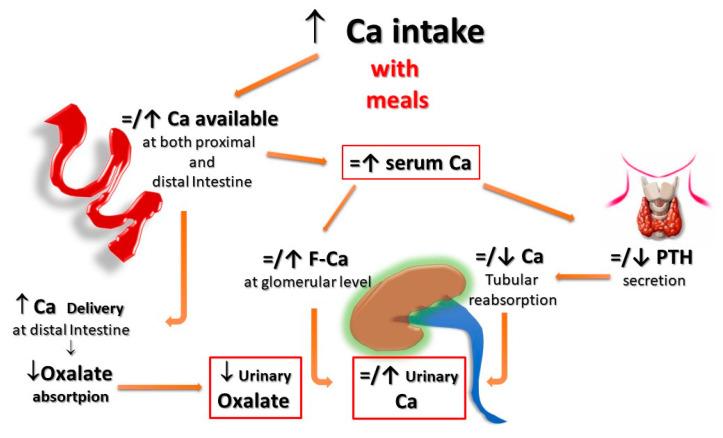
Patients with urolithiasis, and particularly those with hypercalciuria, frequently have a marked reduction of bone mineral content up to the levels of osteoporosis, with a significant increase in bone fracture risk. For these reasons, the indication to prescribe vitamin D and/or calcium supplementations is very frequent in such patients. On the other hand, both calcium supplementation, and even more vitamin D therapy, can worsen the risk of developing urolithiasis by increasing calcium, phosphate, and oxalate urinary excretion. Despite the clinical and practical relevance of this issue, the evidence on this topic is scarce and contradictory. Therefore, some concerns exist about how and whether to prescribe such supplements to a patient with a history of kidney stones. In this narrative review, we resume some pivotal pathophysiological concepts strictly related to the dealt topic, and we draw some considerations and personal opinions on the pros and cons of such prescriptions. Finally, we share with the reader our pragmatic algorithm for handling the urolithiasis risk in patients who have strong indications to be prescribed vitamin D and calcium supplementations.
患有尿路结石的患者,特别是高钙尿症患者,其骨矿物质含量明显减少,甚至达到骨质疏松症的水平,骨折风险显著增加。出于这些原因,经常需要给此类患者开具维生素 D 和/或钙补充剂。另一方面,钙补充剂甚至维生素 D 治疗都会通过增加钙、磷和草酸盐的尿排泄,从而增加尿路结石形成的风险。尽管这个问题具有临床和实际意义,但相关证据却很少且相互矛盾。因此,对于有肾结石病史的患者,如何以及是否开具此类补充剂存在一些担忧。在这篇叙述性综述中,我们总结了与所讨论主题密切相关的一些关键病理生理学概念,并对这些处方的利弊提出了一些考虑和个人意见。最后,我们与读者分享了我们在处理有强烈服用维生素 D 和钙补充剂适应证的患者尿路结石风险时的实用算法。



 Zotero 插件